


What should you do right now when hot grease splatters on your arm? The sting can be sharp, and it’s easy to wonder whether to reach for a cloth, a cream, or cold water. For hot grease splatter on arm first aid, start with cool running water, not ice or a home remedy.
A quick, safe response can ease the heat and help limit further skin damage. This guide explains how to cool the area for 20 minutes, what to remove or leave in place, and how to loosely cover a minor burn afterward. It also explains which signs, including a large or unusually colored burn, mean you should seek urgent medical assessment instead of treating it at home.
After cooling the burn and assessing it, you’ll learn how to keep a minor splatter clean, protect blisters, and use burn-care supplies only as directed. Start by cooling the skin and checking for warning signs.
Key Takeaways
- For hot grease splatter on arm first aid, move away from the heat and cool the area promptly with running water. Avoid ice.
- A small-looking mark can still need urgent assessment if the skin looks white, charred, leathery, or numb, or if symptoms are getting worse.
- After cooling, protect the burn with a loose, clean, non-fluffy dressing. Keep adhesive off the injured skin.
- For a minor burn, reduce rubbing from sleeves and daily activities while keeping the area protected.
- Hydrogel spray and dressings may be options for appropriate minor burns after first aid. Follow product labels, and don’t use them to delay urgent care.
Hot grease splatter on your arm: what to do first
Move away from the stove or other heat source, then cool the burn right away. The first minutes matter: running cool water helps draw heat from the skin, while ice or very cold water can cause additional injury. If a sleeve or bracelet is near the burn, don’t let removing it delay cooling.
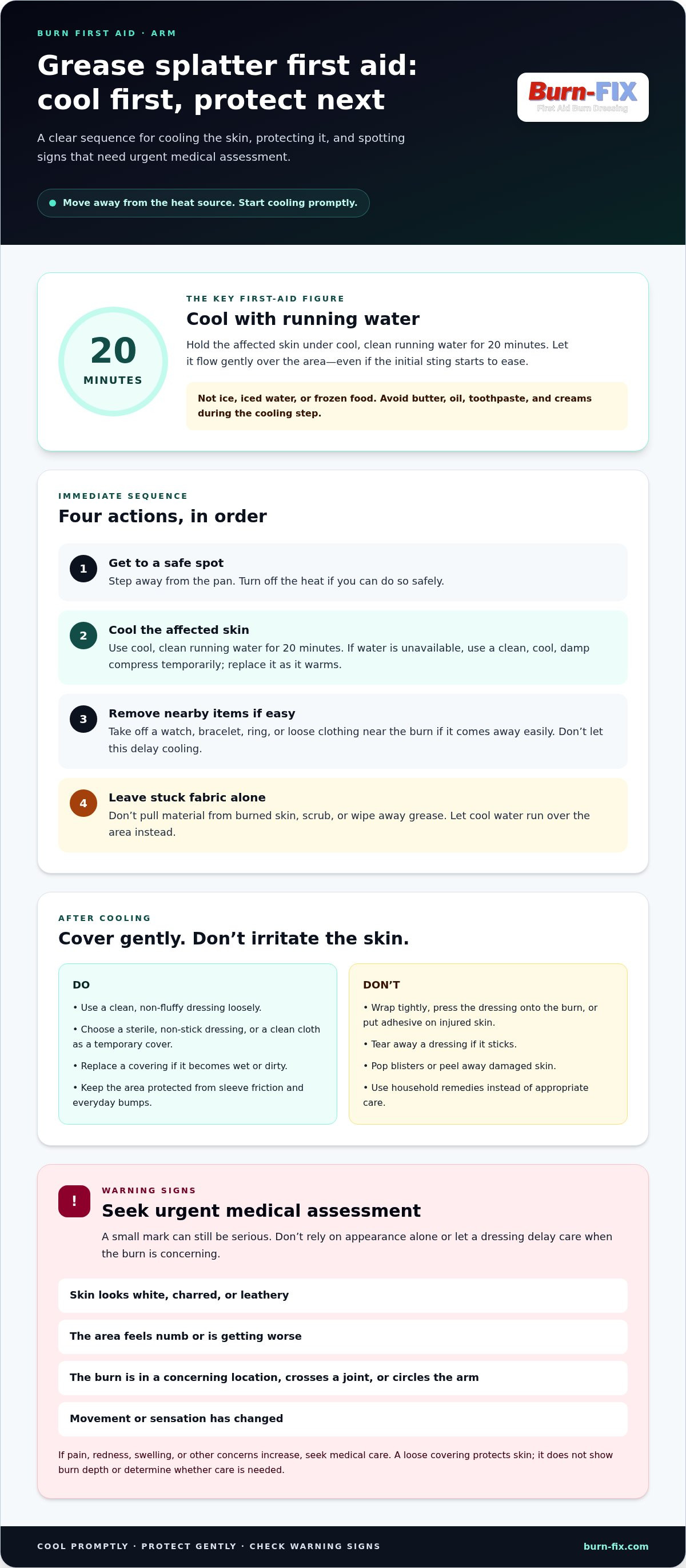
Follow this sequence for hot grease splatter on arm first aid:
- Get to a safe spot. Step away from the pan and turn off the heat if you can do so safely.
- Cool the affected skin. Hold your arm under cool, clean running water for 20 minutes. Let the water flow gently over the area.
- Remove nearby constrictions. Take off a watch, bracelet, ring, or loose clothing close to the burn if it comes away easily.
- Leave stuck fabric alone. Don’t pull material off burned skin or rub the area to remove grease.
Start cooling promptly rather than trying to judge the burn’s seriousness while the skin is still hot. For a general overview of burn causes, types, symptoms, and treatment principles, see Understanding Burn Injuries.
How should you cool a hot grease burn?
Use cool running water, not an ice pack, iced water, or frozen food. Keep the burn under the flow for 20 minutes, even if the initial sting starts to ease. Avoid directing a forceful stream at fragile or damaged skin. If running water isn’t available, place a clean, cool, damp compress over the area temporarily. Replace it as it warms, and use running water as soon as you can.
Don’t apply butter, oil, toothpaste, or creams during this first step. These substances don’t replace cooling, and greasy products can hold heat against the skin. A cool compress is a temporary option, not a reason to stop cooling early once water becomes available.
What should you do about clothing, jewelry, and grease?
Swelling can make jewelry or snug clothing harder to remove, so take off a watch or bracelet near the injury while it still moves freely. Gently lift away loose fabric if it isn’t touching or sticking to the burn. If material clings to the skin, leave it in place and get medical help rather than pulling, cutting close to the skin, or scraping.
Hot oil may leave residue, but don’t scrub or wipe the burn to clean it. That can irritate injured skin and interrupt cooling. Let cool water run over the area instead. Once the full 20 minutes are complete, protect the skin and assess whether the burn needs urgent medical attention.
First aid for a grease splatter burn: protect the skin after cooling
Once you’ve cooled the burn, protect the skin from dirt, friction, and accidental contact. A loose covering can shield the area, but it won’t show how deep the burn is or tell you whether medical care is needed. Use a dressing for protection, not diagnosis.
For hot grease splatter on arm first aid, keep the next steps simple: cover gently, avoid home remedies, and pay attention to how the skin looks and feels. If the burn seems concerning or symptoms worsen, seek medical assessment instead of relying on home care.
How can you cover a cooled arm burn?
Place a clean, non-fluffy dressing loosely over the affected skin. A sterile, non-stick dressing is suitable; a clean cloth can serve as a temporary cover. Don’t press the material onto the burn, wrap it tightly around your arm, or put adhesive directly on injured skin. The covering should stay in place without pulling, rubbing, or restricting circulation.
If the dressing sticks, don’t tear it away from the skin. Avoid repeatedly lifting the cover to inspect a tender area, since friction can aggravate it. Replace a covering that becomes wet or dirty with a clean one, handling the burn gently.
Which common home remedies should you avoid?
Skip ice, butter, cooking oil, toothpaste, and other household substances. They don’t replace proper cooling and may irritate the skin or make the burn harder to assess. Don’t pop blisters or peel away damaged skin, either. Blisters provide a natural protective layer; breaking them can leave delicate skin exposed and increase the chance of contamination.
Keep the area clean and avoid experimenting with creams or remedies. If you’re unsure whether a substance is appropriate, leave it off and follow current medical guidance.
When is a covering not enough?
A neat dressing doesn’t mean a burn is minor. Seek urgent medical assessment if the area looks white, charred, or leathery, feels numb, is getting worse, or is in a concerning location. A small mark can still be serious because appearance, depth, and symptoms all matter. Don’t let applying a dressing delay care for a worrying burn.
If the burn appears minor after cooling and assessment, keep it protected from sleeve friction and everyday bumps. Monitor the skin and your symptoms, and seek medical care if pain, redness, swelling, or other concerns increase. Follow current medical advice for ongoing care, especially if you’re uncertain about the burn’s severity.
Having appropriate first-aid supplies accessible can make it easier to protect a suitable minor burn after cooling. Explore burn-care supplies for a home first-aid kit, and follow each product’s label. These supplies don’t replace medical assessment when warning signs are present.
Can a small grease splatter burn be serious? Signs to check
Yes. A small mark can still need medical attention if it looks deep, affects an important area, or causes concerning symptoms. The size of the splatter alone doesn’t show how seriously the skin is injured. Check how the burn looks and feels, whether it crosses a joint or circles the arm, and whether movement or sensation has changed.
Use these signs to decide when to seek help, but don’t try to diagnose burn depth at home. For hot grease splatter on arm first aid, cooling and covering are only the first steps. They don’t replace an assessment when the injury seems serious or you’re unsure.
What does a more serious burn look or feel like?
Blisters may form, and swelling or pain can increase. More concerning signs include skin that looks white, brown, black, charred, or leathery, or an area that feels numb. A burn can also be serious if pain is severe or getting worse. These clues can help you recognize risk, but no single sign reliably tells you how deep the injury is.
Look at the whole area rather than focusing only on the darkest or reddest spot. If the appearance worries you, symptoms are significant, or you can’t tell whether the skin is deeply damaged, seek professional medical assessment. Don’t wait for a blister to appear before acting on other warning signs.
When should you seek urgent medical care?
Seek urgent assessment for a burn that looks deep, has white or charred patches, or is larger than 3 inches. Burns involving the hands, face, feet, genitals, or a major joint also need prompt medical attention. On the arm, pay particular attention to a burn that crosses the elbow or wrist, wraps all the way around the arm, or makes normal movement difficult.
A burn encircling the arm deserves particular caution because swelling may affect circulation. Get prompt medical help if the hand becomes numb, unusually pale, or difficult to move. Don’t wait to see whether a tight, worsening feeling settles on its own.
Call 911 in the United States for a severe burn or another emergency requiring immediate help. If the injury doesn’t appear life-threatening but has concerning depth, location, or movement signs, arrange urgent medical assessment. When in doubt, choose assessment rather than treating the injury as a minor splatter at home.
- Check appearance: White, brown, black, charred, or leathery skin is concerning.
- Check sensation and movement: Numbness, worsening symptoms, or restricted motion need attention.
- Check location and spread: A burn around the arm, over a joint, or larger than 3 inches warrants urgent assessment.
Caring for a minor grease burn on your arm over the next few days
Once a burn has been cooled and assessed as minor, gentle protection can help prevent everyday contact from irritating the skin. Keep the area clean, and cover it loosely when clothing, work, or other activities might rub against it. Follow any care instructions you’ve received. Don’t assume a small burn will stay minor if its appearance or symptoms change.
Hot grease splatter on arm first aid doesn’t end when the initial sting eases. Pay attention to the skin as you go about your day, especially if the burn sits under a sleeve, near your wrist or elbow, or somewhere that bends and moves often.
How can you protect the area during daily activities?
Choose loose, soft clothing that won’t press or scrape the burn. If a sleeve catches or repeatedly rubs the area, adjust it or use a clean, non-fluffy covering to reduce friction. Keep the covering loose and change it if it becomes wet or dirty. Avoid activities that repeatedly bump, stretch, or irritate the injured skin. If ordinary movement becomes uncomfortable, reassess the burn rather than pushing through the discomfort.
For general kitchen burn first aid, use the same practical approach: keep the area clean, protect it from avoidable contact, and monitor for changes. If blisters appear or the injury seems deeper than first thought, don’t pop them or peel damaged skin. Read guidance on second-degree burn care as you consider next steps, and seek medical assessment if you’re unsure about the burn’s depth or care needs.
Which changes mean the burn needs another assessment?
Get medical advice if pain increases, redness spreads, swelling worsens, or fluid drains from the area. Fever or foul-smelling drainage also warrants prompt attention. A single change doesn’t prove there’s an infection, but these symptoms can signal a problem that needs professional evaluation. Seek care rather than trying to treat concerning changes with household remedies.
Check the burn without repeatedly disturbing it. Notice whether it is becoming more painful, whether redness is extending beyond the original mark, and whether movement is getting harder. If a burn crosses a joint, discomfort or reduced movement deserves particular attention. Any new numbness, unusual skin color, or worsening condition is a reason to seek medical assessment, even if the splatter looked small at first.
Minor-burn care should remain secondary to medical guidance whenever symptoms change or the injury raises concern. If you’re preparing a home first-aid kit for appropriate minor burns, explore Burn-Fix burn-care supplies and follow each product’s label. Supplies can support first aid, but they don’t replace assessment when warning signs appear.
When hydrogel burn-care supplies may help after first aid
Hydrogel burn-care supplies may be a next step only after the burn has been cooled and its severity considered. They’re intended for appropriate first-aid situations, not as a replacement for running water or medical evaluation. A spray or dressing can be convenient to have on hand, but using one should never delay urgent care if the burn looks deep, affects a sensitive area, or has other warning signs.
For hot grease splatter on arm first aid, follow the sequence: cool the skin, assess the injury, then consider a product only if home care is appropriate and its label supports the intended use. If you’re uncertain about the burn or product instructions, follow current medical guidance rather than guessing.
How should you think about hydrogel products for a minor burn?
Use a hydrogel product only after immediate cooling, not instead of it. Read the specific label before applying it, including directions and cautions, and follow those instructions. Product use isn’t a reason to manage a burn at home when professional assessment is needed. Don’t assume a product prevents blisters, guarantees healing, or treats a serious burn.
If the burn worsens or you notice concerning changes, pause home treatment and seek medical advice. A product label can guide use of that item, but it can’t determine burn depth or replace an assessment.
What burn-care supplies can you keep ready at home?
For a home first-aid kit, Burn-Fix Hydrogel Burn Spray - 120ml and Burn-Fix 4x4 First Aid Burn Gel Dressing are burn-care supplies for appropriate first aid. Keeping supplies accessible can make it easier to follow product directions when needed. Keep the packaging and instructions with them so you can refer to them instead of relying on memory during a stressful moment.
These items don’t replace cooling, urgent medical care, or professional assessment. If a burn is extensive, looks deep, or causes significant symptoms, prioritize medical help instead of reaching for a dressing or spray.
- First: Cool the burn promptly with running water.
- Next: Check for warning signs and decide whether medical assessment is needed.
- Then: If the burn is appropriate for home first aid, use supplies only as directed on their labels.
A little preparation can help make first aid more straightforward when there’s no injury to manage. Explore Burn-Fix burn-care supplies for options to include in a home kit, and keep product instructions with them for reference.
Be ready to respond calmly in the kitchen
A burn can be unsettling, but having a simple plan helps you act steadily instead of reaching for the first remedy nearby. Keep trusted first-aid guidance where household members can find it, and store supplies with their instructions. If an injury happens, focus on the person first. Choosing or organizing products can wait until the immediate situation is under control.
For appropriate minor-burn preparation, Burn-Fix offers hydrogel burn spray and gel dressings for home first-aid kits. Supplies support first aid; they don’t replace professional assessment when a burn is concerning. Remembering the right order for hot grease splatter on arm first aid can help you feel more prepared if a kitchen accident occurs.
When you’re ready to prepare your home kit, explore Burn-Fix burn-care supplies and follow each product’s label. Keep the supplies and their instructions together so they’re ready when needed.
Frequently Asked Questions
How long should you run cool water over a hot grease burn?
Hold the affected skin under cool, clean running water for 20 minutes. Start as soon as possible, even if the burn initially looks like a tiny spot. Keep the water comfortably cool rather than icy, and don’t use ice or frozen items on the skin. If the splatter affected more than one small area, cool each burned area while keeping the rest of the person warm.
Can I use a cool compress if running water is not available?
Yes. Use a clean, cool, damp cloth as a temporary option if you can’t get to running water. Lay it gently over the burn and replace it as it warms. Don’t use an icy compress or press hard on the skin. A compress isn’t a reason to skip running water: switch to cool, clean water for the recommended cooling period as soon as it’s available.
Should I remove a sleeve if hot grease splashed through clothing?
Remove the sleeve only if it lifts away easily and isn’t stuck to the burned skin. Don’t pull, peel, or tug fabric that clings, since this can damage injured skin. If a sleeve is tight around the arm, cut around the material without pulling it across the burn, if you can do so safely. Leave stuck fabric in place and seek medical guidance.
What should I do if a grease burn blister forms on my arm?
Leave the blister intact. Don’t pop it, squeeze it, or peel away the skin, since the blister helps cover the tender area. Protect it from rubbing with a clean, loose dressing, and avoid clothing that catches on it. If the blister is large, very painful, worsening, or accompanied by spreading redness, swelling, drainage, or fever, seek medical assessment rather than treating it yourself.
Can I use burn gel after cooling a grease splatter?
You may use burn gel only if the burn appears appropriate for home first aid and the product label permits that use. Cooling comes first; gel doesn’t replace running water or urgent medical assessment. Follow the directions and cautions on the specific product, and don’t apply it to delay care for a deep-looking, extensive, or otherwise concerning injury. If uncertain, seek medical guidance.
When should I call 911 for a burn on my arm?
Call 911 in the United States for a severe burn or an emergency needing immediate help. Examples include a burn that appears charred or leathery, a serious injury around the arm that affects movement or circulation, or a person who seems seriously unwell. For a burn larger than 3 inches or one crossing a major joint, seek urgent medical assessment. Don’t delay emergency help to apply a product.
What pain relief can I use for a minor grease burn?
For a minor burn, an over-the-counter pain reliever such as acetaminophen or ibuprofen may help, if it’s safe for you to take. Follow the package directions and check the warnings, including any age limits or health conditions that may affect use. If you’re unsure which medicine is suitable, ask a pharmacist or healthcare professional. Severe or increasing pain deserves medical assessment.


