


The right first move for an oven rack burn on your forearm isn’t a cream or a home remedy. It’s cool running water. The sting can be sharp, and it’s natural to wonder whether a blister will form or the mark is more serious than it looks. For oven rack burn on forearm treatment, start by cooling the area under cool, not icy, running water for 10 to 20 minutes.
Once the burn is cooled, what to do next depends on its size, appearance, and whether symptoms are changing. This guide explains how to protect a minor burn, avoid irritating it, and recognize warning signs that call for prompt medical care. It also covers what not to put on the skin, how to protect a blister, and when a burn dressing or gel may help after cooling. If the burn appears deep, affects a sensitive area, or shows signs of infection, home care isn’t enough. Calm, careful first aid can ease discomfort, but warning signs should guide what happens next.
Key Takeaways
- For oven rack burn on forearm treatment, move away from the hot surface and cool the burn under clean, cool running water for 20 minutes. Don’t use ice.
- Redness and tenderness can occur with a superficial burn, while blisters, moist skin, or increasing pain call for closer attention.
- After cooling, protect a minor burn with a loose, clean, non-fluffy, non-stick dressing, and don’t break any blisters.
- Avoid ice, greasy substances, and toothpaste. Seek prompt professional assessment for a large, deep, circumferential, or rapidly worsening burn.
- Keep monitoring the area, and get medical advice if pain, redness, swelling, or drainage worsens.
Oven Rack Burn on the Forearm: What to Do First
Move away from the hot rack, then start cooling the forearm right away. Prompt, gentle first aid can ease the heat and limit further skin injury. For oven rack burn on forearm treatment, begin with water, not a gel, cream, or home remedy.
How to cool an oven rack burn safely
Hold the burned area under clean, cool or lukewarm running water for 20 minutes. Keep the rest of the person warm with a blanket or clothing, taking care not to cover or press on the injured skin. If running water isn’t available, lay a clean, cool, wet cloth over the burn and replace it frequently to keep it cool.
First-aid guidance: Cool a burn under clean, cool running water for 20 minutes. Don’t use ice because extreme cold can further injure burned skin.
Avoid scrubbing or rubbing the area as it cools. For background on burn causes and classifications, see Understanding Burn Degrees and Causes. Appearance alone can’t reliably determine how serious an individual burn is.
What to remove, and what to leave alone
As soon as practical, remove a watch, bracelet, or ring near the burn, before swelling makes it harder to take off. Gently move loose clothing away from the area if it comes off easily. If fabric or another material is stuck to the skin, leave it in place rather than pulling or peeling it away.
Don’t puncture blisters, even if they feel tight. Avoid butter, oils, toothpaste, and other household remedies, which can irritate the injury or interfere with proper care. Focus first on cooling, then protect the area while you assess what to do next.
Keep the first steps simple
It’s understandable to want to apply something immediately when the burn stings, but cooling comes first. After the full 20 minutes of cooling, assess the burn more calmly. A small contact mark may look manageable, but size, depth, location, and changing symptoms all matter. Don’t rely on a home remedy or appearance alone to decide that care isn’t needed.
If the burn looks deep, wraps around the forearm, or is worsening quickly, seek prompt professional assessment rather than continuing home treatment. First aid can help protect the skin, but it doesn’t replace medical evaluation when warning signs are present.
How to Recognize Burn Severity Without Guessing
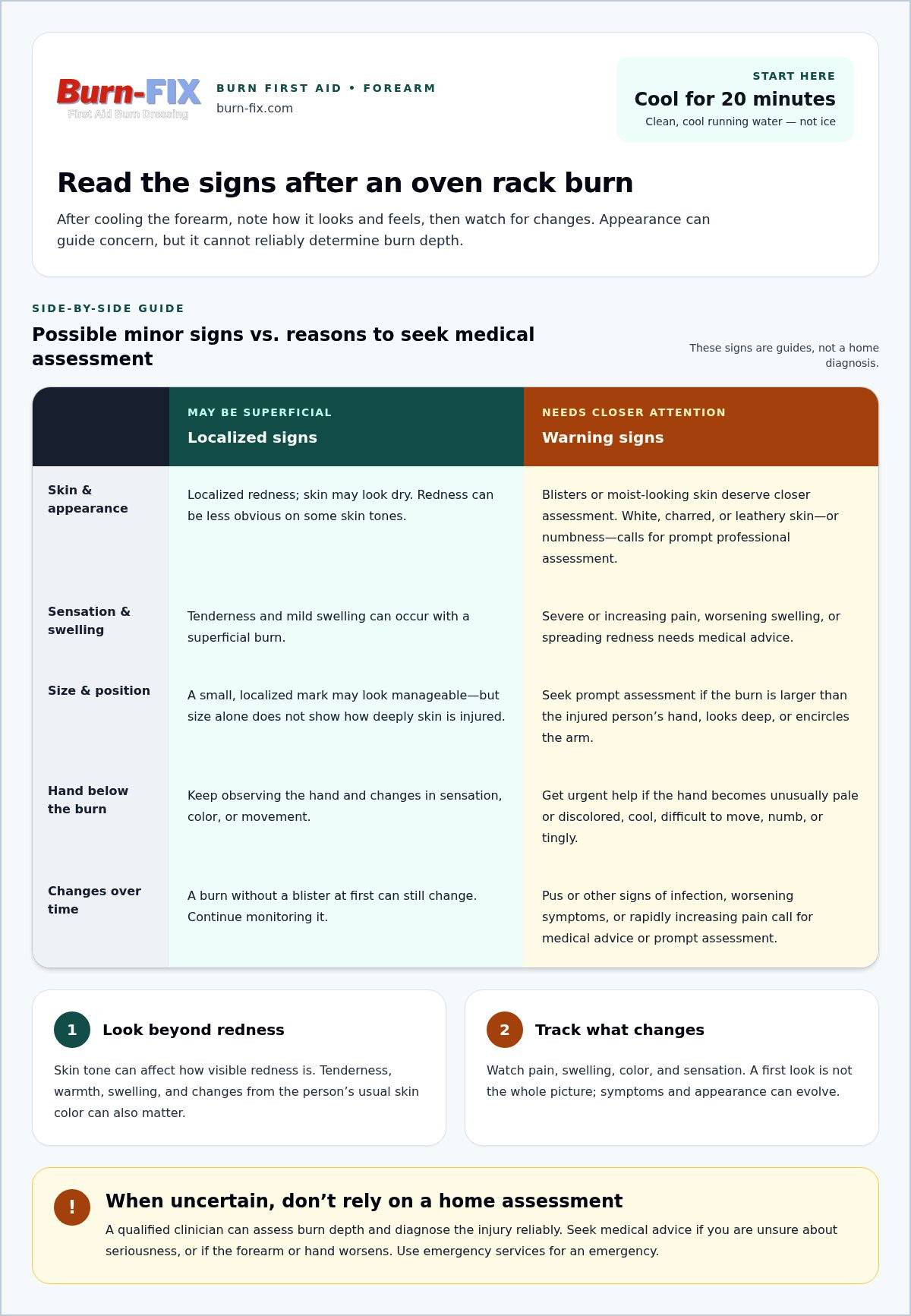
After cooling the burn, take a careful look at the forearm, but don’t try to diagnose the injury by appearance alone. Contact with an oven rack can leave a narrow mark, yet the visible size doesn’t always show how deeply the skin has been injured. Note how the area looks and feels, then watch for changes.
What a minor superficial burn may look and feel like
A more superficial burn may appear localized and red, feel tender, and have dry skin or mild swelling. These are possible signs, not proof that an injury is minor. Appearance varies with skin tone: redness may be less obvious on some skin, so tenderness, warmth, swelling, and changes from the person’s usual skin color can also matter.
Blisters, moist-looking skin, or increasing pain may signal a deeper injury and deserve closer assessment. A burn without a blister at first can still change, so keep monitoring it rather than assuming it can’t worsen.
When a forearm burn needs medical attention
Seek prompt professional assessment if the burn is large, looks deep, or appears white, charred, leathery, or numb. A burn larger than the injured person’s hand also warrants medical attention. Don’t wait for a blister or any other single sign to make the decision.
- Burns that encircle the arm: Swelling can make a full-circle burn especially concerning.
- Changes in the hand: Get urgent help if the hand becomes unusually pale or discolored, cool, difficult to move, numb, or tingly.
- Worsening symptoms: Severe or increasing pain, worsening swelling, spreading redness, pus, or other signs of infection need medical advice.
Use emergency services for an emergency. If you’re unsure about the burn’s depth or seriousness, seek medical advice rather than relying on a home assessment.
Visible signs can guide concern, but only a qualified clinician can assess burn depth and diagnose the injury reliably. Burn appearance and symptoms can evolve, so a first look isn’t the whole picture. Track changes in pain, swelling, color, or sensation, and get help promptly if the forearm or hand worsens.
For an appropriate minor burn after cooling, a burn-care dressing or gel may be part of a prepared-at-home first-aid supply. Follow the product label, and don’t use it in place of needed medical assessment. Explore burn first-aid supplies to keep basic burn-care items on hand.
Blisters, Dressings, and Burn Relief: What Helps After Cooling?
Once the forearm burn has been cooled, protect it from rubbing and dirt. For a minor burn, a clean, non-fluffy, non-stick dressing can provide a gentle barrier while the skin settles. Don’t wrap it tightly: swelling may develop, and a snug bandage can press on the injured area or restrict circulation.
How to cover a cooled forearm burn
Lay the dressing loosely over the burn and secure it without pulling the skin or squeezing the forearm. If the burn is blistered, avoid putting pressure on the blister or using a material that could stick to it. Change the covering if it becomes wet, dirty, or uncomfortable, and follow the dressing’s product directions.
Keep an eye on the skin and the hand below the burn. If swelling increases or the covering begins to feel tight, loosen or remove it carefully. Don’t force off a dressing that sticks to the wound. Seek medical advice if you can’t remove it gently or the injury is worsening.
Where hydrogel burn care may fit
Cooling with running water comes first. Afterward, a hydrogel spray, gel, or burn dressing may be an option for an appropriate minor burn when used according to its label. These products don’t replace cooling, and they aren’t a substitute for medical assessment when a burn is large, deep-looking, or getting worse.
Leave blisters intact. The blistered skin helps cover the tender area beneath it, so popping or peeling it can increase irritation and risk of infection. Seek medical advice if a blister is large, painful, or worsening, or if you notice spreading redness, swelling, drainage, or increasing pain.
For more detail on caring for a burn that may involve deeper skin layers, read this guide to treating second-degree burns at home. If you’re comparing forms of hydrogel care after cooling, the burn relief spray guide explains the product format. Follow the specific product label, and don’t delay medical care to apply a gel or dressing.
In short, oven rack burn on forearm treatment after cooling is about gentle protection, not aggressive cleaning or tight wrapping. If the burn’s severity is uncertain or symptoms are worsening, seek medical advice instead of relying on home care alone.
What Not to Do, and When Home Care Is Not Enough
Some familiar home remedies can make a fresh burn harder to care for. For oven rack burn on forearm treatment, avoid adding anything that traps heat or irritates the skin, and don’t let home care delay professional assessment when the injury looks serious or is getting worse.
First-aid mistakes that can worsen a burn
Don’t use ice or an ice pack. Ice can injure already damaged skin, so cool running water is the safer choice. Butter, oils, toothpaste, and other unverified remedies may irritate the area or complicate care. Don’t pop blisters; leave them intact to protect the tender skin beneath.
If fabric has stuck to the burn, don’t peel or pull it away. Trying to remove it can cause more injury. Keep the area protected and seek medical advice if the material can’t be moved without pulling on the skin.
Warning signs that should change your plan
Arrange prompt professional assessment for a burn that is large, deep-looking, circles the forearm, or is worsening rapidly. A white, charred, leathery, or numb area can signal a serious injury. A burn larger than the injured person’s hand also needs medical attention. If swelling increases or the hand below the burn changes color, feels unusually cool, becomes numb or tingly, or is difficult to move, treat it as urgent.
Get medical advice if pain is severe or increasing, redness spreads, swelling worsens, pus appears, or the person develops a fever. Don’t wait for every warning sign to appear before seeking help.
- Call emergency services for breathing problems, faintness, signs of impaired circulation, or other symptoms that make the person seem seriously unwell.
- Seek urgent assessment for a deep, extensive, circumferential, or rapidly worsening burn.
- Get medical advice if infection signs or worsening pain and swelling develop.
A burn kit can help you keep basic supplies ready for appropriate minor injuries, but it can’t replace emergency care or medical assessment. For practical preparation, see this kitchen safety first aid kit guide. Keep burn-care supplies on hand with a Burn-Fix burn kit, and follow product directions for minor burns after cooling.
A Calm Recovery Plan for a Minor Oven Rack Burn
Once immediate first aid is done, steady, gentle care helps protect a minor burn while you watch for changes. The basic plan is simple: cool the area, remove nearby jewelry before swelling makes it difficult, cover the burn loosely, and monitor how it looks and feels. If you’re following oven rack burn on forearm treatment at home, don’t let a dressing or burn-care product distract from changes that may need medical attention.
How to monitor the burn as it heals
Check the burn and surrounding skin regularly. Keep the area clean and protected from rubbing, including friction from sleeves, and follow the dressing’s directions when changing it. A covering should stay loose and comfortable, not tight around the forearm.
Seek medical advice rather than continuing self-treatment if pain increases, redness spreads, swelling worsens, or drainage appears. Get advice if the burn isn’t progressing toward healing or you’re concerned about how it looks or feels. If symptoms become severe or the person seems seriously unwell, use emergency services.
Prepare for the next kitchen burn
It’s easier to respond calmly when suitable first-aid supplies are accessible. Store burn-care products according to their labels, and check your supplies periodically so you know what you have on hand. Hydrogel spray, gel, and burn dressings may be options for appropriate minor burns after cooling, but follow each product’s directions and don’t use a product in place of medical assessment when warning signs are present.
Knowing the first step matters just as much as having supplies ready: move away from the heat source and cool the burn under clean, cool running water for 20 minutes. Keep that sequence in mind before another kitchen mishap occurs. A home kit can support basic first aid, but it can’t replace emergency services or professional care when needed.
For a suitable minor burn, a labeled burn-care product can be part of a prepared-at-home kit after cooling. Explore the Burn-Fix burn care range to see options for keeping burn-care supplies ready, and use them only as directed.
Take the Next Step With Confidence
The essential oven rack burn on forearm treatment starts with prompt cooling, followed by gentle protection and close monitoring. Don’t pop blisters or rely on household remedies, and seek medical care if the burn looks deep, circles the arm, or symptoms worsen. A calm first-aid response helps, but warning signs should always guide your next step.
For an appropriate minor burn, Burn-Fix offers hydrogel spray, gel packets, and burn gel dressings, along with a burn kit for first-aid preparedness. Use products only as directed, after cooling, and never as a substitute for professional assessment or emergency care when needed.
Explore Burn-Fix burn care supplies to help prepare for minor burn first aid at home. With the right steps and supplies close at hand, you can respond calmly and protect the skin as it heals.
Frequently Asked Questions
What should I do immediately after burning my forearm on an oven rack?
Move away from the hot rack and cool the burn under clean, cool running water for 20 minutes. Remove nearby rings, watches, or bracelets before swelling develops, but don’t pull off anything stuck to the skin. After cooling, protect the area with a loose, clean, non-stick dressing. This is the first step in oven rack burn on forearm treatment. Seek medical care if the burn looks deep or symptoms worsen.
Should I put ice on an oven rack burn?
No. Don’t put ice or an ice pack on a burn because intense cold can further injure already damaged skin. Use cool or lukewarm running water instead, and keep the rest of the person warm while cooling the forearm. If running water isn’t available, use a clean, cool, wet cloth and replace it frequently. Avoid butter, oils, and toothpaste as well.
Can an oven rack burn blister later?
Yes, a blister may develop after the initial injury, and the burn’s appearance can change over time. Don’t pop, puncture, or peel a blister, since the skin helps protect the tender area underneath. Keep it clean and loosely covered with a non-stick dressing. Seek medical advice if a blister is large, painful, worsening, or accompanied by increasing redness, swelling, or drainage.
How do I know if a forearm burn needs medical attention?
Get prompt medical assessment if the burn is larger than the injured person’s hand, appears deep, or looks white, charred, leathery, or numb. Seek advice for severe or increasing pain, worsening swelling, spreading redness, pus, fever, or a burn that isn’t beginning to heal. If you’re uncertain about the injury’s severity, don’t rely on appearance alone; a clinician can assess it.
Can I use burn gel or hydrogel spray on an oven rack burn?
A burn gel, hydrogel spray, or burn gel dressing may be suitable for some minor burns after cooling, but follow the specific product label. Burn-Fix offers these first-aid products for appropriate burns; they don’t replace cooling or medical evaluation when needed. Don’t delay urgent care to apply a product, especially if the burn looks deep, is extensive, or is getting worse.
What should I cover a minor oven rack burn with?
After cooling, cover a minor burn loosely with a clean, non-fluffy, non-stick dressing. Avoid tight wrapping around the forearm, since swelling may develop and a tight bandage can restrict circulation. Change the dressing if it becomes wet, dirty, or uncomfortable, and follow its directions. If it sticks to the skin, don’t pull it off forcefully; seek advice if you can’t remove it gently.
What happens if the oven rack burn goes all the way around my forearm?
A burn that encircles the forearm needs urgent medical assessment because swelling can affect circulation. Watch for a hand that becomes unusually pale or discolored, cool, numb, tingly, or difficult to move. Don’t wrap the arm tightly. Seek emergency help for signs of impaired circulation, severe symptoms, faintness, breathing problems, or if the person seems seriously unwell.


