


Act quickly, but don’t touch hot kiln materials. Ceramic kiln hot brick burn first aid starts by moving the injured person away from the heat and cooling the burn under cool running water. Keep clear of smoke, flames, hot coals, and kiln furniture that may still be dangerously hot.
A burn can be frightening, especially if the kiln area is smoky or still active. It may feel natural to reach in or move hot materials, but protect yourself and create a safe space first. This guide explains how to respond to a burn, stay clear of smoke and fire, and handle coals and kiln furniture cautiously. Follow the steps in order, and let the heat source settle before attempting cleanup.
Key Takeaways
- Start by making the area safe, then cool the burn with cool running water before covering it.
- Learn when jewelry and loose clothing can be removed, and why fabric stuck to burned skin should stay in place.
- Keep ice, butter, and ointments off a fresh burn; the wrong application can make care harder.
- Recognize burn depth, size, and location concerns that call for emergency care, and know where a burn dressing may fit.
How long should a thermal burn be cooled under cool running water?
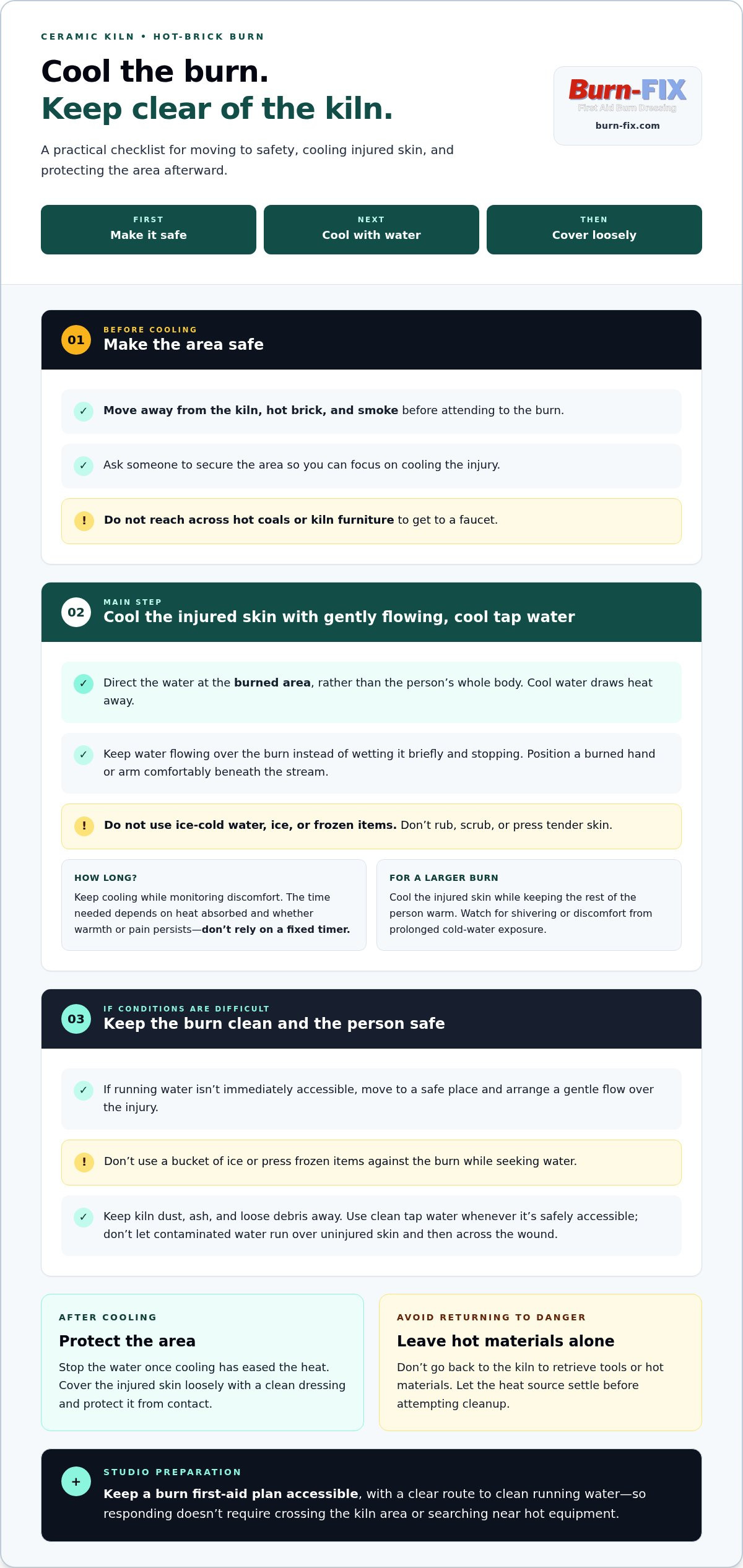
- Move away from the kiln, hot brick, and smoke before attending to the burn. Ask someone to secure the area so you can focus on cooling the injury. Don’t reach across hot coals or kiln furniture to get to a faucet.
- Place the burned skin under gently flowing, cool tap water. Direct the water at the injured area rather than the person’s whole body. Cool water draws heat away; ice-cold water can further harm injured skin.
- Keep water flowing over the burn instead of wetting it briefly and stopping. If the burn is on a hand or arm, position it comfortably beneath the stream. Don’t rub, scrub, or press the tender skin.
- Keep cooling the burn with cool running water while monitoring the person for discomfort. The time needed depends on how much heat the skin absorbed and whether warmth or pain persists. Don’t rely on a fixed timer.
- For a larger burn, cool the injured skin while keeping the rest of the person warm. Use a steady, manageable stream, and watch for shivering or discomfort from prolonged exposure to cold water.
- If running water isn’t immediately accessible, move the person to a safe place and arrange a gentle flow over the injury. Don’t use a bucket of ice or press frozen items against the burn while seeking water.
- Keep kiln dust, ash, and loose debris away from the burn while cooling. Don’t let contaminated water run across uninjured skin and then over the wound. Use clean tap water whenever it’s safely accessible.
- Once cooling has eased the heat, stop the water and protect the area from contact. Ceramic kiln hot brick burn first aid includes covering the injured skin loosely with a clean dressing. Don’t return to the kiln to retrieve tools or hot materials.
- Keep a ceramic kiln hot brick burn first aid plan accessible in the studio, along with a clear route to clean running water. Preparation helps you respond without crossing the kiln area or searching near hot equipment.
Should you remove jewelry or clothing near a kiln burn, and when should clothing be left in place?
- Move the person away from the kiln before handling clothing or jewelry. Make sure you can reach the injured area without crossing hot coals or touching a hot brick.
- Gently remove rings, watches, bracelets, and other tight items near the burn as soon as possible. Skin can swell, making jewelry harder to remove later. Don’t pull an item across burned skin.
- Take off loose clothing that isn’t stuck to the injury. Lift it away carefully, and stop if fabric catches on the skin or causes pain. Don’t rub the area with sleeves, cuffs, or gloves.
- Leave fabric in place if it’s melted, stuck, or firmly attached to the burn. Pulling it away can tear injured skin and worsen the wound. Don’t tug to test whether it will come free.
- Cut around stuck material only if you can do so without touching the burn. For example, trim a shirt sleeve while leaving the fabric attached over the injured area.
- Check for items partly hidden beneath clothing, such as a ring beneath a glove cuff or a watch under a sleeve. Move only what comes away easily; leave anything caught against burned skin.
- Keep loose fabric from brushing the injury as you uncover it. Once the area is accessible, continue cooling it under running water, then protect it with a clean, loose covering.
- Prepare clean scissors and burn first-aid supplies in an accessible kit, away from the kiln’s heat. Having them ready can help you trim loose clothing without searching near hot equipment.
What should you avoid putting on a kiln burn, such as ice, butter, or ointments?
- Use cool running water first; don’t start with ice, butter, or kitchen remedies. A hot-brick burn can leave skin tender, and improvised treatments can make the injured area harder to assess.
- Keep ice cubes and frozen packs off burned skin. Their intense cold can injure tissue further, while a pack may press against the burn or hide changes in the skin.
- Don’t spread butter, cooking oil, or grease over the wound. These substances aren’t a substitute for cooling with water and can leave a greasy layer that complicates cleaning.
- Avoid toothpaste, flour, powders, and household creams. These kitchen and bathroom products can contaminate the injury or stick to delicate skin when you try to remove them.
- Don’t apply ointment, lotion, or an antiseptic to a fresh kiln burn unless a healthcare professional directs you. Start with water, then keep the area clean and protected.
- Never rub in a product to relieve stinging. Rubbing can disturb injured skin, and a towel or cotton pad may leave fibers behind. Let water flow gently over the area instead.
- Don’t apply adhesive tape or a sticky dressing directly to the burn. Adhesive can catch on the injured surface, making removal painful and potentially damaging skin.
- Keep ash, kiln dust, and ceramic debris away from the wound. Don’t brush particles off with a dry cloth or blow on the skin, and avoid touching the area with dirty hands.
- After cooling, cover the burn loosely with a clean, non-fluffy material. If a product has already been applied, don’t scrape or scrub it off; gently rinse with clean water.
When does a kiln burn need emergency care based on burn depth, size, or location
- Call emergency services for a burn that looks deep, charred, white, leathery, or numb. A severe-looking injury needs prompt assessment even if the person reports little pain, because damaged skin may not feel normally.
- Seek urgent medical care for a burn covering a broad area, spreading across a joint, or wrapping around a limb. For example, a burn circling the wrist can affect movement and needs careful evaluation.
- Treat burns on the face, eyes, hands, feet, or genitals as urgent. These locations can affect essential functions, so don’t wait to see whether redness or pain settles before seeking medical attention.
- Get emergency help if smoke exposure accompanies the burn. Trouble breathing, persistent coughing, hoarseness, confusion, or faintness after a kiln fire is an urgent concern, even if the skin injury looks small.
- Arrange prompt care for a burn that blisters extensively, looks wet or mottled, or becomes increasingly swollen. Don’t judge severity by pain alone; appearance, location, and changes in the injury all matter.
- Seek medical assessment if the burn worsens, becomes increasingly painful, or develops spreading redness or drainage. These changes can signal a complication, particularly if the wound has contacted kiln dust or debris.
- Keep the person away from the kiln while arranging help. Tell responders how the burn happened, which body area was affected, and whether smoke was inhaled. These details help them understand the incident.
- For a small, superficial-looking burn, continue protecting it carefully and watch for changes. Keep first-aid supplies accessible near the studio exit, not beside hot equipment, so they’re ready without requiring anyone to cross a hazard.
Burn-Fix: Burn-Fix Hydrogel Burn Spray - 120ml
Burn-Fix Hydrogel Burn Spray - 120ml offers a cooling, moisture-retaining option for first- and second-degree burns after initial cooling. Use it as part of routine care for a minor burn, following the product directions and keeping the injured skin protected.
A spray can be useful when you want to apply burn-care gel without pressing a dressing against tender skin. Burn-Fix also offers the Burn-Fix 4x4 First Aid Burn Gel Dressing, Burn-Fix Burn Kit, and Burn-Fix Burn Gel - 3.5g Per Packet. Choose an option that suits the injury and your first-aid needs.
For a deep, extensive, or sensitive-area burn, seek emergency care rather than relying on a burn product. For product information, contact Burn-Fix or visit Burn-Fix online.
Make your next kiln session feel more prepared
A clear first-aid plan can make a stressful studio accident easier to manage. Keep your ceramic kiln hot brick burn first aid steps where everyone in the workspace can find them, and decide who will guide others away from heat or smoke. After an incident, identify what made the area difficult to access and adjust your studio setup before the next firing.
Preparation also means knowing what support is available for burn-care supplies. Burn-Fix offers products for first- and second-degree burns, including hydrogel spray, gel dressings, and a burn kit. Choose supplies that fit your first-aid setup, and keep emergency care as the priority for serious injuries.
If you’d like to learn more about Burn-Fix’s burn-care offerings, contact Burn-Fix. A thoughtful plan helps you return to your craft with greater confidence and care.
Frequently Asked Questions
What should you do immediately after a burn from a hot ceramic kiln brick?
Move the person away from the brick and kiln, then cool the injured skin under cool running water. Ask a bystander to secure the area without touching hot equipment, and note when the injury happened and which body part was affected. Seek urgent help for deep or extensive injuries, sensitive locations, or breathing problems after smoke exposure. This information is for general informational purposes only and doesn’t constitute medical advice, diagnosis, or treatment.
What first aid is recommended for blisters caused by a hot brick burn?
Leave an intact blister unbroken; its roof protects the tender skin underneath. Don’t puncture it with a needle or peel away loose skin. If it opens, rinse gently with clean water, leave attached skin in place, and cover it loosely with a sterile, non-stick dressing. Keep pressure and friction off the area, such as by avoiding a tight glove. Seek urgent care if blistering is extensive or affects the face, hand, or a joint.
Burn-Fix products have not been evaluated by the FDA and aren’t intended to diagnose, treat, cure, or prevent any disease. Use a product only as directed on its label. Do not exceed the recommended dose unless instructed by a healthcare provider. If you have any known allergies or sensitivities to any ingredients, do not use the product. We are not liable for any adverse effects or consequences resulting from the use of our products. By purchasing and using our products, you agree to use them at your own risk.
When should you get a tetanus booster or follow up with a healthcare professional after a burn?
Seek medical assessment if the burn worsens, becomes increasingly painful, or develops spreading redness or drainage. Get urgent care for deep, extensive, or sensitive-area burns, or if smoke exposure causes breathing trouble, persistent coughing, hoarseness, confusion, or faintness.


