


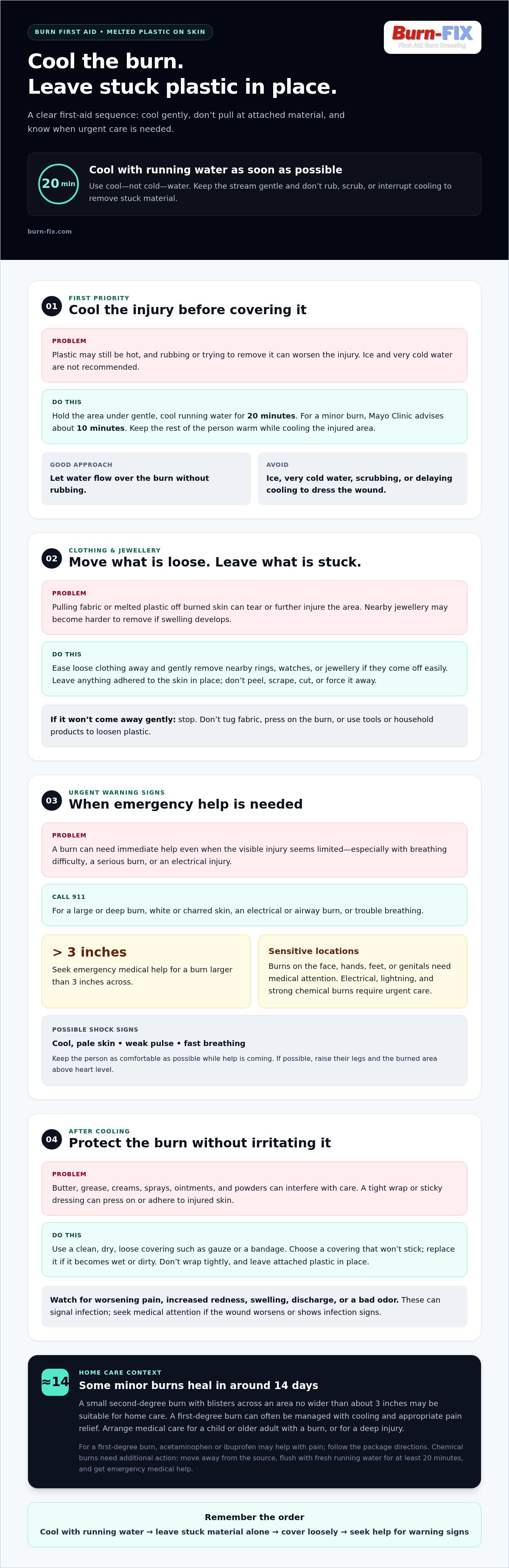
Cool the burn first; don’t pull melted plastic off the skin. If plastic is stuck to a burn, first aid begins with cool running water for 20 minutes as soon as possible. Leave anything adhered to the skin in place, and handle the injured area gently.
A burn like this can be frightening, especially when clothing or jewellery is nearby. This guide to first aid for melted plastic burns stuck to skin explains how to cool the injury, what to move or leave alone, and when to seek emergency help. You’ll also learn how to cover a cooled burn and care for it with a suitable dressing.
Key Takeaways
- Move loose clothing away from the burn and remove nearby rings or jewellery before swelling makes them harder to take off.
- Call 911 for a large or deep burn, white or charred skin, an electrical or airway burn, or trouble breathing.
- Once the burn is cooled, protect it with a clean, dry, loose covering, and avoid butter, creams, sprays, and powders.
- Learn how to choose a suitable burn dressing and recognize when home care isn’t enough.
Cooling a molten plastic or tar burn
Cool a molten plastic or tar burn under cool running water for 20 minutes as soon as possible. For a minor burn, Mayo Clinic advises running cool, not cold, water over it for about 10 minutes. The melted plastic burn stuck to skin first aid response starts with cooling, not removing the material.
-
Cool the Burn with Water
Promptly hold the burned area under cool running water. Let the water flow over the injury without rubbing or scrubbing. For example, if plastic splashes onto a forearm, position the arm so water reaches the affected skin. Don’t use ice or very cold water. Keep the stream gentle, and leave plastic stuck to the skin in place.
-
Use Running Water for Cooling
Keep cool running water over the burn for 20 minutes. For a minor burn, Mayo Clinic recommends about 10 minutes. The right melted plastic burn stuck to skin first aid approach is to cool the injured area before applying a bandage, ointment, or other product. Don’t interrupt the water to rub at stuck material.
- Keep the rest of the person warm while cooling the burned area. If the injury is on an arm or hand, support it comfortably under the running water. If the burn covers a large area, avoid exposing the rest of the body unnecessarily while continuing to cool the injury.
- After cooling, don’t apply butter, grease, creams, sprays, ointments, or powders. These can interfere with care of the burned skin. A clean, loose covering can protect the area, but it shouldn’t replace running water or be wrapped tightly around the burn.
Removing clothing and jewellery near a burn
Remove loose clothing and jewellery near the burn, but leave anything stuck to burned skin in place. Should you peel or cut melted plastic off burned skin? No. Don’t peel or cut it away. Leave the area undisturbed while you cool the burn.
-
Leave Clothing Stuck to Burned Skin
Move loose clothing away from the injury, but don’t tug fabric that has adhered to the skin. For example, if a sleeve is loose around a forearm burn, ease it back without dragging it over the burned area. If fabric sticks, stop and leave it in place. Pulling can tear injured skin and make the wound harder to protect.
-
Avoid Peeling or Cutting Off Plastic
Leave melted plastic or tar stuck to the burn; don’t peel, scrape, or cut it off. Plastic can remain hot, and pulling may worsen the injury. Keep the affected area under cool running water during the advised cooling period of 20 minutes, without rubbing the material. Don’t use tools or household products to loosen it.
- Remove rings, watches, and other jewellery near the burn as soon as you can do so easily. Nearby skin may swell, making jewellery harder to remove later. Slide a ring off an affected hand without touching the damaged skin. If it won’t come away gently, don’t force it or press on the burn.
- Check nearby clothing before moving it. Remove burned clothing only if it isn’t stuck to the skin. If soaked fabric is near a scald, move it away quickly unless it has adhered to the burn. Handle the area gently, and avoid rubbing it or spreading debris that could complicate wound care.
- Watch for signs that the injury needs urgent attention, such as charred skin or a burn caused by electricity. Keep the person still and avoid disturbing the wound while arranging emergency help. Later, increasing redness, swelling, or discharge can signal infection. Don’t let removing clothing delay care for a serious burn.
When to seek emergency care
For a first-degree burn, acetaminophen or ibuprofen may help with pain; follow the package directions. Chemical burns need additional action: move away from the source, flush with fresh running water for at least 20 minutes, and get emergency medical help. If fumes cause difficulty breathing, call 911.
- Call 911 for a large or deep burn, white or charred skin, an electrical burn, or an airway burn. Difficulty breathing after a burn is also an emergency. Don’t wait to see whether severe symptoms settle; get emergency help immediately.
- Seek emergency medical help for a burn larger than 3 inches across. Burns on the face, hands, feet, or genitals also need medical attention. A burn caused by electricity, lightning, or strong chemicals requires urgent care, even if the visible injury seems limited.
- Watch for signs of shock after a serious burn. Cool, pale skin, a weak pulse, or fast breathing can be warning signs. If someone shows signs of shock, keep them as comfortable as possible while help is coming. If possible, raise their legs and the burned area above heart level while help is coming.
- For a small second-degree burn with blisters across an area no wider than about 3 inches, home care may be suitable. A first-degree burn can often be managed with cooling and appropriate pain relief. Don’t apply butter, grease, or powders to either injury.
- Protect a major burn with a loose, clean, dry cloth or sterile gauze while waiting for medical help. For a smaller burn, use a clean covering and watch for worsening pain, increased redness, swelling, discharge, or a bad odor, which can signal infection.
- Arrange medical care for a child or older adult with a burn, or for a deep injury. Minor burns often heal in around 14 days. If the wound worsens or shows infection signs during healing, seek medical attention rather than relying on home care alone.
Burn treatment and dressings
What should you avoid putting on a melted plastic burn? Don’t apply butter, grease, creams, sprays, ointments, or powders. After cooling, protect the burned skin with a clean, loose dressing.
- After cooling, keep the area clean and handle it gently. If plastic or tar remains attached, don’t pull it away while dressing the burn. Cover the injury loosely with clean, dry gauze or a bandage. A tight wrap can press on tender skin and restrict room for swelling.
- Choose a clean covering that won’t stick to the wound. Avoid plasters and sticky dressings over burns. For a small, cooled burn, sterile gauze can shield the skin from contact and dirt. Keep the dressing loose, and replace it if it becomes wet or dirty.
- Don’t put butter, grease, creams, sprays, ointments, or powders on the burn. These can interfere with appropriate wound care. Don’t place ice directly on the injury either. For burns and scalds, cooling with running water comes before applying a dressing or considering other products.
- Check the covered burn during daily care. Gently wash burned skin with liquid soap, then apply a clean bandage. Change burn bandages daily. If a blister breaks, clean it gently with water and ask a doctor about antibiotic ointment before covering it with sterile gauze.
- For a small, cooled burn that’s suitable for a dressing, the Burn-Fix 4x4 First Aid Burn Gel Dressing is an option. Keep serious burns loosely covered with clean, dry material while arranging emergency help. For a suitable minor burn, choose the Burn-Fix 4x4 First Aid Burn Gel Dressing as a burn-care dressing.
Burn-Fix: BurnFix Hydrogel Burn Spray - 120ml
BurnFix Hydrogel Burn Spray - 120ml is a hydrogel option for minor first- and second-degree burns, scalds, and sunburn. After cooling the injury, it can be part of home burn care when the burn is suitable for first aid. Don’t spray over plastic still stuck to skin, and don’t use a product instead of emergency care for a large, deep, or otherwise serious burn.
For a cooled, minor burn, choose a burn-care product that suits the injury and follow its directions. Burn-Fix also offers the Burn-FIX 4x4 First Aid Burn Gel Dressing for covering a burn. Keep emergency signs in mind, and seek urgent help when the burn needs medical attention. Contact Burn-Fix to learn more about its burn-care products.
Be Ready for the Next First-Aid Moment
Knowing the right first aid for a melted plastic burn stuck to skin can help you respond calmly, and having suitable supplies ready can make the next step easier. Keep burn-care items together so you can find a clean dressing quickly. A product isn’t a substitute for emergency care when a burn is severe.
Burn-Fix offers the BurnFix Hydrogel Burn Spray - 120ml, the Burn-FIX 4x4 First Aid Burn Gel Dressing, and the BurnFix Burn Kit for burn-care preparedness. Choose supplies that fit your home first-aid needs, and follow product directions when treating an appropriate minor burn.
For information about these burn-care options, contact Burn-Fix for help. A little preparation can help you take the next step with a steadier hand.
Frequently Asked Questions
What should you do immediately if melted plastic is stuck to a skin burn?
Put the burned area under cool running water for 20 minutes as soon as possible, and leave plastic attached to the skin. Don’t scrape, peel, or tug it, even if the edges look loose. If the injury is on an arm or leg, position it comfortably so water flows over the burn. Keep the person warm while cooling the affected area.
When should you call 911 or seek emergency care for a melted plastic burn?
Call 911 for a large or deep burn, white or charred skin, an electrical burn, an airway burn, or difficulty breathing. Seek emergency help for burns caused by lightning or strong chemicals, too. If the person becomes cool and pale, breathes rapidly, or has a weak pulse, treat these as possible shock signs while waiting for help.
Which melted plastic burns need urgent medical evaluation based on size, depth, or location?
Seek emergency help for a burn larger than 3 inches, or one that appears deep, white, or charred. Burns on the face, hands, feet, or genitals also need medical attention. A small second-degree burn with blisters across an area no wider than about 3 inches may be suitable for home care, but location and depth can change the urgency.
How should you cover and care for a melted plastic burn after cooling it?
Cover the cooled injury loosely with clean, dry gauze or a clean cloth, and avoid sticky plasters directly over the burn. Leave any attached plastic undisturbed beneath the covering. For daily care, gently wash the burned skin with liquid soap and use a clean bandage. If a blister breaks, clean it gently with water and ask a doctor about antibiotic ointment.
What are signs of infection or complications after a melted plastic burn?
Watch for increasing redness, swelling, discharge, a bad odor, or pain that worsens rather than settles. These changes need medical attention, especially if the burn is becoming harder to protect or care for. Cool, pale skin, a weak pulse, or fast breathing can signal shock after a serious injury. Call 911 if these signs appear.


