


You are preparing dinner when a splash of boiling water hits your hand, and suddenly, the kitchen doesn't feel like home anymore. The throbbing pain is immediate. As you rush to the sink, your mind likely flashes through the fear of blistering, permanent scarring, and the inevitable sting of a dry bandage sticking to raw skin tomorrow. It is a moment of high stress that requires more than just a cold tap. We understand that a standard adhesive strip simply isn't enough for a thermal injury; it often traps heat instead of releasing it. This is where a professional-grade burn gel dressing changes the entire recovery process.
In this guide, you will discover how advanced hydrogel technology does more than just cover a wound. It actively extracts heat from deep within the tissue to stop pain in its tracks and prevent long-term skin damage. We will explain why moisture-retaining technology is the secret to faster, scar-free healing. You will also learn how to ensure your next bandage change is completely painless, allowing you to move from a state of crisis to comfort with confidence. This is the professional standard your home first aid kit deserves.
Key Takeaways
- Understand how hydrogel technology acts as a thermal "heat sink," pulling destructive energy away from your skin to stop a burn from progressing.
- Learn why a professional burn gel dressing is significantly safer than using ice or butter, which can inadvertently trap heat or damage delicate tissue.
- Discover the science of moist wound healing and how maintaining the right environment prevents scabbing and reduces the risk of long-term scarring.
- Get a step-by-step guide on how to apply and remove dressings without pain, ensuring you never damage healing skin during a bandage change.
- Identify the essential items for your home safety kit to ensure you can provide immediate care during the critical first minutes of an injury.
What is a Hydrogel Burn Dressing? Beyond the Basic Bandage
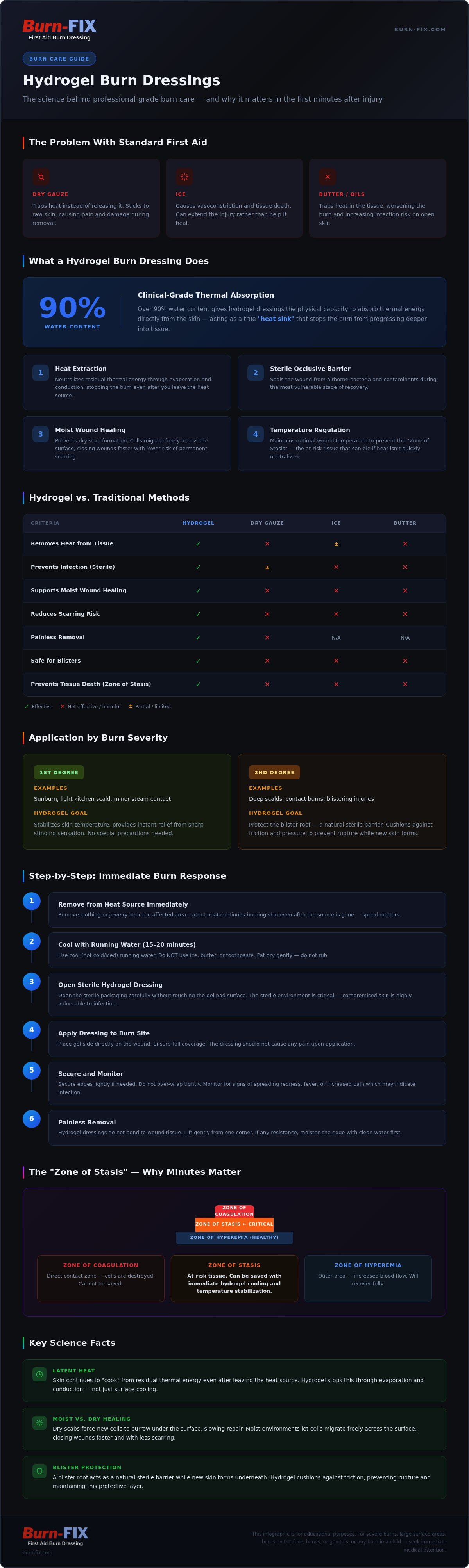
A burn gel dressing is a sterile, water-based pad engineered to provide immediate cooling and moist healing for minor injuries. Unlike a dry gauze that simply covers a wound, this technology functions as a "heat sink." Because these dressings often consist of over 90% water, they possess the physical capacity to absorb thermal energy directly from your skin. This process neutralizes the heat before it can travel deeper into the tissue, effectively stopping the burn in its tracks. It is a transformative approach to first aid that prioritizes thermal management over simple coverage.
The core of this technology lies in its specialized water-saturated polymers. These polymers create a soothing, protective barrier that mimics the skin's natural moisture levels while shielding the site from the outside world. This is what medical professionals call an "occlusive dressing." It seals the wound off from the environment, protecting raw, compromised skin from airborne contaminants and bacteria. By maintaining this sterile environment, you significantly reduce the risk of secondary infections during the most vulnerable stages of recovery.
The Anatomy of a Sterile Burn Dressing
The structure of a Hydrogel dressing is designed to maintain a 90% moisture environment, which is the clinical ideal for cellular repair. This high water content is held within a stable matrix that won't leak or run, ensuring the moisture stays exactly where it's needed. Sterile packaging is a non-negotiable part of this anatomy. When skin is burned, its natural defense system is broken, making it an easy target for microbes. Using a sterile, individually wrapped pad ensures that you aren't introducing new pathogens into a fresh wound. These dressings come in various formats, such as the Burn-FIX 4x4 First Aid Burn Gel Dressing, which is specifically designed to provide full coverage for larger surface area injuries.
First-Degree vs. Second-Degree Burn Application
The application of hydrogel changes slightly depending on the severity of the injury. For first-degree burns, such as a painful sunburn or a light kitchen scald, the gel stabilizes the skin temperature and provides instant relief from that sharp, stinging sensation. When dealing with a second-degree burn, the goal shifts toward protecting the delicate "roof" of a blister. Keeping this blister intact is vital because it acts as a natural sterile barrier while the new skin forms underneath. The gel cushions the site, preventing the blister from rupturing due to friction or pressure. Hydrogel technology is the gold standard for kitchen scalds because it simultaneously removes destructive heat while providing an immediate, cooling anesthetic effect without the risks associated with ice.
The Science of Moist Wound Healing: How Hydrogel Preserves Skin
Scabs are often misunderstood as a sign of progress. In reality, a dry scab acts as a physical barrier that forces new skin cells to burrow deep underneath to find moisture, which slows repair and increases the likelihood of a permanent scar. Using a burn gel dressing creates a moist environment where cells can migrate across the surface with ease. This "moist wound healing" approach mimics the natural function of your skin barrier, shielding the dermis while it recovers from the inside out. It is the difference between a wound that struggles to close and one that repairs itself efficiently.
Proper thermoregulation is another critical factor in effective recovery. While ice can cause vasoconstriction and tissue death, advanced hydrogel dressings maintain the wound at an optimal temperature for cellular repair. This prevents the "Zone of Stasis," a medical term for the area around a burn that is at risk of dying if the heat isn't neutralized. By stabilizing the temperature, you keep this tissue alive and prevent the injury from expanding into deeper layers of the skin. This intervention is vital in the minutes following an accident.
Stopping the Burn Progression
Latent heat is the silent enemy of a fresh burn. Even after you move away from a stove or steam, the skin continues to "cook" because the thermal energy remains trapped in the tissue. Hydrogel stops this progression by neutralizing residual heat through evaporation and conduction. It also plays a vital role in reducing the loss of wound exudate. By keeping these natural fluids on-site, the dressing ensures the body’s own healing proteins stay exactly where they are needed most. This immediate stabilization is why having a Burn-FIX 4x4 First Aid Burn Gel Dressing ready in your kitchen can prevent a minor scald from becoming a major injury.
Reducing Blister Formation and Pain
Blisters are the body’s desperate attempt to cool itself, but they are often painful and prone to infection. Immediate application of a hydrogel pad provides the rapid cooling required to prevent these fluid-filled pockets from forming in the first place. If a blister has already appeared, the gel acts as a soft cushion to prevent accidental rupture during movement. Beyond physical protection, the occlusive nature of the dressing seals off exposed nerve endings from the air. Since air hitting raw nerves is the primary source of throbbing burn pain, this seal provides near-instant relief, allowing the body to shift its energy from pain response to tissue regeneration.
Hydrogel vs. Traditional Methods: Why Ice and Butter Fail
When an accident happens in the kitchen, the instinct to reach for the freezer or the pantry is strong. Old-fashioned remedies like ice cubes or butter have been passed down for generations, yet modern medical science reveals these "cures" often do more harm than good. A professional burn gel dressing provides a controlled, safe alternative that addresses the injury without causing secondary trauma. While traditional methods focus on masking symptoms, hydrogel focuses on preserving the integrity of your skin.
The "Butter Myth" is particularly dangerous because fats and oils create an occlusive seal that works against you. Butter traps the residual heat inside the dermis, effectively continuing the "cooking" process long after the initial contact. Additionally, food products are not sterile. Applying them to a fresh wound introduces bacteria, which significantly increases the risk of infection. Water-based gels are superior because they allow for thermal exchange while maintaining a sterile environment.
The Dangers of Extreme Cold
Using ice on a burn is a common mistake that leads to the "Ice Trap." Damaged skin cells are incredibly fragile. Extreme cold causes immediate vasoconstriction, which is the narrowing of blood vessels. This cuts off the vital blood flow required for cellular repair and can lead to localized tissue death or even frostbite on top of the burn. Ice numbs the pain but kills the tissue; hydrogel stops the pain by saving the tissue. A cool, room-temperature burn gel dressing acts as a gentle thermal regulator, lowering the skin's temperature gradually and safely without shocking the system.
Why Ointments and Creams Can Wait
It's a common urge to apply petroleum jelly or antibiotic ointments immediately, but these should wait. During the first hour of a burn, the skin needs to "breathe" to release latent heat. Heavy, oil-based creams create a thick barrier that keeps that heat trapped against the raw nerves. Hydrogel is unique because its high water content provides the necessary moisture while still allowing the wound to stabilize. Once the initial heat is neutralized and the skin has stabilized, you can safely transition to long-term healing solutions like a burn relief spray to maintain comfort during the recovery phase. Clinical observations consistently show that skin kept in a moist, regulated environment heals significantly faster than skin left to air-dry and scab, as the latter often results in deeper scarring and slower cellular migration.
Application and Painless Removal: A Step-by-Step Recovery Guide
The fear of removing a bandage is often worse than the injury itself. Traditional gauze can bond to raw tissue, causing significant pain and re-opening the wound during removal. A professional burn gel dressing eliminates this trauma. Because it is non-adhesive and high in moisture, it lifts away cleanly without disturbing the delicate new skin forming underneath. This ensures your recovery remains a steady path toward healing rather than a cycle of repeated injury.
Initial preparation is the foundation of effective care. Start by irrigating the site with cool, running water for several minutes to stabilize the temperature. Once the area is clean, apply the 4x4 pad directly over the injury. It’s important to cover not just the visible burn but also the "halo" of heat surrounding it, as this peripheral tissue is often still at risk. Secure the dressing with a loose layer of gauze or a self-stick wrap. Avoid applying restrictive pressure; the goal is to keep the gel in contact with the skin, not to compress the site.
Step-by-Step Application for Home Burns
Maintaining a sterile environment is your first priority. Wash your hands thoroughly or use sterile gloves before handling the dressing to prevent introducing bacteria into the wound bed. If you are applying a Burn-FIX 4x4 First Aid Burn Gel Dressing to a flat area like the forearm or thigh, simply lay the pad flat and ensure it makes full contact with the skin. For injuries on fingers or joints, wrap the dressing loosely around the digit. This protects the site while allowing for the natural movement of the joint, preventing stiffness during the recovery process.
When and How to Change Your Dressing
You will need to monitor the dressing to determine when its moisture has been "spent." As the hydrogel extracts heat and provides hydration, the pad may become thinner or slightly discolored. During the first 24 to 48 hours, we recommend changing the dressing at least once a day to maintain maximum cooling. As the healing progresses, you can extend the time between changes. Always inspect the area for signs of infection, such as spreading redness, an unusual odor, or increased swelling. To ensure you are always prepared for these critical first steps, keep a Burn-FIX 4x4 First Aid Burn Gel Dressing in your home safety kit.
Essential First Aid: Why Burn-Fix Belongs in Your Kitchen and Travel Kit
The first sixty minutes after a thermal injury are known as the "Golden Hour" of burn care. During this critical window, the speed of your response determines whether a burn remains a surface-level irritation or progresses into deep tissue damage. Having a professional burn gel dressing within reach allows you to intervene immediately, neutralizing the heat source before it can cause permanent scarring. Preparation is the bridge between a minor accident and a major medical crisis.
In the kitchen, hazards are frequent and unpredictable. Sizzling grease splashes, scalding steam from a boiling pot, and direct contact with hot oven racks all require instant cooling to stop the "cooking" of the dermis. Portable hydrogel solutions are equally vital for travel and camping. Campfire accidents and severe sunburns often happen far from professional medical facilities, making a reliable cooling agent a necessity for any backpack or glove box. The Burn-Fix advantage lies in our doctor-recommended reliability, providing a veteran solution that families can trust when seconds count.
Building Your Home Emergency Burn Kit
Every kitchen drawer needs at least one 4x4 sterile dressing for a rapid response to larger scalds. These pads provide the surface area needed to cover a significant spill on a forearm or thigh. For smaller, localized accidents like a burnt fingertip from a stovetop, BurnFix Burn Gel packets offer quick, targeted relief that fits in a pocket. By combining the BurnFix Hydrogel Burn Spray with our 4x4 dressings, you create a tiered defense system. This ensures you have the right tool for everything from widespread sunburns to intense, localized thermal contact. A burn gel dressing is the most effective way to manage these injuries in the home environment.
Safe for the Whole Family
Hydrogel is the safest option for a child's sensitive skin. Unlike many medicated creams that contain harsh chemicals or active drugs, our water-based formula is non-toxic and gentle. This cooling sensation does more than just heal; it significantly reduces "first aid anxiety" in children. When a child feels the immediate transition from throbbing pain to cool comfort, the panic of the injury subsides. This makes the rest of the treatment process much easier for both the parent and the child. It's a compassionate way to handle a stressful moment with professional results. Stock your first aid kit with Burn-Fix hydrogel essentials today.
Secure Your Home with Professional Thermal Care
A minor kitchen accident or a painful sunburn shouldn't dictate the health of your skin for years to come. By choosing a burn gel dressing, you are moving beyond simple first aid and adopting a clinical standard of thermal management. You've learned that extracting heat instantly is the only way to stop a burn from progressing, and that maintaining a moist environment is the key to scar-free recovery. This technology replaces dangerous myths like ice or butter with a doctor-recommended solution that prioritizes both comfort and long-term tissue health.
Your family deserves the protection of a "Reliable Specialist" in every first aid kit. Whether you are treating a child’s sensitive skin or managing a grease splash, having the right tools on hand ensures that the "Golden Hour" of recovery is used to its full potential. Don't wait for the next emergency to realize your kit is incomplete. Equip your home with professional-grade Burn-Fix Hydrogel Dressings and experience the peace of mind that comes with instant cooling and moisture-retaining technology. You have the power to turn a moment of pain into a journey of fast, safe healing.
Frequently Asked Questions
Can I leave a hydrogel dressing on overnight?
Yes, leaving a hydrogel dressing on overnight is recommended for continuous recovery. It provides a steady cooling effect that prevents the injury from progressing while you sleep. You should secure the dressing loosely with a clean gauze wrap to ensure it stays in place without adding pressure. If the pad feels dry in the morning, it has successfully transferred its moisture to your skin and is ready for a fresh application.
Will a hydrogel burn dressing prevent my burn from blistering?
Yes, applying a burn gel dressing immediately after an injury can prevent or minimize the formation of blisters. Blisters are the body's response to trapped heat within the dermis. By using a water-based hydrogel, you extract that thermal energy before it can cause the fluid-filled pockets to develop. This rapid intervention stabilizes the skin temperature and protects the underlying tissue layers from further damage during the critical first hour of care.
Is hydrogel better than Neosporin for a new burn?
Hydrogel is significantly better than Neosporin for a fresh burn because it doesn't trap heat. Ointments like Neosporin are petroleum-based, which creates a thick seal that keeps the "cooking" process going. Hydrogel is water-based and allows the wound to breathe while actively cooling the site. You should wait until the heat has been fully neutralized and the skin has stabilized before transitioning to antibiotic creams or long-term healing ointments.
How do I stop a burn dressing from sticking to my skin?
You stop a dressing from sticking by choosing a moisture-saturated burn gel dressing instead of dry gauze. Traditional bandages often bond to the raw wound bed as they absorb fluids and dry out. Because a hydrogel pad is composed of over 90% water, it creates a non-adhesive barrier that stays moist. This ensures that when it's time for a change, the dressing lifts away cleanly without re-opening the wound or causing unnecessary pain.
Can I use hydrogel dressings on children?
Yes, hydrogel dressings are one of the safest first aid options for children. Our formula is non-toxic, drug-free, and specifically designed to be gentle on sensitive skin. Beyond the physical healing, the instant cooling sensation is incredibly effective at reducing a child's anxiety after an accident. It stops the throbbing pain immediately, which helps the child calm down so you can finish the treatment process without a struggle.
What happens if the hydrogel dressing dries out?
If a dressing dries out, it loses its effectiveness as a "heat sink" and its ability to provide a moist healing environment. You'll notice the pad becomes thinner or feels less cool to the touch. This is a clear sign that it's time for a fresh dressing change. If you aren't ready to change the pad yet, you can use BurnFix Hydrogel Burn Spray to temporarily re-moisten the area until you can apply a new sterile dressing.
Should I use a hydrogel dressing on a sunburn?
Yes, you should absolutely use hydrogel on a sunburn, especially for localized areas that feel particularly hot or painful. A severe sunburn is a radiation burn that continues to damage the skin even after you go indoors. Applying a hydrogel pad or spray stops this progression by rehydrating the scorched tissue and pulling the residual heat away from the surface. It provides instant relief and helps prevent the peeling and scarring often associated with deep sun damage.
When should I stop using hydrogel and see a doctor?
You should stop home treatment and see a doctor if the burn appears white, charred, or feels numb, as these are signs of a more serious injury. While hydrogel is excellent for 1st and 2nd-degree burns, it isn't intended for deep tissue damage. Seek help if you notice spreading redness, a foul odor, or if you develop a fever. Always consult a professional if the burn covers a large area of the body or involves the face.


