


Reaching for an ice cube is a common reflex when you touch a hot pan, but that freezing sensation often does more harm than good. While it feels like the right move, the debate of hydrogel vs ice for burns has a clear medical winner. Extreme cold constricts blood flow and can cause secondary tissue damage, effectively "frostbiting" an already fragile wound. You need relief that stops the heat without freezing the skin.
It is natural to feel a sense of urgency when a burn starts to sting and the fear of blistering sets in. You want the pain to stop now, and you want to protect your skin from permanent damage. This article explains why medical professionals warn against ice and how hydrogel provides a safer, faster way to stabilize the injury. We will look at the science of heat extraction, compare the most common home remedies, and provide a clear set of instructions to help you manage first and second-degree burns with professional-grade confidence.
Key Takeaways
- Avoid thermal shock caused by ice; it constricts blood flow and can lead to secondary tissue damage or frostbite.
- Compare hydrogel vs ice for burns to see how a water-based matrix provides safer, more consistent cooling than freezing temperatures.
- Master the "First 60 Seconds" rule to neutralize heat immediately and reduce your risk of painful blistering or permanent scarring.
- Protect your skin with non-stick dressings that shield the wound from contaminants without causing trauma during removal.
- Learn why a dedicated burn kit is more effective than standard first-aid supplies for managing common household injuries.
The Ice Instinct: Why Our First Reaction to Burns is Wrong
The sudden, sharp sting of a kitchen burn or a hot engine part triggers an immediate survival response. Your brain demands a quick fix to stop the fire. Naturally, you reach for the coldest thing in the house: an ice cube. It feels like the logical solution because it provides an instant, numbing sensation that seems to kill the pain. However, this "ice instinct" is actually a dangerous misconception that can turn a manageable injury into a complex wound.
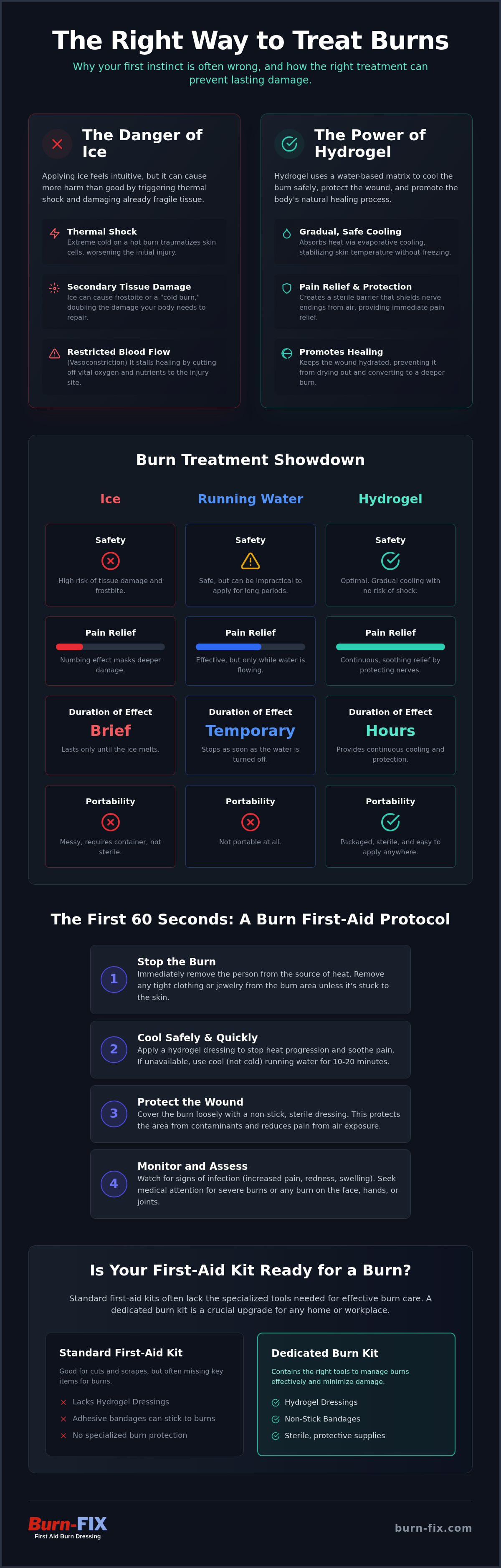
Applying ice causes a phenomenon known as thermal shock. When you move from extreme heat to extreme cold, the sudden temperature drop traumatizes the skin cells further. Medical experts agree that cooling must be a gradual process to be effective. When searching for reliable first aid for burns, you'll find that freezing the tissue is never the recommendation. In fact, ice can actually cause a "cold burn" or frostbite on top of the original heat injury, doubling the damage your body has to repair.
The Danger of Vasoconstriction
Ice works by forcing your body into a state of defense. Vasoconstriction is the immediate narrowing of blood vessels that occurs when skin is exposed to freezing temperatures. While this might temporarily dull the pain, it creates a serious problem for the healing process. Restricted blood flow means that vital oxygen and nutrients cannot reach the site of the injury. Since your skin needs these resources to rebuild damaged layers, ice effectively stalls the recovery clock. In the context of burn injuries, vasoconstriction is the body’s way of cutting off circulation to the affected area, which can lead to deeper tissue death.
How Ice Can Lead to Secondary Tissue Damage
The damage from ice goes deeper than just surface-level blood flow. When ice touches a burn, it can cause microscopic ice crystals to form within the skin cells. These crystals act like tiny shards of glass, piercing cell walls and causing permanent structural damage. The numbness you feel from ice is a form of false relief. It masks the sensation of the burn, but it also hides the pain of the cold-induced trauma happening underneath.
This is where the choice of hydrogel vs ice for burns becomes so important. While ice freezes the tissue in place, hydrogel works through a process of heat transfer. It gently draws the heat out of the wound and into the gel matrix. This allows the skin to cool down to a safe temperature without the risk of freezing or further cellular destruction. Understanding the difference between hydrogel vs ice for burns helps you choose a path that supports the body's natural healing rather than fighting against it.
The Science of Hydrogel: How It Heals Without Freezing
Hydrogel is a specialized water-based matrix designed to mimic the natural moisture levels of human skin. While ice attempts to freeze the injury, hydrogel utilizes a sophisticated heat transfer process. It acts as a thermal magnet, absorbing excess heat from the deeper layers of the wound and dispersing it throughout the gel. This cooling is gradual and safe, which prevents the thermal shock that often follows ice application. By stabilizing the temperature of the tissue, hydrogel helps stop "stasis," a dangerous state where skin cells continue to die even after the heat source is removed. This innovative wound healing technology ensures that a minor injury doesn't progress into a more severe, deep-tissue wound.
When you look at the choice of hydrogel vs ice for burns, the physiological benefits of the gel become clear. Beyond just cooling, the gel creates a physical barrier. This transparent shield protects the raw nerve endings from air currents, which is the primary cause of that persistent, throbbing burn pain. It also prevents airborne contaminants and bacteria from entering the wound, providing a sterile environment for the body to begin its repair work immediately.
Evaporative Cooling vs. Conductive Freezing
Ice relies on conductive freezing, which is often too aggressive and unpredictable for traumatized tissue. In contrast, hydrogel uses controlled evaporative cooling. This method provides a consistent temperature drop that can last for several hours, far exceeding the brief relief provided by running water or melting ice. Because the gel remains in contact with the skin, it offers continuous relief during transport or while you're focused on calming a distressed family member. It provides the "calm in the crisis" by maintaining a steady, soothing temperature without the risk of frostbite.
Protecting the Skin Barrier
One of the greatest risks to a fresh burn is dehydration. When skin loses its moisture, the wound can dry out, causing the injury to "convert" into a deeper, more serious burn. Hydrogel prevents this by keeping the area intensely hydrated. This moisture retention is the main reason why hydrogel dressings significantly reduce the likelihood of painful blistering and future scarring. It's a far safer and more effective option than unsterile home remedies like butter or toothpaste, which can actually trap heat and introduce infection. Keeping a Burn-Fix 4x4 First Aid Burn Gel Dressing in your kitchen ensures you can provide this professional-grade protection the moment an accident happens.
Hydrogel vs. Ice vs. Running Water: A Comparative Analysis
When a burn occurs, three options usually come to mind: grabbing ice, standing under a tap, or reaching for a specialized dressing. Each method offers a different level of effectiveness and safety. While ice provides a quick numbing effect, its dwell time is dangerously short because the secondary damage begins almost instantly. Running water is the standard clinical recommendation, but it requires a constant, clean source to be effective. Hydrogel dressings bridge this gap by providing portable, sterile cooling that lasts for hours without the logistical hurdles of a kitchen sink.
Analyzing the choice of hydrogel vs ice for burns reveals that while ice is convenient, it is biologically counterproductive. Tap water is safer than ice but lacks the longevity of a gel. A sterile hydrogel dressing provides a consistent, protective environment that prevents cross-contamination, which is a significant risk when using household ice or potentially tainted tap water. This makes the gel a superior choice for maintaining wound hygiene during the critical first hour of care.
The Limitations of Running Water
Current medical guidelines suggest twenty minutes of cool running water to stop the burning process. In a real-world crisis, this is often impractical. Keeping a crying toddler's limb under a faucet for that long is nearly impossible and creates a significant mess. There is also the hidden risk of hypothermia. If the burn covers a large surface area, cold water can lower the core body temperature too quickly, leading to further medical complications. Hydrogel provides the same cooling benefits as water but without the "drowning" sensation or the risk of chilling the patient's entire body.
Why Hydrogel Wins for Second-Degree Burns
Second-degree burns often involve blisters and exposed tissue. This makes the choice of hydrogel vs ice for burns even more critical. Using a product like the Burn-FIX 4x4 First Aid Burn Gel Dressing is essential here because it is specifically designed to be non-stick. If you apply a standard dry gauze to a blistered burn, the fibers will fuse to the skin as it dries. Removing that bandage later is excruciating and can tear away new skin cells, setting back the healing process by days. Hydrogel keeps the wound soft and moist. This not only reduces pain but also makes it much easier for a doctor to evaluate the injury without causing further trauma to the site.
Step-by-Step: How to Treat a Minor Burn Without Ice
The moment a burn occurs, the clock starts. Heat doesn't just stop damaging your tissue the second you pull away from the stove; it continues to "cook" the deeper layers of your skin. This is why the "First 60 Seconds" rule is vital. You must neutralize that residual heat immediately to prevent a superficial first-degree injury from progressing into a more painful second-degree wound. When considering hydrogel vs ice for burns during these first few seconds, remember that ice causes a shock to the system, while hydrogel provides the controlled cooling your body needs.
Before you begin treatment, quickly assess the severity of the injury. First-degree burns are red, dry, and painful, much like a typical sunburn. Second-degree burns involve the top two layers of skin and often feature blisters or a "wet" appearance. If the skin looks white, charred, or leathery, or if the area is surprisingly painless, you are likely dealing with a third-degree burn. These are medical emergencies. Never apply hydrogel or any home remedy to a third-degree burn; instead, cover the area loosely and seek immediate professional help.
Immediate Intervention Steps
- Step 1: Clear the area. Move away from the heat source immediately. Carefully remove any jewelry, watches, or tight clothing near the site, as burns can cause rapid swelling that makes these items dangerous.
- Step 2: Neutralize the heat. Apply a cooling agent like BurnFix Hydrogel Burn Spray - 120ml immediately. Sprays are ideal for the initial moments because they allow you to cover the wound without having to touch the sensitive, traumatized skin. If you are using a packet, apply a thick layer of gel without rubbing it in.
- Step 3: Secure the environment. Cover the area with a sterile, non-stick dressing to maintain a moist environment. This shields raw nerve endings from air, which is the primary cause of persistent stinging.
Having the right tools ready can make all the difference in a household crisis. You can ensure your family is prepared by keeping a BurnFix Burn Kit in your kitchen or car first-aid station.
Post-Burn Care and Monitoring
Effective recovery requires consistent monitoring during the first 48 hours. You should change your hydrogel dressing at least once a day, or more frequently if the gel has been absorbed and the wound feels dry. During each change, look for "red flags" of infection, such as spreading redness, increased swelling, or foul-smelling discharge. Keeping your body hydrated and getting extra rest will also support your skin's natural ability to regenerate. By choosing the right method in the hydrogel vs ice for burns debate, you have already given your body the best possible start toward a scar-free recovery.
Essential First-Aid: Why Your Kit Needs Burn-Fix Hydrogel
Accidents don't wait for a convenient time. When a hot liquid spills or a hand touches a stove, the panic is real. Most standard first-aid kits are designed for cuts and scrapes, leaving you unprepared for the unique demands of a thermal injury. In the critical debate of hydrogel vs ice for burns, having the right solution on hand means the difference between a quick recovery and a permanent scar. Professional-grade care is no longer restricted to hospitals. You can now have the same doctor-recommended formulas in your own home to provide instant relief the moment it's needed.
A dedicated burn kit is superior to a generic box because it prioritizes temperature regulation and moisture retention. While a standard bandage might stick to a wound, hydrogel products are designed to shield and soothe without causing further trauma. This versatility makes hydrogel essential for everything from minor kitchen scalds to painful sunburns after a day at the beach. It acts as a reliable specialist in your cabinet, ready to neutralize pain and protect fragile skin.
Burn-Fix Product Highlights
Every household has different needs, which is why a variety of application methods is essential for a complete safety plan. The BurnFix Hydrogel Burn Spray - 120ml is the "first responder" for the kitchen. It allows for rapid coverage of a large area without needing to touch the painful site. For more significant scalds that require prolonged cooling, the Burn-FIX 4x4 First Aid Burn Gel Dressing provides a thick, protective matrix that stays in place. If you're a frequent hiker or camper, the BurnFix Burn Gel - 3.5g Per Packet fits easily into a pocket or backpack, ensuring you're never without protection during an outdoor emergency.
Building Your Home Burn Safety Station
Speed is the most important factor in burn care. You should store your supplies where accidents are most likely to happen. While the bathroom cabinet is a traditional choice, the kitchen is where most thermal injuries occur. Keeping your hydrogel spray near the stove or in a high-traffic pantry ensures you can stop the burning process in seconds rather than minutes. This is especially vital for homes with children, as their skin is thinner and more susceptible to deep damage from high temperatures. Using doctor-recommended hydrogel provides a layer of safety that generic remedies simply cannot match.
Choosing hydrogel vs ice for burns is a decision that protects your family's long-term skin health. Don't wait for a crisis to realize your first-aid kit is lacking. You can Equip your kitchen with the Burn-Fix Emergency Burn Kit today and gain the peace of mind that comes from being prepared for anything.
Prepare Your Home for a Safer Recovery
Choosing between hydrogel vs ice for burns is a decision that impacts how quickly and effectively your skin heals. You've learned that while ice offers a temporary numb feeling, it often hides secondary damage and stalls the body's natural repair process. True relief comes from stabilizing the wound temperature and maintaining a sterile, moisture-rich environment. By switching to professional-grade hydrogel, you provide your skin with the hydration it needs to prevent deep-tissue conversion and minimize the risk of scarring.
Burn-Fix provides doctor-recommended formulas for 1st and 2nd-degree burns, offering a safe, non-toxic solution that delivers instant cooling and soothing action. Having these tools ready in your kitchen or car allows you to handle a minor crisis with the confidence of a first responder. Browse the Burn-Fix Collection for Fast Pain Relief and ensure your family has access to the very best in modern burn care. You can't always prevent accidents, but you can always be prepared to treat them with compassion and expertise.
Frequently Asked Questions
Can I use an ice pack if I wrap it in a towel first?
No, you should avoid ice packs even when wrapped in a towel. The extreme temperature still poses a risk of vasoconstriction, which restricts blood flow to the traumatized area. This slows down the healing process and can lead to secondary tissue damage. In the debate of hydrogel vs ice for burns, hydrogel is the safer choice because it cools the skin through gentle heat transfer rather than conductive freezing.
How long should I leave a hydrogel dressing on a burn?
You can typically leave a hydrogel dressing on for up to 24 hours. However, you should check the wound periodically to ensure the gel hasn't been fully absorbed. If the dressing feels dry or the pain begins to return, it's time for a fresh application. Maintaining a moisture-rich environment is the key to preventing the burn from deepening into a more serious injury during the first day of recovery.
Is hydrogel safe to use on children and infants?
Yes, doctor-recommended hydrogel is safe for children and infants. Because it's non-toxic and provides instant cooling without the risk of frostbite, it's an ideal addition to a family first-aid kit. It provides a soothing sensation that helps calm a distressed child quickly. Always ensure you're treating a first or second-degree burn, and seek medical advice for any injury involving a young child or infant.
What is the difference between aloe vera and hydrogel for burns?
Aloe vera is primarily a topical moisturizer, while hydrogel is a medical-grade water-based matrix. While aloe can feel cooling, it doesn't have the same capacity to draw deep heat out of a wound. Hydrogel is specifically engineered to absorb thermal energy and provide a protective barrier against contaminants. This makes hydrogel vs ice for burns a more effective comparison for immediate medical intervention than using simple plant extracts.
Can hydrogel prevent a burn from blistering?
Hydrogel can significantly reduce the likelihood of blistering if applied immediately after the injury occurs. Blisters form when heat trapped in the skin continues to damage deeper layers. By neutralizing this residual heat through a process of evaporative cooling, hydrogel stops the damage before it can cause the skin layers to separate. This proactive care helps preserve the skin barrier and reduces the chance of future scarring.
When should I stop using hydrogel and switch to a regular bandage?
You should switch to a regular bandage once the initial heat has left the wound and the skin has stabilized. This usually happens after the first 48 to 72 hours of care. Once the stinging sensation has stopped and the wound is no longer actively oozing, a standard sterile dressing can protect the site as it continues to heal. Always monitor the area for signs of infection during this transition.
Does hydrogel expire, and how should it be stored?
Yes, hydrogel products do have an expiration date printed on the packaging. Over time, the water-based matrix can begin to dry out, which reduces its ability to absorb heat and provide pain relief. To ensure your supplies remain effective, store them in a cool, dry place away from direct sunlight. Regularly checking your kit ensures you're prepared with fresh, moisture-rich gel when an emergency occurs.
Can I apply hydrogel to a burn that is already blistering?
Yes, applying hydrogel to a blistering burn is actually one of the best ways to manage the injury. Because dressings like the Burn-FIX 4x4 are non-stick, they won't tear the fragile skin of the blister during removal. The gel provides a sterile, moist environment that protects the raw tissue underneath. This prevents the wound from drying out and helps manage the intense pain associated with second-degree burns.


