


Imagine you're in the kitchen when a splash of boiling water hits your hand. The pain is sharp and immediate, starting a throb that feels like it's burning deeper every second. Your first instinct might be to reach for ice or butter, but these household remedies can actually cause more harm by trapping heat or damaging fragile tissue. Learning how to use hydrogel dressings is the most important step you can take to move from a moment of panic to a state of cooling relief. These sterile tools provide a professional-grade heat sink that stabilizes the injury right when it matters most.
It's completely normal to feel anxious about potential scarring or the sting of a developing blister. You want the pain to stop now, and you want to ensure your skin heals without complications. This guide will show you exactly how to apply hydrogel dressings to neutralize discomfort and create the ideal environment for skin recovery. We will explore the simple application process, the clinical benefits of moisture-retaining barriers, and the best practices for managing minor burns with the confidence of a first responder.
Key Takeaways
- Halt thermal damage instantly. Understand how hydrogel dressings use conduction to draw heat away from the wound and stabilize the injury site.
- Select the best tool for the job. Use sheet dressings for flat surfaces and amorphous gels for irregular areas like knuckles or joints.
- Avoid dangerous "ice traps." Learn why common household items like butter or ice can worsen tissue damage and trap residual heat.
- Master the application. Follow a professional guide on how to use hydrogel dressings to protect fragile skin and stop throbbing pain.
- Prepare for any emergency. Build a home burn kit that goes beyond standard gauze to provide specialized, moisture-rich recovery tools.
What is a Hydrogel Dressing and Why Use it for Burns?
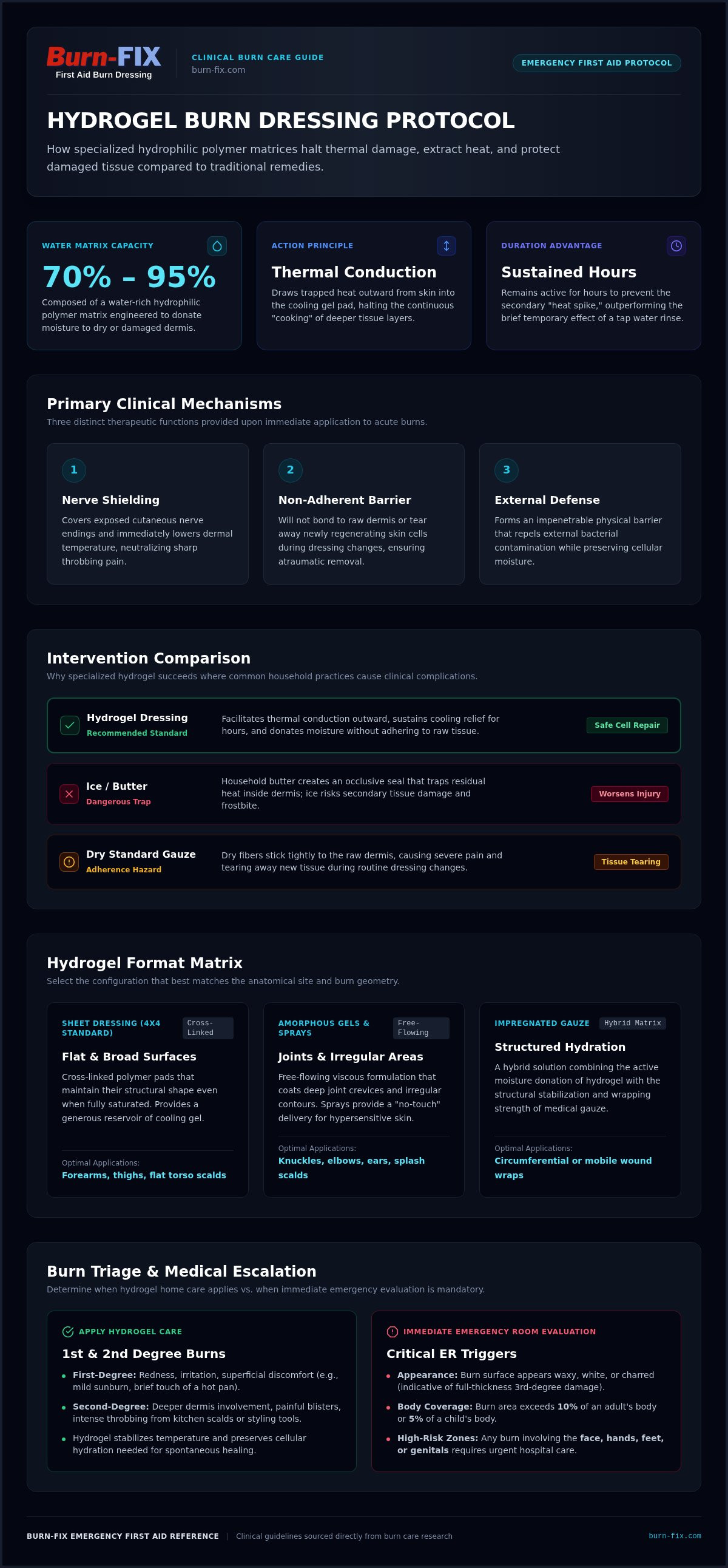
A hydrogel dressing is a specialized, water-rich cooling pad designed to donate moisture to dry or damaged skin. When you understand how to use hydrogel dressings, you gain a powerful tool for managing household accidents. These hydrogel wound dressings are composed of a hydrophilic polymer matrix that can hold a high percentage of water, often between 70% and 95%. When applied to a fresh burn, the dressing works through thermal conduction. It draws trapped heat out of your skin and into the gel. This process stops the "cooking" of deeper tissue, which is the secret to preventing painful blisters.
Standard gauze is often the wrong choice for an acute burn. Dry fibers can stick to the raw dermis, causing agony when the dressing is changed. In contrast, hydrogel creates a non-adherent barrier. It shields the wound without bonding to it, ensuring that your recovery is as painless as possible. This moisture-retaining seal is what allows the skin to heal from the inside out while keeping external bacteria at bay.
How Hydrogel Stops Burn Pain Instantly
Immediate relief is the primary goal. By covering exposed nerve endings and lowering the skin temperature, the gel neutralizes the sharp, stinging sensation of a kitchen accident. Sustained cooling is what sets hydrogel apart from a simple water rinse. While water provides a temporary fix, hydrogel stays active for hours, preventing the "heat spike" that often follows the initial injury. Hydrogel is a moisture-rich heat extractor that stabilizes skin temperature while providing a protective barrier against external irritants.
First and Second-Degree Burns: When to Reach for Hydrogel
Knowing when and how to use hydrogel dressings depends on the severity of the injury. First-degree burns, like a mild sunburn or a quick touch of a hot pan, cause redness and irritation. Second-degree burns are deeper and usually result in blisters and intense throbbing. Hydrogel is the gold standard for these common kitchen scalds and curling iron mishaps because it maintains the moisture needed for skin cells to repair themselves.
Some injuries require more than home care. You should head to the emergency room if the burn appears waxy, white, or charred, which indicates a full-thickness (third-degree) injury. Seek professional help immediately if the burn covers more than 10% of an adult's body or 5% of a child's. Burns involving the face, hands, feet, or genitals always require a medical evaluation to prevent long-term complications.
Types of Hydrogel Dressings: Sheets vs. Amorphous Gels
Choosing the right format is as important as knowing how to use hydrogel dressings correctly. Not every burn occurs on a flat, easy-to-reach surface. Understanding the difference between sheet dressings and amorphous gels ensures you can provide the right intervention for the specific injury site. According to clinical research on hydrogels in burn wound management, these tools are highly effective because they facilitate cooling through evaporation while maintaining a moist environment that supports cellular repair.
Sheet dressings are cross-linked polymer pads that maintain their shape even when saturated. They're the best choice for larger, flat surface areas where consistent, prolonged cooling is needed. For irregular areas like knuckles, elbows, or ears, amorphous gels and sprays are superior. These free-flowing formulations can fill deep joint crevices and coat uneven skin without leaving painful gaps. A third hybrid option, impregnated gauze, combines the hydration of a gel with the structural support of a dressing. Keeping a variety of these options in your BurnFix Burn Kit ensures you're ready for any kitchen or outdoor scenario.
The Versatility of the 4x4 First Aid Burn Gel Dressing
The 4x4 size has become the universal standard for home first aid for a reason. It's large enough to cover most kitchen scalds yet small enough to fit comfortably on a forearm or thigh. This sterile burn dressing 4x4 provides a generous reservoir of cooling gel that won't dry out quickly. Its non-stick surface is a critical feature. It allows for painless removal even if the skin is highly sensitive, ensuring you don't tear away newly formed tissue during a dressing change. Learning how to use hydrogel dressings in this format is the quickest way to stabilize a household injury.
When to Use Hydrogel Sprays and Packets
Sprays are the ideal "no-touch" solution for sensitive areas. When you're dealing with a widespread sunburn or a large splash scald, even a gentle touch can be agonizing. Using a burn relief spray allows you to coat the area with a cooling mist from a distance. This instantly lowers the skin temperature without the friction of a pad. For those who lead an active lifestyle, small packets are essential. These 3.5g sachets fit easily into a hiking pack or a glove box, providing immediate protection when you're far from a sink or a traditional first aid station.
Hydrogel vs. Traditional Methods: Why Ice and Ointments Fail
Old habits die hard, but reaching for the freezer or the pantry after a burn can lead to permanent damage. Many people still fall into the "ice trap," believing that extreme cold is the best way to stop the sting. In reality, ice triggers acute vasoconstriction, which shuts down blood flow to the injured area. This can cause secondary tissue necrosis, essentially adding frostbite on top of a thermal burn. Similarly, household staples like butter, mayonnaise, or heavy oils are dangerous. These substances act as thermal insulators, trapping residual heat inside your skin and driving the burn deeper into the dermis.
When you understand how to use hydrogel dressings, you replace these harmful myths with a professional-grade solution. Unlike greasy ointments that can clog pores and trap heat, hydrogels are water-based and breathable. They stabilize the wound temperature without the risk of freezing the tissue. While antibiotic ointments have their place in later stages of wound care, they lack the heat-extraction properties required during the first few hours of a burn emergency.
The Moisture-Retentive Advantage
You may have been told to "let a burn breathe" to help it scab over. Modern dermatologist guidelines for treating minor burns confirm that this is outdated and counterproductive advice. Exposing an open burn to dry air leads to desiccation, where healthy skin cells dehydrate and die. Hydrogels create an occlusive, moisture-rich environment that prevents this cell death. By maintaining a moist wound bed, the gel mimics the natural protective function of a blister, shielding raw nerve endings while providing the exact hydration your body needs to rebuild skin layers.
Painless Removal: Protecting the New Skin
Traditional bandages often become a source of secondary trauma. Dry gauze or standard adhesive strips can bond to the wound bed as it begins to weep. When you try to remove them, you're forced to tear away newly formed tissue, which restarts the pain and slows down the recovery clock. This is where knowing how to use hydrogel dressings makes the biggest difference in your comfort. Because the gel is non-adherent and remains moist for hours, the dressing simply slides off without resistance. This result-first approach ensures that your healing skin remains undisturbed, significantly reducing the overall pain you feel during the entire recovery process.
Step-by-Step: How to Apply a Hydrogel Burn Dressing Correctly
When an accident happens in the kitchen or workshop, your priority is to stop the damage and soothe the pain. Knowing exactly how to use hydrogel dressings can prevent a minor injury from becoming a lasting scar. Follow these clinical steps to stabilize the burn and protect your skin during the most critical stage of recovery.
- Step 1: Cool the burn. Run room-temperature tap water over the injury for 10 to 20 minutes. This essential step stops the "cooking" process by dissipating residual heat before you apply any dressing.
- Step 2: Clean the area gently. Use a mild, fragrance-free soap if necessary, but never scrub the wound. If blisters have formed, leave them intact; they act as a natural, sterile barrier for the raw skin underneath.
- Step 3: Apply the hydrogel. Open the sterile pouch and place the hydrogel dressing directly over the injury. Ensure the gel makes full contact with the skin to begin the heat-extraction process.
- Step 4: Secure the site. Use a light roller gauze or medical tape on the edges of the dressing to keep it in place. It's vital to wrap the area loosely to avoid putting pressure on the sensitive tissue.
Preparation and Assessment
Success starts with a clean environment. Always wash your hands thoroughly before touching the injury to avoid introducing bacteria to the compromised skin. When selecting your supplies, choose a dressing that is at least 5 to 10mm larger than the wound margins. This ensures the entire area remains hydrated and protected from friction. Sterile application is the first line of defense against infection in a compromised wound environment. If you're preparing a home safety station, you can find professional-grade supplies in a BurnFix Burn Kit.
Securing and Monitoring the Dressing
A common mistake is wrapping a burn too tightly, which can restrict blood flow and increase pain. Use just enough medical tape or gauze to prevent the dressing from sliding. You should typically change the hydrogel every 24 to 48 hours, or sooner if the gel begins to dry out or the dressing becomes dislodged. While the cooling sensation is a sign that the treatment is working, stay vigilant for signs of infection. If you notice spreading redness, pus, or a sudden increase in swelling, seek medical attention immediately. Mastering how to use hydrogel dressings gives you the confidence to manage these risks effectively at home.
Building Your Home Burn Kit with Burn-Fix
A standard first-aid kit is usually designed for minor scrapes and cuts, but it often falls short when a thermal injury occurs. When you're facing a painful kitchen scald or a curling iron accident, dry gauze and adhesive bandages aren't enough to stop the damage. These traditional supplies can't extract heat or provide the hydration needed to prevent blisters. Understanding how to use hydrogel dressings is a vital skill, but that knowledge is only effective if you have professional-grade supplies ready in your cabinet. Being prepared transforms a moment of high-stress panic into a controlled, soothing recovery process.
The "Three Pillars" of a comprehensive burn kit ensure you have a specific solution for every type of injury. A complete set should include targeted tools for different surface areas and locations. By stocking a variety of formats, you ensure that immediate cooling is always accessible, whether you're at the stove, in the bathroom, or out on a trail. This proactive approach provides the professional-level care your family deserves in a format that's easy for anyone to use. You won't have to scramble for unreliable home remedies when the right tools are already within reach.
The Essential Burn-Fix Checklist
Your home safety station needs three specific items to be truly effective. Start with the BurnFix Hydrogel Burn Spray - 120ml. This is your first line of defense for widespread redness or sunburns, providing instant, no-touch relief that lowers skin temperature without friction. For more concentrated injuries, the Burn-FIX 4x4 First Aid Burn Gel Dressing is a kitchen essential. It's the universal standard for scalds, offering a thick reservoir of gel that stays moist for hours. Finally, keep several BurnFix Burn Gel - 3.5g Per Packet sachets in your car or travel bag. These portable packets ensure you never have to wonder how to use hydrogel dressings when you're away from home.
Trusted Relief for the Whole Family
Safety is a priority when treating children's sensitive skin. The Burn-Fix formula is doctor-recommended because it's effective yet gentle, stopping pain instantly without the use of harsh chemicals. It provides a protective, moisture-retaining barrier that is safe for all ages, from toddlers to seniors. When an accident happens, you want a veteran solution that has been tested in real-world scenarios. Having these supplies on hand gives you the "calm responder" confidence needed to handle a minor crisis with ease. Protect your family with a complete Burn-Fix Hydrogel Burn Kit and ensure you're always ready to stop the throb and start the healing.
Take Control of Your Home Burn Care
Minor burns happen in an instant, but your response determines how quickly you find relief. By moving away from harmful myths like ice or butter and mastering how to use hydrogel dressings, you ensure that heat is extracted properly and healing begins immediately. These sterile tools provide the moisture-rich environment your skin needs to prevent painful blisters and long-term scarring. It's about more than just a bandage; it's about having a professional-grade heat sink ready when you need it most.
Don't wait for an emergency to realize your first-aid kit is missing essential supplies. These doctor-recommended formulas for 1st and 2nd degree burns offer instant cooling and a non-adherent design for painless removal. Equip your kitchen with professional-grade Burn-Fix hydrogel dressings to ensure you're prepared for the unexpected. You now have the knowledge and the right tools to handle any minor burn with the confidence of a professional. Your family's comfort and recovery are worth the preparation.
Frequently Asked Questions
Can I use a hydrogel dressing on an open or bleeding wound?
Hydrogel dressings are primarily designed to donate moisture to dry or sloughy wounds, but they can be used on minor open burns that are weeping fluid. They are not intended to stop active, heavy bleeding. If the wound is deep or won't stop bleeding with pressure, you should seek immediate medical attention. For minor abrasions and partial-thickness burns, the gel provides a protective barrier that keeps the wound bed moist.
How long should I leave a hydrogel dressing on a burn?
You should typically leave a hydrogel dressing in place for 24 to 48 hours depending on the amount of fluid the burn is producing. If the dressing becomes saturated, loose, or visibly soiled, it's time for a change. When you're learning how to use hydrogel dressings, remember that some can stay on for up to three days. Consistently monitoring the site ensures the skin stays hydrated without becoming waterlogged or macerated.
Is hydrogel better than Neosporin for a fresh burn?
Hydrogel is superior for the acute stage of a burn because it actively extracts heat through conduction. While antibiotic ointments can help prevent infection later, they often trap heat inside the skin if applied too early. Learning how to use hydrogel dressings during the first few hours provides immediate cooling and pain relief that petroleum-based ointments cannot offer. This makes hydrogel a much better choice for the initial first-aid response.
Can I use hydrogel dressings on my child or toddler?
Yes, Burn-Fix hydrogel products are safe for children and toddlers. The formula is non-toxic and doctor-recommended for sensitive skin, making it an ideal choice for common household accidents. Because children have thinner skin, they are more susceptible to deep burns from hot liquids. Applying a cooling hydrogel immediately helps stabilize the skin temperature and reduces the distress caused by sharp, stinging pain without using any harsh chemicals or medications.
Do hydrogel dressings expire, and how should I store them?
Hydrogel dressings do have an expiration date, which is typically printed on the sterile pouch. Over time, the water content can evaporate or the sterile seal may degrade, reducing the product's effectiveness. You should store your burn supplies in a cool, dry place away from direct sunlight. Keeping your BurnFix Burn Kit in an accessible kitchen cabinet ensures the products remain stable and ready for any household emergency or accidental scald.
What should I do if the hydrogel dressing dries out and sticks to the skin?
If a dressing dries out and begins to stick, don't pull it away forcefully. This can damage the fragile new skin cells underneath. Instead, soak the dressing in room-temperature sterile saline or clean tap water for several minutes. Once the gel rehydrates, the pad should slide off easily without causing any trauma. This is why it's important to check the dressing daily and replace it if you notice the moisture levels are dropping.
Can I use hydrogel for a severe sunburn?
Hydrogel is excellent for treating severe sunburns that feel hot to the touch. For large areas like the back or shoulders, the BurnFix Hydrogel Burn Spray is the most effective tool. It provides a "no-touch" application that cools the skin instantly through evaporation. This helps prevent the deep peeling and blistering often associated with significant UV damage while providing long-lasting relief from the constant, radiating heat of a bad burn.
What is the difference between a hydrogel sheet and a hydrogel spray?
The main difference lies in the application and surface area. A hydrogel sheet is a solid, sterile pad that provides a thick barrier and sustained cooling for flat surfaces. A spray is a liquid formulation that allows for quick, even coverage on irregular areas like the face or joints. Both are essential components of a first-aid strategy, but the spray is often preferred when the skin is too sensitive to be touched directly.


