


One second you are perfecting a curl, and the next, a 450 degree heating plate slips against your skin. A hair straightener burn on neck areas is uniquely painful because the skin there is thinner and more sensitive than almost anywhere else on your body. You are likely feeling a sharp, stinging heat and worrying about a permanent dark mark right where everyone can see it. It is a stressful moment, but the right intervention right now can change your skin's future.
We understand the panic that comes with a visible injury. This guide provides the exact medical grade steps to stop the pain of a neck burn and prevent permanent scarring from styling tools. You will learn how to use professional hydrogel technology to neutralize heat, why you should never reach for ice, and how to manage the high movement area of the neck for seamless healing. By following this clinical protocol, you can move from stinging distress to lasting comfort while keeping your skin clear and smooth.
Key Takeaways
- Learn why the thin, delicate skin of the neck is uniquely vulnerable to high-heat contact and how to recognize the early signs of tissue damage.
- Master the critical first-aid steps to stabilize a hair straightener burn on neck skin, focusing on immediate cooling and the removal of heat-trapping jewelry.
- Discover why doctor-recommended hydrogel is the gold standard for moisture retention, helping you avoid painful blisters and long-term discoloration.
- Follow a professional daily cleaning and protection protocol that supports the skin's natural repair process while preventing accidental scarring.
- Explore how to build a styling station safety kit with heat-resistant tools to eliminate the risk of accidental burns during your beauty routine.
Why Hair Straightener Burns on the Neck Require Specific Care
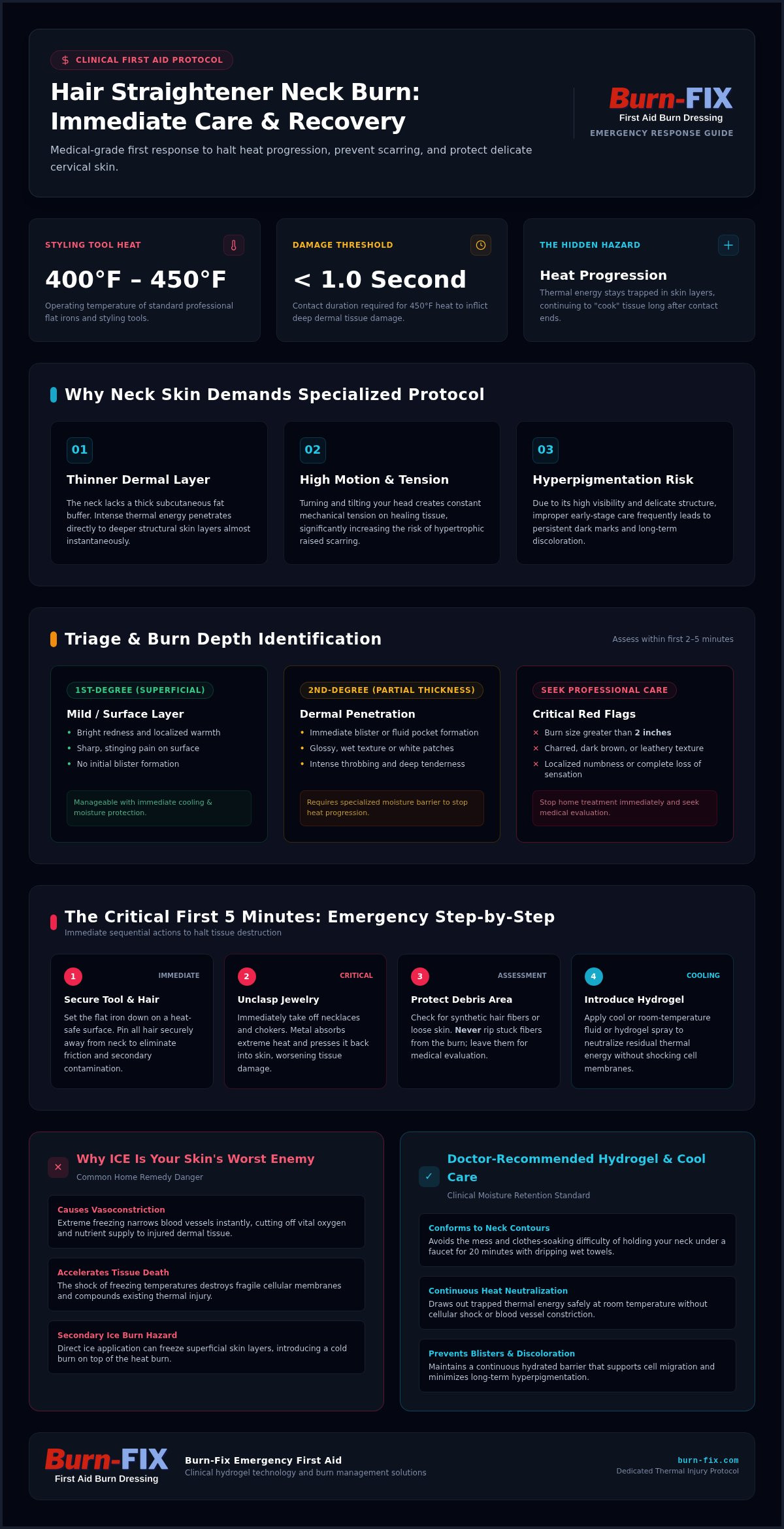
The neck isn't like your arm or leg. Its skin is significantly thinner, making a hair straightener burn on neck areas particularly dangerous. Because there's less subcutaneous fat to act as a buffer, heat from a 450 degree styling tool penetrates the deeper dermal layers almost instantly. This area is also highly visible. Any mismanagement during the healing phase can lead to noticeable hyperpigmentation or raised tissue that's difficult to hide.
Most professional flat irons operate between 400°F and 450°F. At these temperatures, human tissue sustains damage in less than one second. Understanding thermal burn classifications is essential for choosing the right treatment path. While a superficial burn might just look like a sunburn, the intense heat of a straightener often causes a partial-thickness injury that requires specialized moisture management to prevent the skin from scarring.
Identifying the Severity: Redness vs. Blisters
You can usually tell the depth of the injury by how the skin reacts in the first few minutes. A first-degree burn presents as bright redness, warmth, and a sharp stinging sensation. If you notice white patches, a glossy texture, or immediate blister formation, you've sustained a second-degree burn. You should stop home treatment and seek professional medical evaluation if the burn is larger than two inches, appears charred, or if you experience any numbness at the site.
The "Heat Progression" Effect
Removing the straightener doesn't stop the damage. Thermal energy remains trapped in the skin, causing the tissue to continue "cooking" long after contact ends. This residual heat is what turns a minor red mark into a painful blister over several hours. Neutralizing this temperature is your primary goal. For those dealing with more intense injuries, following a specific protocol for at-home first aid for second degree burns is the best way to stop heat progression and preserve healthy skin cells.
The neck is a high-motion area. Every time you turn your head, you stretch the healing tissue. This constant mechanical tension, combined with the neck's thin dermis, makes it a high-risk zone for hypertrophic scarring. Proper care isn't just about immediate pain relief. It's about stabilizing the wound environment so the skin can knit back together without leaving a permanent reminder of your styling accident.
The First 5 Minutes: Immediate Steps to Stop the Burn
Immediate action saves skin. When a hair straightener burn on neck areas happens, panic sets in, but you must act in seconds. First, safely set aside the flat iron on a secure surface and pin your hair away from the injury site to prevent further irritation. Next, immediately unclasp any necklaces or chokers. Metal jewelry absorbs and retains extreme heat, pressing it directly back into your compromised skin and deepening the tissue damage.
Once the area is clear, quickly assess the site. Look for any melted synthetic hair fibers or severely peeling skin. If debris is stuck to the wound, don't rip it away. Instead, focus on introducing an instant cooling agent to neutralize the residual heat. Following standard dermatologist guidelines for treating minor burns helps protect the delicate cervical skin from long-term complications.
Why Ice is Your Skin’s Worst Enemy
Extreme cold feels like the logical answer to intense heat, but ice actually worsens thermal injuries. Applying ice cubes or freezing water to a fresh burn causes immediate vasoconstriction, which narrows your blood vessels and cuts off vital oxygen to the damaged tissue. This lack of blood flow accelerates tissue death and can introduce a secondary ice burn on top of the heat injury. The optimal temperature for cooling a fresh burn is cool or room-temperature fluid, which safely draws out heat without shocking your cells.
Mess-Free Cooling for the Neck Area
Standard first aid guides always tell you to hold a burn under cool running water for 20 minutes. While this works for a hand or wrist, trying to angle your neck under a bathroom faucet is nearly impossible and ends up soaking your clothes. This is where specialized first aid solutions change the game. A cooling hydrogel spray coats the contours of your neck smoothly, providing instant, hands-free relief without the mess of dripping wet towels.
Keeping a specialized spray at your vanity ensures you can act during that critical five-minute window. For detailed application techniques and tips on managing sudden hot tool accidents, check out our comprehensive guide to burn relief spray to keep your healing on the fastest track.
Moisture-Rich Healing: Why Hydrogel Beats Traditional Remedies
The old advice to let a wound "air out" is one of the most damaging myths in first aid. When you leave a hair straightener burn on neck skin exposed to the air, it dries out and forms a thick, hard scab. This scab creates a physical barrier that prevents new skin cells from moving across the wound to repair the damage. Modern dermatology favors moist wound healing, which keeps the area hydrated to accelerate cell regeneration and minimize the risk of a permanent dark mark.
Medical grade hydrogel is the superior choice for this environment. It acts as a cooling "second skin" that absorbs residual heat while providing a sterile barrier against bacteria. Scientific studies on hydrogel wound dressings for burn healing show that high water content dressings significantly outperform dry gauze by maintaining the ideal temperature for tissue recovery. By shielding exposed nerve endings from the air, BurnFix Hydrogel also provides immediate relief from the sharp, stinging pain that usually follows a styling accident.
Avoid the temptation to use household items like butter, mayonnaise, or toothpaste. These substances are occlusive, meaning they trap heat inside your skin and continue the "cooking" process. They also aren't sterile and can easily lead to an infection in the delicate neck area. Using specialized hydrogel ensures you are neutralizing the injury rather than complicating it with kitchen ingredients.
Hydrogel vs. Ointments and Creams
Greasy ointments and heavy creams can be just as problematic as butter if applied too early. Their oil-based formulas create a seal that prevents heat from escaping the dermal layers. Hydrogel is water-based, which allows it to pull heat away from the site while delivering essential moisture. When comparing hydrocolloid vs hydrogel for burns, hydrogel is the clear winner for the initial cooling phase because it actively lowers the skin's temperature while providing deep hydration.
Applying the Burn-FIX 4x4 First Aid Burn Gel Dressing to the Neck
The neck is a difficult area to bandage because it's curved and in constant motion. A Burn-FIX 4x4 First Aid Burn Gel Dressing is designed to conform to these contours without shifting. Because it uses non-stick technology, the dressing won't adhere to the raw wound bed, ensuring a painless removal that doesn't tear away new skin cells. You should keep this initial dressing in place for 24 hours to stabilize the wound and provide a consistent, moisture-rich environment for the first stage of healing.
Managing Recovery: Protecting Your Neck During the Healing Process
Healing requires a disciplined routine once the initial heat has been neutralized. Clean the hair straightener burn on neck areas twice daily using lukewarm water and a mild, fragrance-free cleanser. Avoid scrubbing the site. Instead, let the water flow gently over the wound and pat it dry with a clean, lint-free cloth. Consistent hygiene prevents the buildup of debris that can lead to irritation or secondary infections.
Protect every blister that forms. While it may be tempting to pop a fluid-filled bubble, doing so destroys your body's natural, sterile barrier. A blister acts as a biological bandage that shields the raw dermis while new skin cells regenerate underneath. If a blister breaks on its own, clean the area immediately and apply a fresh hydrogel dressing to keep the exposed tissue from drying out. Watch for red flags like spreading redness, increased swelling, or a foul odor, which indicate you need a professional medical evaluation.
Mechanical irritation is a common setback during neck recovery. The constant motion of your head creates friction against collars, scarves, and even your own hair. Choose soft, breathable cotton fabrics and avoid high-necked shirts or rough wool that can snag on the wound. Keeping the area shielded from physical stress ensures the delicate new tissue can knit back together without being repeatedly torn.
Styling Safety During Healing
Chemical irritation can be just as damaging as heat. Most hairsprays, dry shampoos, and perfumes contain high concentrations of alcohol and synthetic fragrances that cause intense stinging on compromised skin. These products can trigger chemical dermatitis or stall the healing process if they mist onto a fresh burn. Style your hair in a high bun or use clips to secure strands away from the injury site. Never attempt to hide a fresh or blistered burn with makeup or concealer, as these products introduce bacteria directly into the wound bed.
Scar Prevention Strategies
Sun protection is the most critical factor in preventing a permanent dark mark. The thin skin of the neck is highly susceptible to post-inflammatory hyperpigmentation. Once the wound has fully closed and the skin is no longer raw, apply a broad-spectrum SPF 50+ every morning. UV rays trigger excess melanin production in healing tissue, which can turn a temporary red mark into a permanent brown scar. For long-term texture management, you can begin gentle massage with medical-grade silicone sheets once the skin is completely remodeled and durable.
Preparation is the key to a scar-free recovery. To keep your skin protected and supported throughout the healing journey, shop our professional-grade burn care supplies for the best results.
Prevention and Your Styling Station Safety Kit
Preparation turns a potential crisis into a manageable event. While we have focused on treatment, the ultimate goal is to ensure a hair straightener burn on neck skin never happens in the first place. Styling accidents often occur during a rush or when the workspace is cluttered. By engineering your environment to be heat-safe, you create a physical buffer between your delicate skin and a 450 degree styling tool. You should establish a dedicated "Cool Down" zone on your vanity, using heat-resistant silicone mats or stands that can withstand extreme temperatures for the 40 minutes it takes a flat iron to safely return to room temperature.
Every bathroom needs a professional response plan. Because these injuries happen in a split second, searching through a cluttered medicine cabinet for supplies only allows the heat to sink deeper into your tissue. This is why every household needs a specialized emergency burn kit for home use, ensuring that medical-grade cooling is always within arm's reach when the heat makes contact.
The Styling Station Essentials
Your styling station should be as organized as a professional salon. Keep BurnFix Burn Gel - 3.5g packets in your top drawer or styling bag for immediate access. These small, portable packets are perfect for travel and provide the exact amount of hydrogel needed to cover a typical hair straightener burn on neck areas without wasting product. If you frequently style the back of your head, consider investing in heat-resistant thermal gloves to protect your fingers, and always use a multi-way mirror system. The "Mirror Check" technique allows you to see the proximity of the iron to your skin at all times, eliminating the blind spots where most neck burns occur.
Building a Kitchen and Bathroom Safety Hub
Safety shouldn't be limited to your vanity. Thermal accidents are just as common near the stove as they are near the mirror. Integrating professional burn care into your general kitchen safety first aid kit ensures that whether it is a hot plate or a hot pan, you are ready to act. Make it a habit to check the expiration dates on your hydrogel sprays and dressings every six months; expired products may lose their moisture content and cooling efficacy. Finally, take a moment to teach family members how to use a burn spray. When a burn happens, the person injured is often in too much pain to treat themselves, so having a prepared "first responder" in the house is the best way to ensure fast, effective healing.
Secure Your Skin Against Styling Accidents
A hair straightener burn on neck areas doesn't have to result in a permanent scar. By ditching outdated myths like using ice or butter and embracing moisture-rich hydrogel, you give your skin the best possible environment for rapid repair. Remember that the neck's thin dermis and high mobility require specialized care that balances instant cooling with long-term protection. Healing happens most effectively when you neutralize heat immediately and maintain a sterile, hydrated barrier throughout the recovery phase.
Being prepared is the difference between a minor incident and a lasting mark. These compact packets fit in any makeup bag or drawer, ensuring you have professional-grade care the moment heat makes contact. You can keep BurnFix Burn Gel packets at your styling station for instant relief, providing moisture-retaining hydrogel that prevents scarring and delivers pain relief in seconds. Having these essentials within arm's reach allows you to act with confidence rather than panic.
You deserve to feel comfortable and beautiful in your daily routine. With the right tools and knowledge, you can style your hair with peace of mind, knowing your skin is protected by modern first-aid science. Stay safe, stay hydrated, and let your skin heal beautifully.
Frequently Asked Questions
How long does a hair straightener burn take to heal?
A superficial hair straightener burn on neck areas typically heals within three to six days. However, if the injury is a second degree burn with blistering, the recovery process usually takes two to three weeks. you can accelerate this timeline by maintaining a moist environment with hydrogel dressings. This prevents the formation of a hard scab, which often slows down new skin cell migration and increases the risk of visible marks.
Will a curling iron burn on my neck leave a permanent scar?
Permanent scarring isn't inevitable, but the neck is a high risk zone due to thin skin and constant movement. These factors increase the likelihood of hypertrophic tissue or dark marks. To minimize this, use doctor recommended hydrogel to stabilize the wound and apply SPF 50+ once the skin has closed. Consistent sun protection prevents UV rays from turning a temporary red mark into a permanent brown scar.
Can I put Neosporin on a hair straightener burn?
You should avoid applying Neosporin or other greasy ointments to a fresh burn. These oil based products create a seal that traps residual heat inside the skin, potentially deepening the tissue damage. It's much safer to use a water based hydrogel like Burn-Fix. This specialized formula pulls heat away from the site while providing the moisture needed for recovery without the risk of trapping thermal energy.
What should I do if my hair straightener burn starts blistering?
Blistering indicates a second degree burn, and your first rule is to never pop them. A blister serves as a sterile, biological bandage that protects the raw tissue underneath while it repairs itself. You should gently clean the area and apply a Burn-FIX 4x4 First Aid Burn Gel Dressing. This keeps the environment moist and protected from friction, ensuring the blister can heal naturally without introducing bacteria.
Is it okay to cover a neck burn with makeup?
Covering a fresh neck burn with makeup is dangerous because it introduces bacteria and chemicals directly into a compromised wound. Cosmetic ingredients can cause irritation or lead to a painful infection that stalls the healing process. You must wait until the skin is completely closed and no longer raw before applying concealers. Until then, focus on using transparent hydrogel products that protect the site while remaining discreet.
Why does my neck burn feel like it is still throbbing?
Throbbing occurs because the initial heat triggers an inflammatory response, causing blood vessels to dilate and nerve endings to become hypersensitive. This sensation often means the tissue is still reacting to the thermal energy trapped in the dermal layers. Applying a cooling hydrogel spray helps neutralize this residual heat and shields exposed nerve endings. This intervention reduces the pulsing discomfort and brings immediate, soothing relief to the injured area.
Can I use aloe vera on a fresh styling burn?
While pure aloe vera has cooling properties, medical grade hydrogel is the superior choice for a hair straightener burn on neck skin. Many over the counter aloe gels contain alcohols, preservatives, or fragrances that can sting and irritate an open wound. Specialized hydrogel is sterile and designed specifically to stop heat progression. It provides a more reliable moisture barrier that supports professional level healing without the risk of chemical irritation.
When should I see a doctor for a burn from a hair tool?
Seek professional medical attention if the burn is larger than two inches or if the skin appears white, charred, or leathery. You should also see a doctor if the burn completely encircles your neck, as swelling could potentially affect your breathing. Other red flags include signs of infection like spreading redness, pus, or a fever. Remember that Burn-Fix products are for first and second degree burns only, not third degree injuries.


