


A frantic employee clutches a red, stinging forearm while you stare at the first aid cabinet, your heart racing as you try to remember which dressing actually stops the heat. In a high-pressure environment, choosing between hydrocolloid vs hydrogel for burns isn't just about wound care; it's about how quickly you can stop a colleague's pain and prevent a minor injury from becoming a recordable incident. It's completely normal to feel a moment of hesitation when faced with technical medical jargon during a crisis. You want to help, but the fear of applying the wrong material and trapping heat against the skin is a heavy burden for any safety manager.
This guide simplifies that decision so you can act with the authority of a seasoned first responder. We'll show you exactly why one material cools in seconds while the other is better suited for the days that follow. You will discover the critical differences between these dressings to ensure your workplace kit provides the fastest relief and optimal healing. We're breaking down the 2026 safety standards, providing a definitive compliance checklist, and identifying the specific tools that offer instant comfort when every second counts.
Key Takeaways
- Extract heat instantly. Hydrogel technology stops burn progression in seconds, providing immediate relief for distressed employees.
- Master the choice between hydrocolloid vs hydrogel for burns to identify which dressing cools a fresh injury and which supports secondary healing.
- Avoid common first aid mistakes. Generic bandages can trap heat and cause further damage, making specialized dressings a non-negotiable safety requirement.
- Ensure 2026 workplace compliance by stocking sterile 4x4 gel dressings that meet the latest standards for high-risk industrial environments.
- Transition from pain to comfort. Discover the science behind moisture retention that speeds up skin recovery and prevents long-term scarring.
Why Your Workplace Burn Kit Needs Specialized Dressing Technology
In a bustling commercial kitchen or a high-output industrial floor, a thermal injury happens in a heartbeat. The stakes are incredibly high; a minor splash of grease or momentary contact with a steam pipe leads to deep tissue damage if the heat isn't neutralized immediately. Understanding the nuances of hydrocolloid vs hydrogel for burns is the difference between a quick return to work and a weeks-long recovery. While a Hydrocolloid dressing is a standard in many medical kits, its specific mechanism isn't always suited for the initial heat-extraction phase of a fresh burn. Choosing the right technology allows you to transition from panic to a professional response that protects both the employee and the business.
The Limitations of Traditional First Aid
Standard adhesive bandages and dry gauze are staples in most kits, but they're often the worst choice for a fresh burn. Dry gauze acts like a sponge, eventually bonding with the damaged tissue as it dries. When you remove it, you're essentially peeling away the new skin cells trying to form underneath, causing secondary trauma and intense pain. We also see many workplaces still relying on outdated home remedies like ice or ointments. Ice can cause frostbite-like damage to fragile skin, while thick ointments can trap heat, essentially "cooking" the tissue further. These mistakes lead to extended employee downtime and an increased risk of permanent scarring.
The Goal of Modern Burn Care
Professional response requires a shift toward immediate heat extraction. You need to pull the thermal energy out of the skin to stop the burn progression that happens even after the heat source is removed. Modern moisture-balancing dressings are designed to stabilize the injury site by creating a soothing, protective environment. The primary objectives are clear:
- Immediate Heat Extraction: Drawing heat away from the wound to stop further tissue destruction.
- Sterile Barrier Protection: Shielding the raw area from workplace contaminants like flour, dust, or bacteria.
- Instant Pain Relief: Soothing the exposed nerve endings to manage the "calm urgency" of the situation.
By stocking specialized supplies like the Burn-FIX 4x4 First Aid Burn Gel Dressing, you ensure that the first 60 seconds of care are handled with medical-grade efficiency. This proactive approach prevents deep-tissue damage and turns a high-stress accident into a managed, professional recovery. Specialized technology doesn't just cover the wound; it actively intervenes in the healing process from the moment of contact.
Hydrocolloid vs Hydrogel for Burns: Understanding the Science
To choose the right dressing, you must understand the molecular difference between these two technologies. Hydrogel is a water-based matrix, often containing up to 90% water, designed specifically to donate moisture to a dry wound and pull heat away. In contrast, a hydrocolloid consists of gel-forming agents like pectin or gelatin that absorb fluid to create a moist seal. When discussing hydrocolloid vs hydrogel for burns, the most critical factor is the "heat trap" risk. Because hydrocolloids are occlusive and designed to insulate, applying them to a fresh thermal injury can actually lock the heat against the tissue; this worsens the damage. Hydrogels facilitate rapid thermal transfer, pulling the stinging heat away from the skin and into the gel matrix.
How Hydrogels Cool on Contact
These dressings act as a high-tech heat sink for the skin. By mimicking the skin’s natural moisture levels, they provide a soothing environment that stops burn progression immediately. Scientific reviews on Hydrogel Dressings for Burn Wounds confirm that this high water content is vital for stabilizing skin temperature and promoting faster recovery. This makes them the preferred choice for at-home first aid for second degree burns where cooling is the top priority. Because they don't adhere to the wound bed, you can remove them without tearing new skin or causing secondary trauma. It's a gentle, effective way to manage the initial trauma and neutralize pain.
When Hydrocolloids Shine
Hydrocolloids are valuable tools, but timing is everything. They excel during the late-stage healing process, typically several days after the initial injury has occurred and the heat has dissipated. Once the skin is no longer radiating heat, these dressings help manage low-to-moderate wound drainage, also known as exudate. They are particularly effective for protecting intact blisters; the thick, rubbery seal provides a cushioned barrier against friction and workplace bacteria. Think of them as the secondary phase of recovery rather than the emergency response. For a complete solution that covers every stage of an injury, keeping a BurnFix Burn Kit in your facility ensures you have the right technology ready for the right moment.
The Critical Comparison: Which Dressing Wins for Immediate Care?
When an injury occurs, the first 60 seconds determine the severity of the recovery. In the debate of hydrocolloid vs hydrogel for burns, hydrogel is the undisputed winner for immediate care. It provides instant pain relief by neutralizing the burning sensation on contact. While hydrocolloids are excellent for sealing a wound, they lack the high water content needed to pull thermal energy out of the skin. Using a hydrocolloid too early can actually insulate the injury; this keeps the tissue at a damaging temperature for longer and can lead to deeper scarring.
Versatility is another major advantage for hydrogels in a professional setting. Workplace burns rarely happen on perfectly flat surfaces. They occur on knuckles, between fingers, or across joints. Adhesive hydrocolloid sheets often struggle to stay secure on these irregular areas and can restrict movement. In contrast, hydrogel sprays and gel packets conform to any shape. They ensure every millimeter of damaged skin receives cooling relief without the need for precise placement during a high-stress moment.
The Emergency Response Matrix
A professional response follows a clear, two-step path to minimize damage. First, you must cool the burn. A hydrogel spray or gel packet is mandatory here to halt the burning process and stabilize the skin temperature. Second, you protect the area. A sterile 4x4 gel dressing is superior to a small patch because it provides a thick, moisture-rich cushion that shields the wound while continuing to hydrate it. Hydrogel is the "Reliable Specialist" choice for fresh burns because it prioritizes immediate physical comfort and tissue stabilization over simple coverage.
Avoiding Common Workplace Mistakes
The most dangerous mistake a safety manager can make is applying an occlusive hydrocolloid patch to a "hot" burn. If the skin still feels warm to the touch, it's still losing moisture and potentially sustaining damage. You'll know the cooling phase is over when the intense, radiating heat has subsided and the area has been thoroughly stabilized with gel. Because of its safety profile and ease of use, hydrogel is the safest "all-rounder" for kitchen safety first aid kits. It handles the immediate crisis effectively, allowing you to manage the situation with confidence before moving to long-term protection later in the healing cycle.
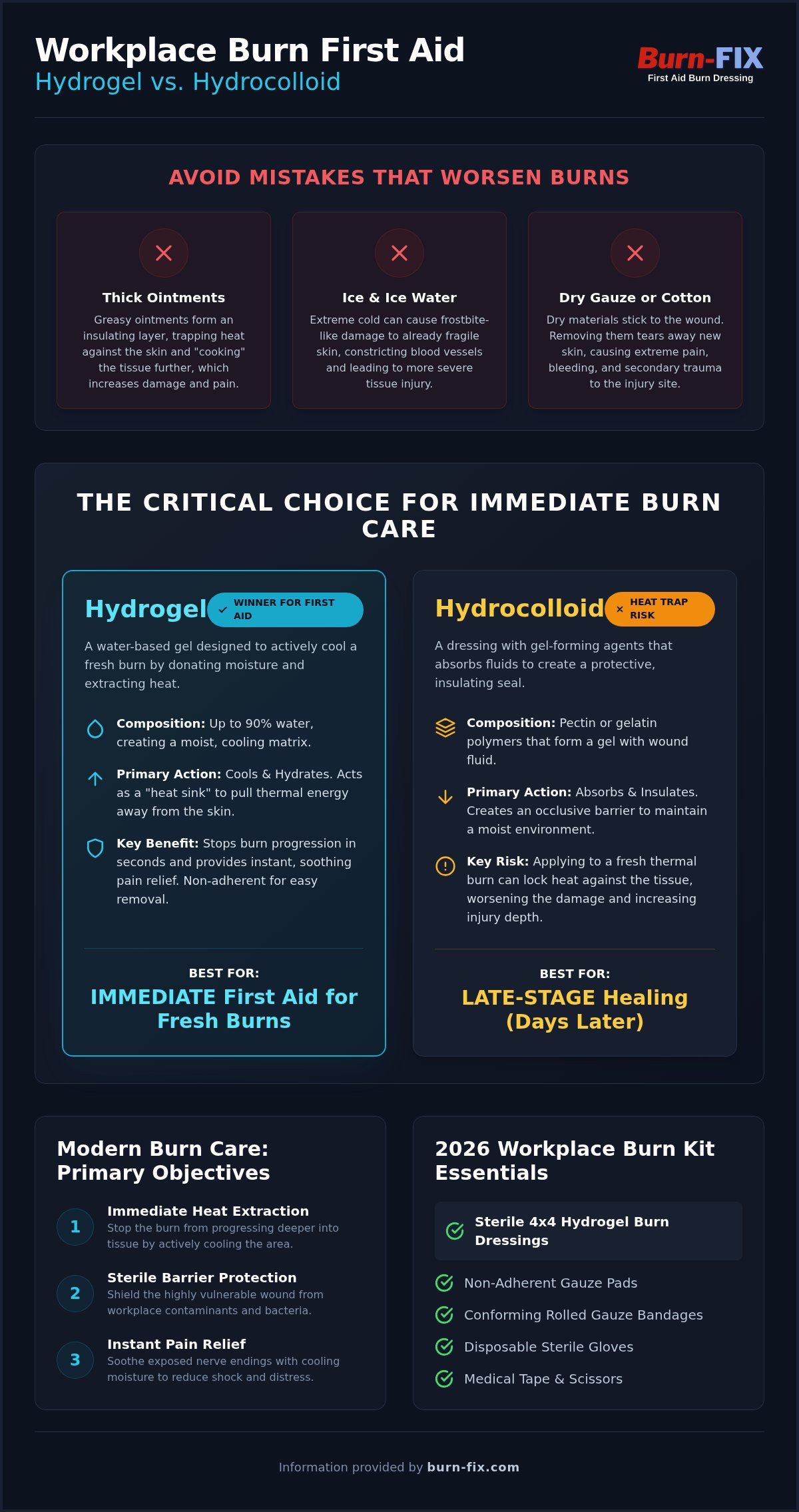
The 2026 Workplace Burn Kit Essentials Checklist
Preparedness is the backbone of workplace safety. While we have explored the science behind hydrocolloid vs hydrogel for burns, having the right physical tools on hand transforms that knowledge into life-saving action. A 2026-compliant workplace kit must prioritize specialized cooling technology over generic supplies to ensure that every thermal incident is met with a professional, calming response. Stocking the right materials allows you to transition from a moment of crisis to a state of controlled recovery.
- BurnFix Hydrogel Burn Spray - 120ml: Essential for covering large surface areas quickly or soothing widespread sunburns. It provides a cooling mist that stops burn progression without touching the sensitive skin.
- Burn-FIX 4x4 First Aid Burn Gel Dressing: This is the professional standard for workplace scalds. It provides a thick, sterile barrier that cushions the wound while extracting heat.
- BurnFix Burn Gel - 3.5g Per Packet: Perfect for small finger burns or minor grease splashes. These single-use packets should be distributed throughout the facility for instant access.
- Medical-Grade Scissors: Necessary for safely removing clothing from the burn site. You must be able to clear the area without causing secondary trauma to the damaged tissue.
- Non-Stick Conforming Bandages: These secure your hydrogel dressings in place without applying pressure. They allow the gel to remain in contact with the skin while protecting the wound from workplace contaminants.
Stocking for High-Risk Zones
Identify your "Burn Hotspots" immediately. Areas around deep fryers, high-pressure steam stations, and heavy machinery require immediate access to cooling agents. In a busy commercial kitchen, you often need multiple emergency burn kit for home style setups distributed strategically across the floor. High visibility and easy access are critical. Staff members should never have to hunt through generic cabinets during the high-stress seconds following an injury.
Maintenance and Expiry Protocols
Maintenance ensures your kit remains a reliable tool rather than a false sense of security. Check your hydrogel supplies monthly for moisture integrity; a dried-out dressing loses its ability to extract heat. Current 2026 safety standards require sterile, individually wrapped dressings to prevent cross-contamination in industrial environments. Establish a strict refill schedule to replace items used during minor incidents. To ensure your facility stays fully compliant and prepared, consider stocking a dedicated BurnFix Burn Kit that bundles these essentials into one accessible station.
Professional Relief: Why Hydrogel is the Gold Standard
Relief should be immediate. The psychology of employee recovery begins the moment the searing heat of a burn is replaced by a soothing, moisture-rich barrier. In the high-stress minutes following a workplace accident, an employee's primary focus is the overwhelming pain. By providing a solution that neutralizes discomfort instantly, you manage the human element of the crisis as effectively as the physical injury itself. This is why doctor-recommended hydrogels are the preferred choice of first responders globally. They offer a sense of "calm urgency," providing a professional intervention that signals to the injured person that they are safe and protected.
The Burn-Fix difference lies in this balance of medical authority and compassionate care. While the debate of hydrocolloid vs hydrogel for burns often centers on laboratory science, the practical reality in a kitchen or factory is about speed and safety. Integrating Burn-Fix products into your existing safety protocols ensures that you aren't just checking a compliance box. You're providing a veteran solution tested in real-world scenarios to stop burn progression and start the healing process before the employee even leaves the floor.
The Transition from Pain to Comfort
Imagine a line cook during a frantic dinner rush who splashes boiling oil across their hand. Without the right tools, that cook faces a long night of escalating pain and potential infection. However, applying a Burn-FIX 4x4 First Aid Burn Gel Dressing changes the narrative entirely. The intense heat is drawn out of the skin and into the gel matrix; this shields the exposed nerve endings from the air and provides instant comfort. This immediate intervention prevents the burn from deepening into the lower layers of tissue, leading to a lasting resolution with minimal scarring and faster skin regeneration. Hydrogel is the veteran solution for thermal injury because it transforms a painful crisis into a managed recovery by cooling the tissue and calming the patient simultaneously.
Next Steps for Workplace Safety
Your safety plan is only as effective as the supplies in your cabinet. Audit your current kit today and identify if it contains active cooling agents or merely passive coverings like dry gauze. Training your team on the "hydrogel-first" rule ensures that no one accidentally reaches for an insulating patch while the skin is still radiating heat. This simple shift in training can prevent minor scalds from becoming serious medical leave incidents. Upgrade your professional readiness with Burn-Fix Professional Burn Care Supplies to ensure your team has the gold standard of protection when they need it most.
Securing Your Facility’s Future with Advanced Burn Care
Protecting your team requires more than just a standard first aid cabinet; it demands the right technology for the right moment. By understanding the critical differences between hydrocolloid vs hydrogel for burns, you've taken a vital step toward preventing permanent tissue damage and ensuring a faster recovery for your staff. Remember that while hydrocolloids offer excellent protection for late-stage healing, only hydrogel provides the instant heat extraction needed in those first high-stress seconds after a scald or flash burn.
Stocking a doctor-recommended formula ensures you can provide professional-grade care for first and second-degree burns immediately. These solutions are trusted by industrial sites and professional kitchens because they deliver reliable, transformative relief when every second counts. Don't wait for the next incident to audit your supplies. Equip your workplace with professional-grade Burn-Fix Hydrogel kits today to provide your employees with the instant cooling and pain relief they deserve. Your commitment to a safer, better-prepared environment starts with a single, smart choice in dressing technology. Stay safe, stay prepared, and lead your team with confidence.
Frequently Asked Questions
Is hydrocolloid or hydrogel better for a fresh burn?
Hydrogel is the superior choice for a fresh burn because it extracts heat immediately. In the debate of hydrocolloid vs hydrogel for burns, hydrogel wins the emergency phase by providing instant cooling that stops the injury from progressing deeper into the tissue. Hydrocolloids are occlusive and can trap thermal energy against the skin; this increases pain and damage. Always reach for a water-based gel or spray first to stabilize the wound site and neutralize discomfort.
Can I use hydrocolloid dressings on a blistered burn?
You can use hydrocolloid dressings on a blistered burn only after the initial heat has dissipated. These dressings provide a cushioned, protective seal that prevents the blister from popping due to friction or workplace activity. However, applying them too early while the skin is still radiating heat can cause further tissue damage. Wait until the area is stable and cool before switching to a hydrocolloid for secondary protection and moisture management.
How long should I leave a hydrogel dressing on a workplace burn?
A hydrogel dressing can typically remain on a burn for up to 24 hours, though you should monitor the injury closely. The dressing works by donating moisture and absorbing heat; once the gel feels warm or begins to dry, it has served its primary purpose. For workplace injuries, leaving the dressing in place for several hours provides a sterile barrier and continuous pain relief, allowing the employee to remain comfortable while the skin stabilizes.
Do hydrogel dressings expire?
Yes, hydrogel dressings have a specific shelf life and will eventually expire. Because they are primarily composed of water, the moisture can eventually evaporate if the sterile seal is compromised or if the product is stored past its expiration date. A dried-out dressing loses its ability to cool the skin and provide the necessary moisture for healing. You should check your workplace first aid kit monthly to ensure all gel products are within their valid use dates.
Is hydrogel safe for chemical burns in the workplace?
Hydrogel is safe for chemical burns only after the area has been thoroughly flushed with water to remove the corrosive agent. You must ensure the chemical is completely neutralized or washed away before applying any dressing. Applying gel too early can trap the chemical against the skin, leading to severe secondary reactions. Once the site is clear of chemicals, a hydrogel dressing helps soothe the resulting thermal damage and provides a protective moisture barrier.
Why shouldn’t I use a standard adhesive bandage on a burn?
Standard adhesive bandages are designed for cuts, not thermal injuries. The dry pad can stick to the damaged skin; this causes intense pain and secondary trauma when the bandage is removed. Furthermore, these bandages don't have the high water content required to extract heat or provide a moist healing environment. Using a generic bandage often traps heat and increases the risk of scarring, whereas specialized dressings focus on immediate cooling and tissue protection.
How often should I replace the burn dressings in my first aid kit?
You should inspect your burn dressings every 30 days as part of a routine safety audit. While individual dressings often have a multi-year shelf life, they must be replaced immediately after any use to maintain kit readiness. Ensure that all items, such as the Burn-FIX 4x4 First Aid Burn Gel Dressing, remain in their original, sterile packaging. If a seal is punctured or the packaging appears compromised, replace the item to prevent infection risks.
Can hydrogel prevent a burn from scarring?
Hydrogel significantly reduces the risk of scarring by stopping burn progression and maintaining a moist wound environment. By cooling the skin instantly, it prevents the heat from damaging deeper dermal layers where permanent scars typically form. Consistent moisture retention also encourages faster skin cell regeneration and prevents the formation of hard scabs that can lead to uneven healing. Proper initial care with a doctor-recommended gel is your best defense against long-term skin discoloration.


