


That stick of butter in your fridge might be the worst thing you could reach for after a kitchen mishap. While generations have sworn by pantry staples, applying grease or ice can actually trap heat and deepen the tissue damage. It's normal to feel a sense of panic when stinging, throbbing pain sets in, leaving you wondering exactly what to put on a minor burn to stop the damage. You want relief now, and the conflicting advice from the internet only adds to the fear of a permanent scar.
This guide reveals why traditional home remedies fail and provides the 2026 doctor-recommended protocol for soothing your skin instantly. We'll explore the science of hydrogels, debunk common myths like toothpaste and oils, and give you a clear roadmap for professional-grade recovery at home. You'll learn how to extract heat safely and keep the wound moist to prevent blisters from forming. By the end of this article, you will have a reliable, expert-backed strategy to transition from painful distress to calm, protected healing.
Key Takeaways
- Stop using butter, flour, or oils on fresh injuries; these common pantry staples trap heat and can lead to deeper tissue damage.
- Avoid applying ice or extreme cold, as vasoconstriction can cut off vital blood flow and worsen the skin's trauma.
- Learn exactly what to put on a minor burn by prioritizing 20 minutes of cool running water to stop the heat from spreading.
- Switch from greasy ointments to modern hydrogels, which actively extract heat and provide a protective moisture barrier for faster healing.
- Identify the critical differences between first and second-degree burns to determine when home care is safe and when to seek professional help.
Common Home Remedies for Minor Burns: Separating Fact from Fiction
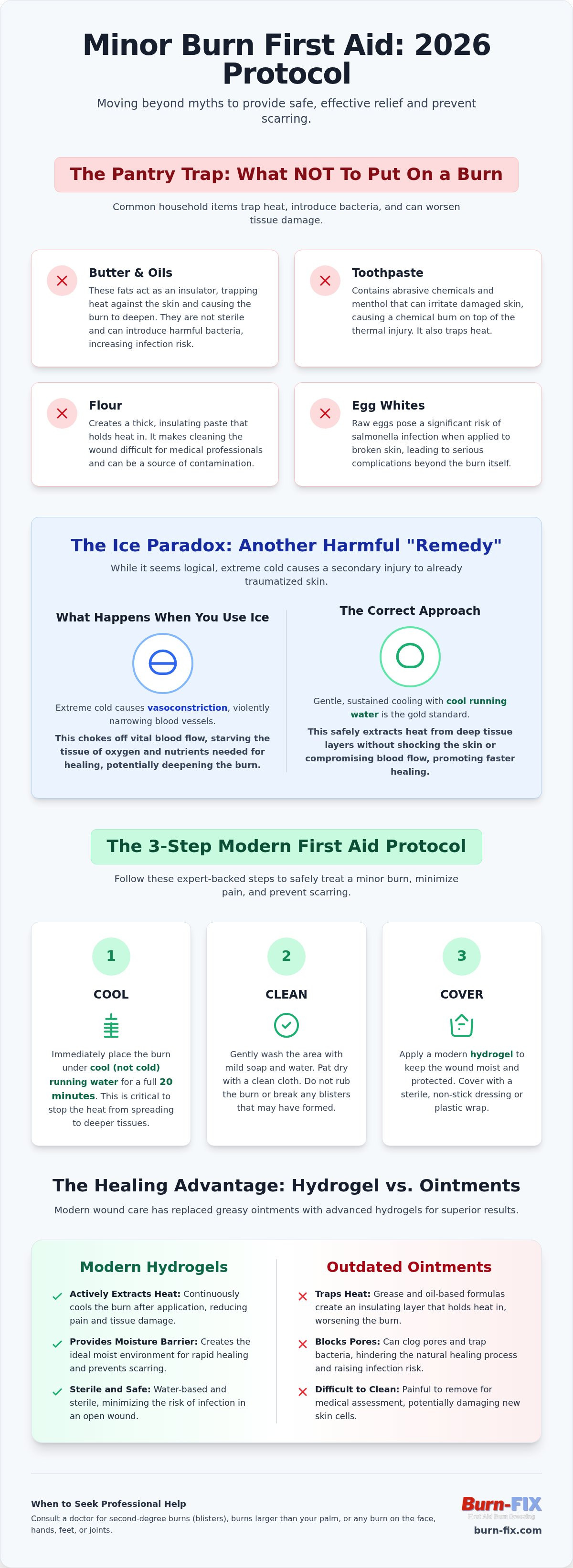
When your hand brushes a hot pan, the immediate instinct is to reach for anything cool or soothing in your kitchen. This is the "Pantry Trap." We often grab butter, flour, or oil because they feel slick and cold for a split second. However, these choices are dangerous. Before you decide what to put on a minor burn, you must understand the nature of the injury. A minor burn typically includes first-degree redness and pain or second-degree blisters and swelling. For a comprehensive overview of burns and how they affect different layers of skin, understanding the underlying damage is vital.
Applying household fats creates a seal over the wound. This seal acts like an insulator, trapping the thermal energy inside your tissue. Instead of the burn cooling down, the heat continues to cook the skin from the inside out. This can turn a superficial injury into a deep, painful wound within minutes. Your goal is to extract heat, not preserve it.
The Butter and Oil Myth
Butter is for toast, not for trauma. Applying butter or cooking oil to a fresh burn is a recipe for complications. These products are not sterile. They introduce bacteria into raw, compromised skin, which significantly increases the risk of infection. While "Grandma's advice" was born from a time before modern first aid, it fails the dermatological tests of 2026. Fats and greases are also difficult for medical professionals to remove later. This often requires painful scrubbing that can damage newly forming cells and delay your recovery.
Toothpaste, Flour, and Egg Whites
Toothpaste is another common mistake that causes more harm than good. It contains chemicals like menthol, calcium carbonate, and sodium lauryl sulfate that irritate raw, damaged tissue. It might feel "minty fresh" for a moment, but it's actually causing a chemical irritation on top of a thermal one. Flour is equally problematic. It creates a thick, insulating paste that traps heat and makes professional cleaning nearly impossible without causing further pain.
Perhaps the most dangerous remedy is egg whites. Raw eggs carry a high risk of salmonella. Placing them on an open wound, especially a second-degree burn with broken skin, is an open invitation for infection. When considering what to put on a minor burn, your focus should be on sterile, heat-extracting solutions. Modern hydrogels have replaced these outdated kitchen experiments because they prioritize safety and speed.
Why Ice and Extreme Cold Actually Damage Burned Skin
Ice provides a deceptive sense of relief. When skin is scorched, the numbing sensation of an ice cube feels like the perfect antidote to the stinging pain. This is the "Ice Paradox." While the surface feels cooler, the extreme temperature shift actually causes a secondary injury. Determining what to put on a minor burn requires looking past the immediate numbing effect and focusing on long-term tissue health. Applying ice or freezing water can lead to frostbite on top of an existing burn, effectively doubling the damage your body has to repair.
The goal of first aid is heat extraction, not freezing the tissue. Sudden, extreme cold causes the blood vessels to constrict violently. This process, known as vasoconstriction, is the body's way of preserving core temperature, but it is disastrous for a localized injury. By aligning with the modern first aid protocol for minor burns, you ensure that the cooling process is gentle enough to protect the skin while being effective enough to stop the damage.
The Science of Tissue Ischemia
Healthy healing relies on blood flow. When you apply ice to a burn, the resulting vasoconstriction cuts off the supply of oxygen and nutrients to the site of the injury. This creates a state of ischemia, where the tissue is essentially starved. Without blood flow, the natural healing cells your body sends to repair the skin cannot reach the damaged area. This lack of circulation can cause the burn to deepen, turning a simple first-degree redness into a more serious second-degree blister. Cool water or room-temperature compresses are the true gold standard because they lower the temperature without choking off the blood supply.
Thermodynamics of a Burn
Thermal injuries are progressive. Your skin continues to "cook" even after you have moved away from the stove or the hot liquid. This is because the skin layers hold onto thermal energy, radiating it deeper into the dermis. A sudden freeze from an ice pack only shocks the surface, often leaving the heat trapped underneath. Effective cooling must be sustained for at least 20 minutes to fully neutralize the thermal energy stored in your skin. A steady, gentle cooling agent is far more effective at drawing out this deep-seated heat than a flash-freeze. For those looking to build a more effective response plan, understanding these principles is a key part of assembling a kitchen safety first aid kit that actually works when seconds count.
Hydrogel vs. Ointments: What Really Helps a Burn Heal?
Choosing what to put on a minor burn often feels like a choice between whatever is in your medicine cabinet. Most people reach for thick, petroleum-based ointments like Vaseline or Neosporin immediately after the injury occurs. However, fresh burns require cooling, not just coating. Hydrogel is a specialized, water-based solution designed for instant heat dissipation. It works by mimicking the skin's natural moisture barrier, providing a soothing layer that doesn't trap residual heat. Following expert advice on treating first-degree burns means prioritizing cooling agents that allow the skin to breathe while it recovers.
Why Hydrogel is the Professional Choice
Hydrogels are the gold standard for immediate care because they utilize an evaporative cooling effect. This process actively draws heat out of the dermis, stopping the "cooking" process that continues even after you've moved away from the heat source. Because these gels are primarily composed of water, they provide the moist environment critical for faster cellular repair. Another major benefit is their non-adherent nature. Using non-stick burn dressings ensures that when it's time to change the bandage, you aren't ripping away newly formed skin cells. This reduces both pain and the risk of permanent scarring.
The Problem with Heavy Creams and Ointments
Petroleum-based products act like a thermal blanket. If you apply a thick ointment to a fresh burn, you're sealing the heat inside the tissue. This can actually worsen the depth of the injury by preventing the thermal energy from escaping. There's also a hidden risk with many common antibiotic creams. Many contain neomycin, which is a frequent cause of allergic contact dermatitis, especially on damaged skin. Unless there are clear signs of infection, these heavy creams aren't necessary for the initial healing phase.
A smart strategy is the 48-hour rule. Use a hydrogel for the first two days to ensure the heat is completely neutralized and the skin is hydrated. Only after the site has cooled and the initial inflammation has subsided should you consider transitioning to protective balms. This allows the skin to transition from an active recovery phase to a long-term shielding phase without the risk of trapping heat. By choosing the right tool for the right stage of healing, you minimize discomfort and maximize your body's natural ability to repair itself.
The Modern First Aid Protocol for Minor Burns
Speed is your greatest ally when a burn occurs. The first few minutes of care determine the total depth of the injury and the length of your recovery. Knowing exactly what to put on a minor burn ensures you stop the thermal damage before it reaches deeper tissue layers. Follow this four-step protocol to transition safely from the initial shock of the injury to a state of calm, protected healing.
- Immediate Irrigation: Place the injury under cool running water for at least 20 minutes. This is non-negotiable for extracting deep-seated heat.
- Assessment: Check the surface area and depth. If the burn is larger than three inches or appears charred, seek professional help. If it is red or has small, closed blisters, it is a minor burn suitable for home care.
- Application: Once the skin is cooled, apply a specialized burn relief spray to maintain hydration and provide a soothing moisture barrier.
- Protection: Cover the site loosely with a sterile dressing to shield it from bacteria and friction.
Immediate Action: The First 5 Minutes
Remove rings, watches, and restrictive clothing immediately. Swelling is a natural response to thermal trauma, and trapped jewelry can quickly become a secondary emergency by cutting off circulation. While it might be tempting to inspect the damage, leave any blisters intact. That fluid-filled bubble is your body's own sterile bandage, shielding the raw dermis while new skin forms underneath. For the most effective heat extraction, the water should be maintained at a cool or tepid temperature range between 10°C and 25°C (50°F to 77°F).
Dressing the Wound Correctly
Proper shielding prevents the skin from drying out and cracking. Apply a sterile burn dressing 4x4 directly over the injury. These dressings are designed to be non-adherent, meaning they won't stick to the raw tissue or cause pain during removal. Wrap the area loosely with gauze to secure the dressing without restricting blood flow. You should change the dressing daily or sooner if it becomes soiled or wet.
Watch the site closely for signs of infection. If you notice spreading redness, increased heat around the wound, or an unusual discharge, contact a healthcare provider. Effective first aid is about being prepared before the crisis happens. You can ensure your family is protected by keeping a professional BurnFix Burn Kit in your kitchen or travel bag.
Preparing Your Home for Burn Emergencies
Standard first aid kits are designed for cuts and scrapes. They rarely contain the specialized tools needed to manage a thermal injury effectively. When a splash of boiling water or a hot iron causes a crisis, you shouldn't be searching for what to put on a minor burn in a cluttered drawer. Being prepared means having a dedicated station that prioritizes heat extraction and sterile protection. This proactive approach saves vital seconds and prevents the panic that often leads to harmful home remedies.
Educating your family on the "No Pantry" rule is the first step in home safety. Make it clear that butter, oils, and ice are strictly off-limits. Instead, point them toward a kitchen safety first aid kit that contains hydrogel-based solutions. For those who are often on the go, portable hydrogel packets are essential for camping trips, car kits, and outdoor barbecues where running water might not be immediately accessible.
Building Your Burn Care Station
Your home response plan should center on rapid heat removal. Stocking BurnFix Hydrogel Burn Spray allows for immediate application without having to touch the sensitive, damaged skin. Traditional gauze can often stick to a weeping wound, so you must prioritize sterile, non-stick pads that maintain a moist environment. Keep your emergency burn kit for home in high-risk zones like the kitchen and the garage where thermal or chemical exposures are most likely to occur.
When to Call a Professional
Knowing when home care is insufficient is just as important as knowing what to put on a minor burn. Use the "Palm Rule" for a quick assessment: the size of the patient's palm represents roughly 1% of their total body surface area. If a burn covers more than 1% of the body or is larger than 3 inches, seek medical attention immediately. This rule helps you make an objective decision during a stressful moment.
Location also dictates the level of care required. Burns to the face, hands, feet, genitals, or major joints are considered critical because they can impact breathing or long-term mobility. Additionally, any injury that breaks the skin barrier increases the risk of infection. Check your medical records to ensure your tetanus boosters are up to date. Doctors often recommend a booster after skin-breaking injuries if it's been more than five years since your last shot. This transition from home care to professional oversight ensures that a minor accident doesn't turn into a major health complication.
Mastering Modern Burn Care for Your Home
Transitioning from the distress of an injury to the comfort of recovery starts with knowing exactly what to put on a minor burn. You now understand that pantry staples like butter and ice are relics of the past; they often do more harm by trapping heat or restricting vital blood flow. True healing requires the active heat extraction and moisture retention found in professional hydrogel formulas. By following the modern 20-minute cooling protocol and protecting the site with non-stick dressings, you give your skin the best possible environment for rapid cellular repair.
Preparation is the difference between a minor sting and a lasting scar. Used by professionals for instant cooling, our safe, non-toxic hydrogel formula is a veteran solution for home crises. Take the guesswork out of first aid and ensure your family is shielded from the unexpected. Equip your kitchen with the BurnFix Hydrogel Relief Kit today and benefit from fast shipping for emergency preparedness. You have the tools and the knowledge to handle minor burns with confidence and care.
Frequently Asked Questions
Is it better to leave a minor burn open to the air or cover it?
It's better to loosely cover a minor burn with a sterile dressing rather than leaving it open to the air. Exposure to air can cause the wound to dry out, which increases pain and slows the cellular repair process. A moisture-retaining dressing, like the Burn-FIX 4x4 First Aid Burn Gel Dressing, shields the site from bacteria and friction while maintaining the hydration necessary for healing. Always ensure the wrap is loose enough to allow for natural swelling.
Can I put Aloe Vera on a fresh minor burn?
You should only apply aloe vera after the burn has been thoroughly cooled with running water for at least 20 minutes. While aloe is soothing for minor sunburns, applying thick lotions or gels too early can trap residual heat in the skin. For immediate care, a specialized hydrogel is more effective because it actively extracts heat from the dermis. Once the heat is neutralized, pure aloe can help keep the skin hydrated during the later stages of recovery.
How do I know if my burn is second-degree instead of first-degree?
You can identify a second-degree burn by the presence of blisters, intense pain, and significant swelling. While a first-degree burn only affects the outer layer of skin, a second-degree injury reaches the deeper dermis. This damage causes fluid-filled bubbles to form. If you're unsure what to put on a minor burn of this type, focus on cooling the area and applying a sterile, non-stick dressing to protect the blisters and prevent infection.
Should I put a bandage on a burn blister?
Yes, you should protect a burn blister with a loose, sterile bandage to prevent it from accidentally popping. The blister acts as a natural, sterile barrier that protects the raw skin underneath from infection. If the blister is in an area where it might rub against clothing, use a non-adherent pad like those found in a BurnFix Burn Kit. This prevents the dressing from sticking to the skin if the blister eventually drains on its own.
Why does my burn feel worse after I put ice on it?
Your burn feels worse because ice causes rapid vasoconstriction, which chokes off blood flow to the damaged tissue. This sudden lack of oxygen and nutrients, known as ischemia, can actually intensify the stinging pain and cause secondary tissue damage. While the cold provides a brief numbing effect, it prevents your body from sending healing cells to the site. Stick to cool running water or hydrogels to lower the temperature safely without damaging your circulation.
What is the best way to prevent a burn from scarring?
The best way to prevent scarring is to maintain a moist wound environment and avoid popping any blisters. When skin stays hydrated during the healing process, it can repair itself more efficiently without forming thick scar tissue. Using a doctor-recommended hydrogel formula helps keep the area moist while extracting deep-seated heat. Protecting the site from sun exposure for several months after it heals is also crucial, as UV rays can cause permanent discoloration of new skin.
How long does a minor burn typically take to heal?
A first-degree burn usually heals within three to six days as the top layer of skin sheds. Second-degree burns, which involve blistering, typically take two to three weeks to fully recover. The speed of your recovery depends heavily on how quickly you neutralized the heat in the first few minutes. Using moisture-retaining dressings prevents the skin from cracking, which helps avoid complications that could extend your healing timeline or lead to infection.
Can I use honey as a home remedy for burns?
While medical-grade honey is used in some clinical settings, you shouldn't put regular kitchen honey on a fresh burn. Household honey isn't sterile and can introduce bacteria into compromised skin, increasing the risk of infection. It also acts as an insulator that can trap heat if applied too soon. For a safer result, use a sterile hydrogel spray. It provides the same moisture benefits without the mess or the risk of contamination from food products.


