


The dinner rush is peaking when a chef’s hand slips against a searing grill grate, turning a high-speed service into a sudden medical crisis. In these moments, a standard office-style first aid kit for restaurants simply isn't enough to neutralize the heat. You know the frustration of watching a talented team member sidelined by a preventable blister or a minor cut that won't stop bleeding. It's a constant challenge to manage high staff turnover while trying to maintain a safety culture that actually holds up under pressure.
You deserve a safety strategy that protects your crew and your bottom line. This guide reveals the essential components every commercial kitchen needs to manage high-heat injuries and meet 2026 workplace safety standards. We'll explore how specialized hydrogels provide immediate pain relief and why moisture-retaining dressings are the key to minimizing staff downtime. From understanding updated regulations to selecting tools for rapid thermal neutralization, you'll learn how to build a kit that handles the real-world demands of a professional kitchen.
Key Takeaways
- General kits don't handle the intensity of a commercial line. Learn why a specialized first aid kit for restaurants must prioritize thermal neutralization to keep your team working safely.
- Modern kitchens are replacing outdated home remedies with doctor-recommended hydrogels. These advanced solutions provide instant cooling and moisture retention without the risk of further tissue damage.
- Ensure your facility meets 2026 safety expectations by stocking blue, metal-detectable bandages. This essential component protects both your staff and your food safety reputation.
- Evaluate your kitchen based on "Risk Stations" rather than simple employee counts. This approach ensures you have enough sterile dressings and sprays at the grill line during your busiest shifts.
- Discover how specialized burn kits minimize staff downtime by neutralizing discomfort immediately. Fast intervention is the key to preventing minor injuries from slowing down your service.
Why a Standard First Aid Kit Fails in a Commercial Kitchen Environment
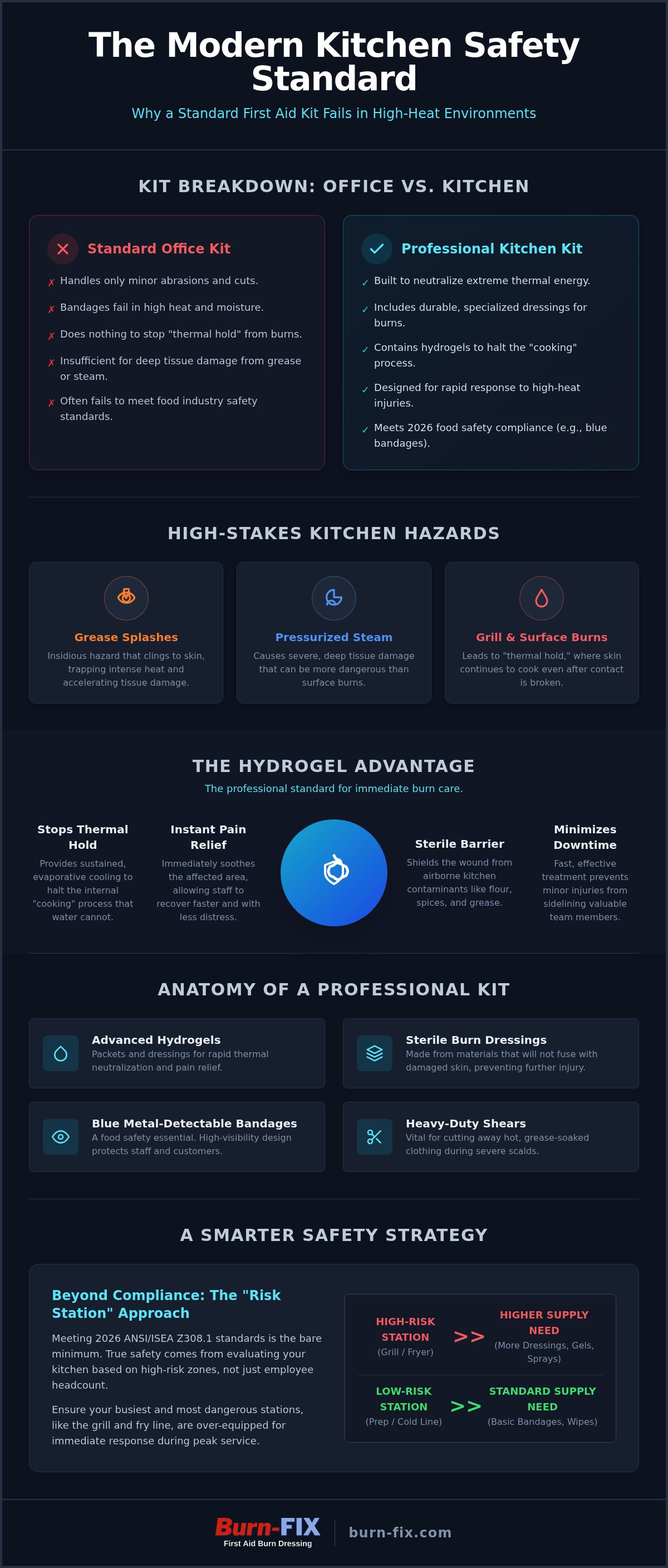
A generic first aid kit belongs in an office, not a kitchen. In a high-volume culinary environment, your supplies shouldn't just be a box of bandages; they must function as a specialized trauma response tool. While an office kit handles minor abrasions, a professional first aid kit for restaurants is built to neutralize extreme thermal energy. Standard adhesive bandages often fail here because they lack the durability to withstand the intense heat and constant moisture of a functioning line. Even worse, they do nothing to address "thermal hold," a dangerous phenomenon where skin continues to cook even after the heat source is gone.
The High-Heat Hazard: Grease, Steam, and Grills
Kitchen injuries are rarely superficial. A flash burn from a grill might singe the surface, but a grease splash or a pressurized steam blast causes deep tissue damage. Grease is particularly insidious because it clings to the skin, trapping heat against the body and accelerating the injury. Rapidly cooling the site is the only way to halt this internal "cooking" process. Without specialized hydrogels to draw that heat away, a minor incident can quickly escalate into a debilitating injury that sidelines your best staff for weeks. In the fast-paced world of professional cooking, these injuries happen in seconds. You need a solution that works just as fast to stop the pain and protect the tissue.
Beyond Compliance: Why OSHA Standards are the Minimum, Not the Goal
Meeting the 2026 ANSI/ISEA Z308.1 requirements for Class A or Class B kits is a legal necessity, but it's often insufficient for real-world kitchen safety. There is a significant gap between having a kit that satisfies an inspector and having the right supplies to manage a chef's specific risks. Inadequate first aid leads to higher liability and lost productivity. When a cook has to leave the line because a standard bandage won't stick or the pain from a steam burn is too intense to ignore, your entire service suffers. Investing in a robust first aid kit for restaurants ensures that your team feels protected and can return to work quickly and comfortably. True safety means being prepared for the trauma of the grill, not just the paperwork of the office.
Essential Components of a Professional First Aid Kit for Restaurants
Building a high-performance first aid kit for restaurants requires moving beyond the basic plastic box. You need a setup that accounts for the specific physics of kitchen injuries and the high-pressure environment of the line. Stocking the right tools allows your team to transition from a state of shock to a state of relief in seconds.
- Sterile dressings designed not to fuse with damaged skin
- High-visibility, blue metal-detectable bandages
- Advanced hydrogels for rapid thermal neutralization
- Heavy-duty shears for emergency clothing removal during scalds
Hydrogel is a moisture-rich cooling agent for burns. Unlike standard kits, a professional kitchen setup must prioritize items like heavy-duty shears. These are vital for cutting away hot, grease-soaked clothing during a severe scald, preventing fabric from trapping heat against the body and deepening the tissue damage.
Food safety is just as critical as staff safety. This is why blue, metal-detectable bandages are mandatory in any professional environment. If a bandage slips off during a busy shift, its bright color makes it easy to spot, and the metal strip ensures it's caught by detection systems before leaving the kitchen. Pair these with antiseptic wipes that are specifically formulated not to interfere with the cooling process of a burn. Using the wrong alcohol-based wipe can cause intense stinging and further dehydrate the wound site, slowing down the natural healing process.
Specialized Burn Care: The Role of Hydrogels
Hydrogel is the professional standard because it does what water cannot: it provides sustained, evaporative cooling to stop the "cooking" process. These dressings create a sterile, protective barrier that shields the wound from kitchen contaminants like flour, spices, and airborne grease. For smaller incidents, like a finger graze against a sheet pan, single-use packets of gel provide instant relief. Keeping a specialized burn kit stocked with these supplies ensures that heat is neutralized the moment contact happens.
Trauma and Wound Management
Kitchens aren't just hot; they're sharp. Your kit needs blood-stopper dressings designed to apply pressure to deep knife cuts, halting heavy bleeding faster than standard gauze. Additionally, saline eye wash stations are essential for neutralizing splashes from caustic cleaning chemicals. When it comes time to change a dressing, non-stick pads are vital. They ensure that the healing tissue isn't ripped away during the process, preventing secondary injuries and significantly reducing overall recovery time for your staff.
Hydrogel vs. Traditional Remedies: Why Modern Kitchens Choose Advanced Cooling
Old-school kitchen lore often suggests reaching for ice, butter, or flour after a burn, but these "remedies" are actually dangerous. Ice is too aggressive; it causes immediate vasoconstriction, which restricts blood flow and can lead to further tissue damage. Butter and flour are even worse in a commercial setting. They act as contaminants that trap bacteria against a raw wound. A modern first aid kit for restaurants must replace these myths with science-backed solutions that actually heal.
Unlike generic antibiotic ointments found in standard kits, hydrogel works through the process of evaporative cooling. While ointments create an occlusive seal that traps heat deep within the skin layers, hydrogel draws the heat out. If you're unsure about the best approach, learning what to put on a minor burn is the first step toward professional-grade safety.
The Danger of Trapping Heat
Thermal energy doesn't dissipate instantly. It lingers in the dermis, continuing to destroy healthy cells long after the initial contact with a hot pan or steam. Occlusive ointments act like an insulator, holding that residual heat against the tissue and potentially turning a first-degree burn into a painful second-degree injury. You want to neutralize the temperature, not preserve it. By using a cooling gel, you halt the damage immediately. This result-first intervention prevents the formation of deep blisters and significantly reduces the recovery time for your chefs.
How Hydrogel Stops the Burn Cycle
Applying a hydrogel dressing creates a sense of "calm urgency" in the middle of a busy shift. The relief is almost instantaneous. The gel provides a moisture-rich environment that mimics the skin's natural barrier, protecting the site while allowing it to breathe. This moisture retention is essential for the science of healing; it keeps the wound bed hydrated so cells can regenerate without being stifled. The soothing, cooling sensation does more than just heal the skin. It helps an injured staff member regain their composure, allowing them to step back from the crisis with confidence. A well-stocked first aid kit for restaurants ensures that your team moves from pain to comfort without the risks associated with outdated home remedies.
Selection Guide: Choosing the Right Kit for Your Restaurant Size
Effective protection begins with a realistic assessment of your floor plan. While many suppliers suggest buying a first aid kit for restaurants based solely on employee headcount, this often leaves high-risk areas under-equipped. You need to evaluate your facility based on "Risk Stations." A bar area might only require basic bandages for minor glass nicks, but your grill line demands a heavy concentration of hydrogel and sterile dressings to handle constant thermal threats. Base your supply quantities on your peak shift volume rather than just your total staff list to ensure you don't run out of essentials during a busy weekend rush.
Assessing High-Risk Stations
Kitchen layouts dictate your medical needs. Your prep area, where knives are the primary tool, needs a deep stock of bandages and blood-stoppers. Conversely, the cooking line is a high-heat zone that requires immediate access to hydrogel dressings. If you operate a seafood house or a kitchen with high-pressure steamers, your risk of deep-tissue scalds increases significantly. In these environments, one central kit isn't enough. You should place "satellite kits" or specialized modules at the most dangerous stations. This ensures that when a chef is injured, they don't have to navigate a crowded, slippery kitchen to find relief. The goal is to minimize the time between the injury and the application of a cooling agent.
Maintenance and Accessibility
Placement is a delicate balance. Your kit must be highly visible and accessible, yet shielded from the ambient grease and steam that can degrade adhesive and contaminate sterile packaging. Mounting the kit near an exit or a hand-washing station keeps it within reach while protecting the integrity of the supplies. A kit buried in a manager's office or hidden behind dry goods is useless during an emergency.
Establish a "Monthly Audit" led by a designated safety officer. This person should be responsible for checking expiration dates and restocking used items. Encourage your team to report any used supplies immediately so the kit is never empty during a crisis. Training your staff to treat the kit as a vital piece of kitchen equipment ensures a culture of proactive safety. For a comprehensive solution that simplifies this process, you can purchase a professional burn kit tailored to the specific needs of commercial culinary environments.
The Burn-Fix Solution: Professional Burn Care for High-Stakes Kitchens
Reliable safety requires more than a compliance checklist. The BurnFix Burn Kit stands as the definitive first aid kit for restaurants, offering a specialized response system designed for the unique trauma of high-heat environments. It's built on the principle of "calm urgency," providing kitchen managers with the exact tools needed to transition a staff member from intense pain to soothing comfort in seconds. By focusing on thermal neutralization rather than just coverage, this kit ensures that minor accidents don't escalate into long-term liabilities.
Rapid cooling is essential for large-area injuries. The BurnFix Hydrogel Burn Spray - 120ml allows for immediate application over grease splashes or steam scalds, neutralizing heat without requiring direct contact with sensitive tissue. For localized second-degree burns that require sustained moisture, the Burn-FIX 4x4 First Aid Burn Gel Dressing provides a sterile, moisture-rich environment that shields the wound. For those looking to understand the science behind these interventions, our 2026 Workplace First Aid Guide offers a deep technical comparison of modern healing technologies.
Instant Relief with BurnFix Sprays and Dressings
Pain relief should be instantaneous. When a chef applies a BurnFix dressing or spray, the cooling sensation is immediate, halting the "cooking" process of the skin and lowering the temperature of the affected area. The application is simple and intuitive, making it effective even during the height of a dinner rush when stress levels are high. Because the hydrogel is safe for all skin types, including those with sensitivities, you can provide professional-grade care to every member of your team without hesitation. This fast-acting relief doesn't just treat the injury; it restores the calm needed to keep the kitchen moving.
Why Restaurant Groups Trust Burn-Fix
Medical-grade reliability is the backbone of a professional kitchen. Restaurant groups choose Burn-Fix because our supplies are tested for the high-stakes reality of the culinary world. Our non-stick technology is a critical feature; it ensures that dressings can be removed painlessly without tearing away newly healed tissue. This prevents secondary trauma and speeds up the overall recovery process. You're not just buying a box of supplies; you're investing in a veteran solution that has been proven in real-world scenarios. Don't leave your team's safety to chance. Equip your kitchen with a BurnFix Burn Kit today and ensure you're prepared for the demands of 2026 and beyond.
Preparing Your Kitchen for a Safer 2026
Success in a high-pressure kitchen depends on your team's ability to recover from the unexpected. You've seen why a standard first aid kit for restaurants isn't enough to stop the "cooking" process of a deep grease scald or steam burn. By moving away from dangerous home remedies and embracing doctor-recommended hydrogel technology, you provide your staff with immediate pain relief. This transition from pain to comfort is vital for maintaining morale and productivity during a peak shift.
Professional safety means having sterile, moisture-retaining dressings ready at every high-heat station. These products are specifically designed for high-heat industrial environments, ensuring moisture stays in and contaminants stay out. Don't wait for a dinner rush crisis to realize your supplies are inadequate. Protect your staff with professional Burn-Fix kits today and build a culture where safety is as high a priority as the menu. Your crew works hard; they deserve the specialized care that keeps them safe, protected, and comfortable on the line.
Frequently Asked Questions
Does OSHA require a specific first aid kit for restaurants?
OSHA requires that employers ensure medical personnel or first aid supplies are readily available for all employees. While OSHA doesn't name a specific brand, it references the ANSI/ISEA Z308.1 standards for compliance. For a professional first aid kit for restaurants, you should aim for a Class B classification. This ensures you have the specific volume and variety of supplies needed to handle high-risk kitchen injuries like deep scalds or significant cuts.
Why should I use hydrogel instead of ice on a kitchen burn?
Ice is too aggressive for damaged skin tissue. Applying extreme cold causes vasoconstriction, which reduces blood flow and can lead to secondary tissue damage or frostbite. Hydrogel is the professional alternative because it uses evaporative cooling to draw heat away gently. It provides a moisture-rich environment that protects the wound bed, offering instant relief without the risk of freezing the delicate skin cells that are trying to recover.
How often should I restock my restaurant first aid kit?
You should perform a formal audit of your supplies at least once every month. However, a high-volume kitchen should restock individual items immediately after they are used during a shift. An empty kit is a liability during a crisis. Assigning a safety officer to check expiration dates and quantity levels ensures your first aid kit for restaurants is always ready to provide the calm, effective response your team depends on.
What are blue metal-detectable bandages and why do I need them?
These are specialized bandages designed for food manufacturing and culinary environments. The bright blue color is chosen because it doesn't occur naturally in food, making the bandage easy to spot if it accidentally falls into a dish. The internal metal strip allows industrial metal detectors to catch the bandage before it leaves the kitchen. Using these is a critical step in maintaining food safety while protecting your staff's minor cuts.
Can I use Burn-Fix hydrogel on a grease burn?
Yes, Burn-Fix hydrogel is specifically designed to neutralize the intense heat of grease burns. Grease clings to the skin and continues to "cook" the tissue long after the initial splash. Applying a hydrogel spray or dressing immediately halts this process by absorbing the thermal energy and providing a cooling barrier. It's safe for first and second-degree burns, helping to minimize blistering and providing the moisture retention needed for faster healing.
What is the difference between a Class A and Class B first aid kit?
The primary difference lies in the quantity and variety of supplies provided. Class A kits are designed for low-risk workplaces, like small offices, where minor injuries are rare. Class B kits are built for high-risk environments like commercial kitchens. They contain a higher volume of burn treatments, sterile pads, and splints. For restaurant safety, Class B is the standard because it accounts for the frequency and severity of injuries found on a busy cooking line.
Should a restaurant first aid kit include burn cream or gel?
You should prioritize hydrogel over traditional antibiotic creams or ointments. Creams are often occlusive, meaning they create a seal that can trap heat inside the skin and worsen a thermal injury. Hydrogel is a water-based cooling agent that allows the wound to breathe while providing moisture. It offers a "result-first" solution by neutralizing the burn temperature immediately, which is the most critical step in preventing deep tissue damage and long-term scarring.
How do I treat a steam burn in a commercial kitchen?
Steam burns require immediate intervention to stop the heat from penetrating deeper into the skin. First, safely remove any steam-soaked clothing using heavy-duty shears if necessary. Apply a hydrogel spray or a 4x4 dressing to provide instant cooling and moisture. This halts the thermal hold and protects the area from kitchen contaminants. Once the heat is neutralized, cover the site with a non-stick sterile dressing to ensure the healing tissue remains undisturbed and protected.


