


One moment you're playing with the kids or cycling down the street, and the next, a sudden slip leaves you with a raw, throbbing patch of skin that feels like it's still on fire. That intense stinging sensation is your body's alarm system, but the heat trapped in the tissue can continue to cause damage long after the initial contact. Knowing the right first aid for friction burns is the difference between a quick recovery and a permanent scar. Whether it's a minor carpet burn or a painful case of road rash, you need a solution that stops the burn in its tracks and protects your skin from infection.
It's completely normal to feel a sense of panic when you're staring at a weeping wound and wondering if it's a simple scrape or something more serious. We understand that your priority is immediate relief and ensuring that your skin heals without leaving a lasting mark. In this guide, you'll learn how to identify the severity of your injury, the safest way to clean the area without causing more pain, and professional techniques used to lock in moisture for faster healing. We'll show you how to neutralize the "hidden heat" and create the perfect environment for your skin to repair itself safely.
Key Takeaways
- Friction burns are dual-action injuries that combine mechanical scraping with thermal heat, requiring immediate cooling to stop progressive tissue damage.
- Effective first aid for friction burns involves gentle cleaning followed by the application of moisture-retaining barriers to block out infection and environmental stressors.
- Maintaining a moist wound environment is more effective than letting a dry scab form, as it significantly reduces intense stinging and promotes faster skin repair.
- Recognizing the difference between surface irritation and deep tissue damage helps you decide when home care is sufficient or if professional medical help is necessary.
- Long-term recovery depends on shielding new skin from sunlight and keeping the area hydrated to prevent permanent scarring or dark spots.
What is a Friction Burn? Understanding the Injury
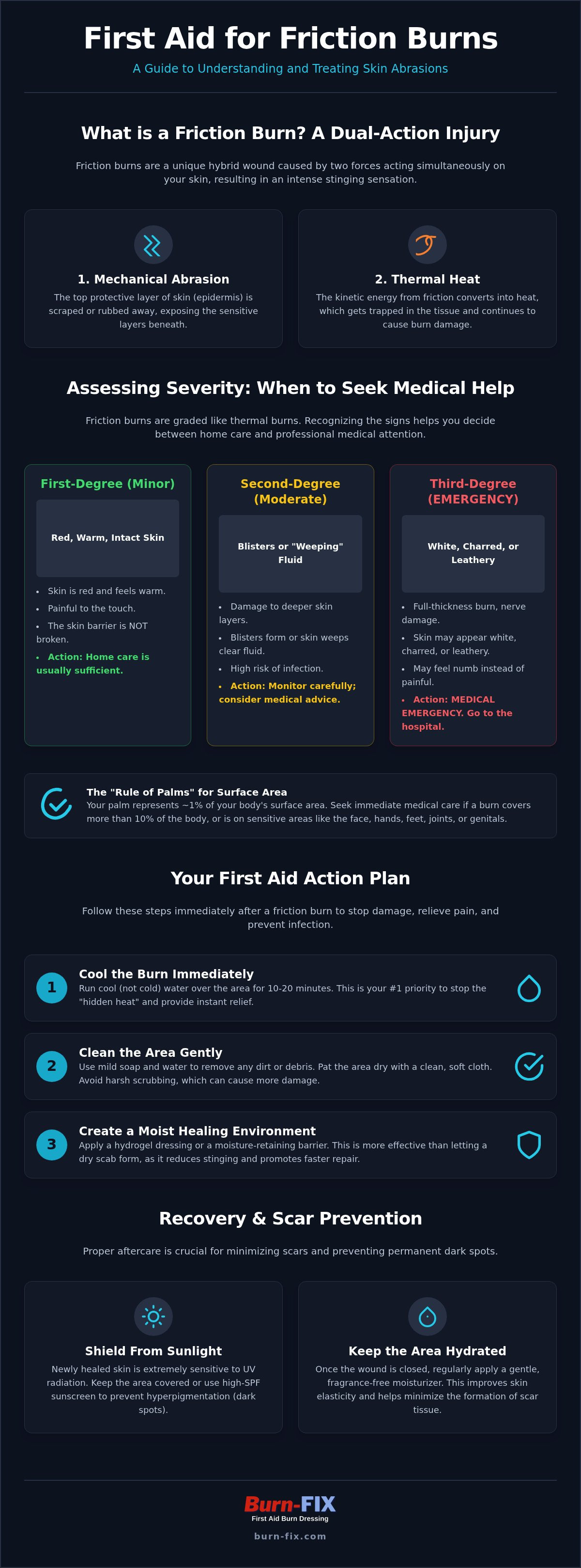
Stop the stinging by understanding the dual nature of your injury; a friction burn is a unique hybrid wound that requires a specific approach to care. Unlike a cut from a sharp object, this injury is caused by two distinct forces working against your skin: mechanical abrasion and thermal heat. When your skin rubs quickly against a rough surface, the kinetic energy from that motion transforms into heat. This heat is what causes the "burn" part of the injury, often damaging multiple layers of skin simultaneously. Understanding What is a friction burn? helps you realize that you aren't just dealing with a surface wound; you're dealing with heat that has been driven into the tissue.
These injuries go by many names depending on how they happened. You might call it a carpet burn or rug burn if it happened at home, while athletes often refer to them as floor burns. In more severe cases involving bicycles or motorcycles, it's known as road rash. Regardless of the name, the hallmark of this injury is an intense, localized stinging sensation that feels far more painful than the size of the wound might suggest. This pain is your body's signal that the skin barrier has been compromised and the underlying tissue is under stress.
Common Scenarios: From Carpet to Treadmills
Minimize the damage from household accidents by recognizing that carpet and rug burns are more than surface irritations. While they usually affect only the top layer of skin, they can still be incredibly painful. Treadmill burns represent a more modern and severe danger. Because of the high speed of the belt, these injuries can quickly progress to second-degree burns, requiring immediate first aid for friction burns to prevent deep tissue damage. Road rash is another common scenario where the friction is combined with debris like gravel or dirt, making the cleaning process even more critical to prevent infection from setting in.
Why Friction Burns Sting More Than Regular Scrapes
Neutralize the intense pain by addressing the exposed nerve endings in your upper dermis. When the top layer of skin is rubbed away, these nerves are left unprotected and highly sensitive to air and touch. Additionally, the heat component of the injury doesn't stop the moment the rubbing ends. This "hidden heat" continues to radiate through the skin layers, which is why immediate cooling is your absolute priority. Applying first aid for friction burns that focuses on cooling rather than just covering the wound is the best way to neutralize this heat and provide instant relief. By cooling the site quickly, you stop the progression of the burn and shield the body from further discomfort.
Assessing Severity: When is a Friction Burn an Emergency?
Evaluate the damage quickly to determine if home care is enough or if you need professional medical intervention. When performing first aid for friction burns, your first task is a visual triage. These injuries are classified by their depth, similar to thermal burns, and understanding these levels helps you choose the right recovery path. A first-degree friction burn is the most common; it presents as bright red, irritated skin that feels warm to the touch. While painful, the skin remains intact and doesn't usually require more than simple cooling and protection.
Second-degree burns are more complex because they involve damage to the deeper dermis layer. You'll recognize these by the presence of blisters or "weeping" skin where clear fluid seeps from the wound. This stage is highly sensitive and carries a higher risk of infection because the protective barrier is broken. If the skin appears white, charred, or leathery, you've entered the danger zone of a third-degree injury. These are full-thickness burns that damage nerves and deep tissue; they are medical emergencies that require immediate hospital care rather than home treatment.
The 'Rule of Palms' for Surface Area
Measure the extent of the injury using a simple medical guideline: the patient's palm represents roughly 1% of their total body surface area. If a case of road rash or a treadmill burn covers more than 10% of the body, or about ten "palms," the risk of fluid loss and systemic shock increases significantly. Even smaller burns require a doctor's eyes if they occur on sensitive areas like the face, genitals, or directly over a joint. For these moderate, weeping wounds that don't meet emergency criteria, applying a hydrogel burn dressing can provide the protective, non-stick barrier needed to soothe the area while you monitor for healing.
Red Flags: When to Seek Immediate Medical Help
Identify the warning signs that indicate home care isn't enough. If you see deep tissue exposure or a lack of pain in a deep wound, it suggests significant nerve damage. You should also seek help if you can't gently remove debris like gravel or glass from the site, as scrubbing too hard at home can cause further trauma. Watch closely for signs of a developing infection in the days following the injury. Seek a physician immediately if you experience any of the following:
- A fever or chills developing shortly after the injury.
- Red streaks emanating from the burn site toward the heart.
- Increased swelling, warmth, or pus draining from the wound.
- Pain that worsens over time instead of improving with first aid for friction burns.
Taking these signs seriously ensures that a simple accident doesn't turn into a long-term health complication. Quick assessment leads to faster relief and better cosmetic outcomes.
The Science of Healing: Why Moisture and Cooling Matter
Stop the heat to stop the damage. A friction burn creates a unique physiological demand for evaporative cooling that your body cannot manage on its own once the epidermis is compromised. When the skin is stripped away, the underlying layers lose their ability to regulate temperature and moisture. This creates a "heat sink" effect where the thermal energy from the initial friction continues to cook the surrounding tissue. Effective first aid for friction burns focuses on neutralizing this residual heat immediately to prevent the injury from deepening.
Heal faster by rejecting the myth of the dry scab. While many believe that letting a wound "air out" to form a hard scab is a sign of progress, the opposite is true. A dry scab acts as a physical roadblock for new skin cells; they must travel deeper and work harder to bridge the gap, which significantly increases the likelihood of a permanent scar. Maintaining a moist environment allows these cells to migrate across the wound surface with ease. This moisture also serves as a surrogate skin barrier, shielding exposed nerve endings and blocking opportunistic bacteria from entering the raw tissue.
The Danger of Ice and Home Remedies
Don't reach for the ice tray. While extreme cold seems like the logical answer to a burning sensation, ice causes immediate vasoconstriction. This narrowing of the blood vessels shuts down vital circulation to the site, which can actually worsen tissue death and lead to frostbite on already damaged skin. You should also avoid common kitchen "cures" like butter, flour, or heavy oil based ointments. These substances are dangerous because they trap heat against the wound and create a breeding ground for bacteria. Heavy ointments applied too early can seal in the "stinging" heat, making the pain last longer and increasing the risk of infection.
Hydrogel: The Professional Standard for Friction Relief
Experience instant relief through advanced hydrogel technology. Specialized dressings, such as the Burn-FIX 4x4 First Aid Burn Gel Dressing, are designed to mimic the skin's natural protective layer while providing a high water content to absorb deep tissue heat. This professional standard of first aid for friction burns works by drawing the thermal energy out of the wound and into the gel. The result is a transformative cooling effect that calms hyperactive nerve endings almost immediately upon contact.
Protect your recovery by choosing materials that won't stick. One of the greatest challenges in treating road rash or carpet burns is the pain of changing bandages. Because hydrogels are moisture-rich, they don't bond to the raw wound bed. This ensures painless removal during dressing changes, which protects the delicate new skin cells that are trying to knit the wound back together. Using a product like BurnFix Hydrogel Burn Spray provides a sterile, touch-free way to maintain this moisture balance throughout the day.
Step-by-Step First Aid for Friction Burns
Stop the stinging immediately. The first few minutes of first aid for friction burns are the most critical for preventing long-term damage and stabilizing the injury. Follow these professional steps to manage the pain and start the healing process safely at home.
Step 1: Cool the area. Run room-temperature water over the site for at least 10 minutes or use a specialized cooling spray. This draws out the thermal energy without shocking the tissue or causing the harmful vasoconstriction associated with ice.
Step 2: Clean the wound gently. If you're dealing with road rash, you'll likely see grit or dirt trapped in the skin. Use a mild, fragrance-free soap and let the water do the work of flushing out debris. Avoid aggressive scrubbing, which can drive bacteria deeper into the tissue and cause unnecessary trauma.
Step 3: Apply a sterile, cooling barrier. Once the area is clean, apply a hydrogel to neutralize any remaining heat. This provides an instant soothing effect on exposed nerve endings and creates a moisture-rich environment that prevents the wound from drying out.
Step 4: Protect the site. Cover the burn with a loose dressing. This shields the raw skin from air and physical contact, which are the primary triggers for that sharp, stinging pain.
Step 5: Monitor for 48 hours. Watch closely for signs of infection. If you notice increased redness, swelling, or heat in the days following the injury, seek medical attention immediately.
Cleaning Road Rash and Dirty Friction Burns
Dirty wounds require patience. Removing grit is essential, but you must do it without causing further trauma. If the wound is too sensitive for direct contact, use a burn relief spray for touch-free cooling and soothing. After flushing the area, pat the surrounding skin dry with sterile gauze. Never rub the open wound itself, as this can tear the delicate new skin cells attempting to form and lead to increased scarring.
Applying the Right Dressing
Choose a non-stick pad for the best results. Standard cotton gauze can fuse to a weeping friction burn, causing intense pain and reinjury when removed. Secure the pad with medical tape or a light wrap, but keep it loose enough to ensure healthy circulation and prevent swelling. For "weeping" second-degree burns, you may need to change the dressing twice a day to keep the area clean and manage fluid. For a complete recovery setup, the BurnFix Burn Kit provides everything you need to manage these steps professionally at home.
Recovery and Prevention: Your Home Safety Strategy
Protect your skin's future by focusing on the weeks following the injury. Once the raw stinging has subsided, the newly formed skin is incredibly delicate and vulnerable to environmental stressors. Consistent hydration of the wound site is the most effective way to minimize scarring; it keeps the tissue pliable and supports the final stages of cellular repair. You must also shield the area from direct sunlight. UV exposure on healing tissue often leads to permanent hyperpigmentation or dark spots, so applying a high-SPF sunscreen or keeping the area covered is a mandatory part of first aid for friction burns until the skin tone has fully evened out.
Preparation is the best defense against the panic of a sudden injury. Building a proactive emergency burn kit for home ensures that you have the right tools to stop pain immediately rather than scrambling through a cluttered medicine cabinet. Having a dedicated plan reduces stress and ensures that every member of the household knows exactly how to respond when an accident occurs.
Essential Supplies for Friction Burn Care
Standard adhesive bandages often fail to manage the weeping nature of a friction injury. This is why your home kit needs a Burn-FIX 4x4 First Aid Burn Gel Dressing. These specialized pads provide a sterile, non-stick environment that won't tear away new skin during changes. Athletes should keep travel-sized gel packets in their gym bags for instant floor burn relief, while home chefs should integrate these supplies into a dedicated kitchen safety first aid kit. Having these items on hand allows you to transition from injury to comfort in seconds.
Preventing Future Friction Injuries
Stop the burn before it starts by addressing common environmental risks. For athletes and cyclists, wearing moisture-wicking, abrasion-resistant clothing provides a sacrificial layer that absorbs the friction before it reaches your skin. Parents can prevent household accidents by performing regular safety checks on home equipment; ensure treadmill safety keys are always used and that area rugs are secured with non-slip backing. Educating children on the dangers of carpet sliding or high-speed floor play can significantly reduce the incidence of rug burns. By combining proper first aid for friction burns with these preventive habits, you create a safer environment for your entire family.
Take Control of Your Recovery and Shield Your Skin
Friction burns are more than simple scrapes; they're thermal injuries that demand immediate intervention to stop progressive tissue damage. By choosing to cool the wound rather than ice it and maintaining a moist environment instead of letting a hard scab form, you significantly reduce the risk of permanent scarring. Mastering the right first aid for friction burns allows you to transform a moment of intense stinging into a path toward comfortable, effective healing.
Don't wait for the next accident to occur before you prepare your home. Professional-grade solutions offer the instant cooling relief and moisture retention your skin needs during those first critical minutes. With doctor-recommended sterile dressings and non-stick technology for painless changes, you can protect your family with confidence. Equip your home with professional-grade Burn-Fix Hydrogel today to ensure you're ready for any minor crisis. You have the knowledge to treat these injuries safely; now make sure you have the right tools to finish the job.
Frequently Asked Questions
How long does it take for a friction burn to heal?
A superficial friction burn typically heals within three to seven days, while deeper second-degree injuries may take two to three weeks to fully repair. The speed of your recovery depends heavily on how well you maintain a moist environment at the wound site. Using moisture-retaining dressings prevents the formation of hard scabs that physically block new skin cells from migrating across the surface. Consistent protection ensures the tissue repairs itself without unnecessary delays.
Should I keep a friction burn covered or let it breathe?
Keep the wound covered to ensure a faster and more comfortable recovery. While old advice suggested letting a burn "breathe," modern medical standards show that exposing raw skin to air causes intense stinging and leads to dry scabbing. A sterile, non-stick dressing like the Burn-FIX 4x4 First Aid Burn Gel Dressing acts as a surrogate skin barrier. It shields exposed nerve endings from environmental triggers and prevents the bandage from bonding to raw tissue.
Can I put Neosporin or antibiotic ointment on a friction burn?
You can use antibiotic ointments on minor abrasions, but specialized hydrogels are often more effective for the thermal component of the injury. Heavy ointments can sometimes trap residual heat against the skin if they're applied too quickly after the initial contact. For the best results, use a water-based hydrogel first to neutralize the "hidden heat" and provide instant cooling relief. This approach addresses both the physical damage and the burning sensation simultaneously.
What is the difference between road rash and a friction burn?
Road rash is essentially a friction burn that occurs at high speeds and often involves embedded debris like dirt, gravel, or asphalt. While a carpet burn is a "clean" friction injury, road rash requires much more intensive cleaning to prevent deep-seated infections. Both injuries involve mechanical scraping and thermal heat, but road rash usually covers a larger surface area and carries a higher risk of scarring if the initial debris isn't gently and thoroughly removed.
How do I stop a friction burn from stinging immediately?
Stop the stinging by immediately neutralizing the heat trapped in your skin layers. The most effective first aid for friction burns is the application of a cooling agent like BurnFix Hydrogel Burn Spray. This professional-grade solution draws thermal energy out of the tissue and provides a protective moisture barrier over exposed nerve endings. If you don't have spray on hand, run room-temperature water over the site for at least ten minutes to stabilize the temperature.
Will a friction burn leave a permanent scar?
Most minor friction burns won't leave a permanent scar if you prevent a hard scab from forming and protect the new skin from the sun. Scars occur when the body has to work around a dry, physical barrier to knit the skin back together. By using moisture-retaining dressings and applying high-SPF sunscreen to the pink, newly healed area, you can prevent hyperpigmentation and ensure the final result blends seamlessly with your surrounding skin.
Can I use a friction burn spray on children?
Yes, you can safely use hydrogel products on children to provide fast relief from painful accidents. Burn-Fix products feature a doctor-recommended formula that is gentle enough for sensitive young skin while remaining powerful enough to stop the burning sensation. Having a child-safe option in your home kit is essential for first aid for friction burns because kids are prone to rug burns and playground slips that require immediate, soothing care without harsh chemicals.
What should I do if my treadmill burn starts blistering?
Blistering indicates a second-degree burn, so your priority is to keep the blister intact as a natural, sterile barrier against infection. Never pop or peel the skin, as this exposes the raw dermis to bacteria. Instead, protect the area with a loose, moisture-rich dressing like a Burn-FIX 4x4 pad. This cushions the site and provides the hydration needed for the underlying tissue to heal. If the blister is larger than your palm, seek professional medical help.


