


It happens in a split second. A slip of the hand while styling your hair is followed by the sharp, stinging sizzle of 400-degree ceramic against your forehead or neck. You're likely staring in the mirror right now, watching the skin turn an angry red and wondering if this mistake will leave a permanent mark. The panic is real, especially when you aren't sure whether to reach for the ice tray or a tube of ointment. Learning how to treat a curling iron burn correctly is the only way to stop the immediate agony and protect your complexion.
You deserve a recovery process that is fast and effective. This guide provides the professional, medical-grade steps needed to extract heat from the tissue, prevent painful blistering, and shield your skin from long-term scarring. We will cover the vital first minutes of water-based cooling, the science of moisture-retaining hydrogel dressings, and the specific recovery timeline that leads to smooth, scar-free healing. From instant relief to final protection, you'll have a clear roadmap to restore your skin's health and your own peace of mind.
Key Takeaways
- Stop burn progression immediately by cooling the affected area with lukewarm running water for 10 to 20 minutes to neutralize surface heat.
- Master the professional protocols for how to treat a curling iron burn by using hydrogel dressings to extract deep-seated heat and prevent painful blistering.
- Protect your skin from secondary damage by avoiding common myths like ice, butter, or toothpaste, which can trap heat and worsen the injury.
- Prevent permanent facial scarring by maintaining a moist healing environment and shielding the new tissue from UV exposure throughout the recovery phase.
- Ensure you are always prepared for styling accidents by keeping specialized, medical-grade burn gel dressings in your vanity for instant relief.
Immediate First Aid: What to Do the Second You Get Burned
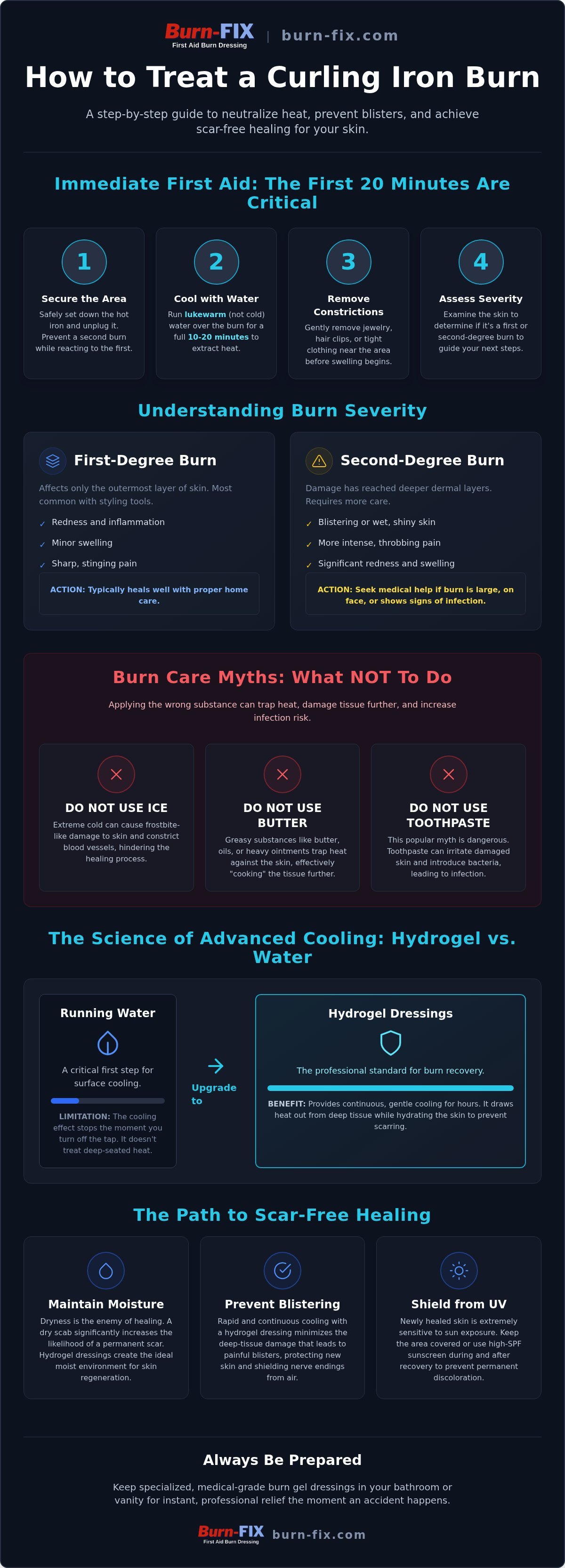
Reaction time is the single most important factor in determining whether your injury heals cleanly or leaves a lasting mark. When 400-degree heat meets delicate skin, every second counts. Your primary goal is to halt the thermal energy before it travels deeper into your tissue. Follow these four essential steps immediately to manage the crisis effectively and learn how to treat a curling iron burn with professional precision.
- Step 1: Safely set down the iron and move away. Don't let a second burn happen while you're reacting to the first. Unplug the device to eliminate any further risk.
- Step 2: Cool the skin under lukewarm running water for 10 to 20 minutes. This is the most critical step for heat extraction.
- Step 3: Remove jewelry, hair clips, or tight clothing near the site. Burns often cause rapid swelling, and items like rings or necklaces can quickly become dangerous constrictions.
- Step 4: Assess the damage. Look for specific visual cues that indicate the depth of the injury so you can choose the right recovery path.
The First 60 Seconds: Neutralizing the Heat
The damage doesn't stop the moment you pull the iron away. Your skin acts like a thermal sponge, holding onto high temperatures that continue to "cook" the underlying dermis long after contact. This is known as heat soak. If you don't intervene within the first minute, a minor surface burn can easily progress into a deeper, more painful injury. Lukewarm water is significantly safer than ice because extreme cold causes blood vessels to constrict, which can restrict vital blood flow and cause further tissue damage similar to frostbite.
Assessing Burn Severity
Understanding the difference between burn types helps you decide when home care is sufficient and when you need a doctor. Most styling accidents result in first-degree burns, which are characterized by redness, minor swelling, and a sharp, stinging sensation. These affect only the outermost layer of skin and typically heal without complication if kept moist.
Second-degree burns are more serious. You'll notice the skin looks wet or shiny, and blisters will likely begin to form. The pain is often much more intense because the heat has reached the deeper dermal layers. While you can often manage small second-degree burns at home, you should seek professional medical help if the burn is larger than three inches, occurs on the eyes or lips, or shows signs of infection like unusual discharge or spreading redness. Knowing how to treat a curling iron burn means knowing your limits; never attempt to treat a third-degree burn, which often looks charred or white, on your own.
The Science of Cooling: Why Hydrogel Beats Water
Running water is an excellent starting point for Immediate First Aid, but it has a significant limitation: it stops working the moment you turn off the tap. While water cools the surface, it rarely reaches the deeper layers of the dermis where residual heat continues to damage healthy cells. Understanding how to treat a curling iron burn effectively requires a transition from surface cooling to deep-tissue heat extraction. Hydrogel dressings provide this transition by utilizing a specialized cooling matrix that remains active for hours rather than seconds.
The primary enemy of a healing burn is desiccation, or the drying out of the skin. When a burn is left exposed to the air, the damaged tissue loses moisture rapidly. This leads to a hard, dry scab that increases the likelihood of a permanent scar. Hydrogel acts as a moisture-rich reservoir, keeping the wound bed hydrated while creating a "soothing barrier" that shields exposed nerve endings from the air. This immediate protection doesn't just lower your pain levels; it creates the ideal physiological environment for skin cells to regenerate without interruption.
How Hydrogel Works on Contact
Hydrogel operates through the physics of heat transfer. The gel consists of a high percentage of water held in a stable polymer structure. When applied to a hot curling iron burn, the gel absorbs the thermal energy from your skin and dissipates it through evaporation and conduction. This is the gold standard for burn recovery because it provides a constant, gentle cooling effect that water cannot match. Unlike a dry bandage, which can stick to the wound and cause agony during removal, a hydrogel dressing stays moist and lifts away cleanly without disturbing the new skin forming underneath.
Hydrogel vs. Ointments
Many people instinctively reach for heavy creams or antibiotic ointments like Neosporin the moment they get burned. This is a mistake. Oil-based products create an occlusive seal that traps heat inside the skin, effectively continuing the "cooking" process. You should never apply greasy substances to a fresh burn that still feels hot to the touch. Hydrogel is different because it is water-based and breathable, allowing heat to escape while providing essential moisture. For those who need a quick solution to neutralize the sting on the go, using an Instant Relief: Guide to Burn Relief Spray can bridge the gap between the initial accident and proper dressing. If you want to ensure your first-aid kit is truly prepared for styling mishaps, consider stocking up on specialized burn care supplies that prioritize heat extraction over simple coverage.
Curling Iron Burn Mistakes to Avoid
When the sudden sting of a high-heat contact injury hits, your first instinct is often to grab whatever is closest in the bathroom or kitchen. This moment of panic is where most people make critical errors that turn a minor accident into a long-term mark. Knowing how to treat a curling iron burn is as much about what you avoid as what you apply. Many common household "cures" actually insulate the heat or cause secondary tissue damage that complicates the recovery process.
The myth of "airing out" a wound is one of the most persistent and damaging pieces of advice. Research shows that burns heal significantly faster and with less pain when kept in a controlled, moist environment. Exposing a fresh burn to the air leads to desiccation, which is the drying out of the skin. This process kills off the delicate new cells trying to bridge the wound, resulting in a harder scab and a much higher chance of a visible scar.
The Dangers of Traditional Home Remedies
Kitchen staples like butter, coconut oil, or toothpaste should never touch a fresh burn. These substances are non-sterile and can introduce bacteria into compromised skin, leading to painful secondary infections. Oil-based products are particularly dangerous because they create an occlusive seal that traps the thermal energy inside your tissue, effectively continuing the "cooking" process long after the iron is gone. Following professional advice on Preventing Blisters and Scars means respecting the body's natural defense mechanisms. This includes leaving blisters intact. Popping a blister exposes the vulnerable wound bed to external contaminants and halts the orderly migration of new skin cells, which significantly increases the risk of thick, uneven scarring.
Why Ice is Not Your Friend
It seems logical to fight extreme heat with extreme cold, but ice is far too aggressive for damaged skin. Applying ice or even ice-cold water causes a physiological reaction called vasoconstriction. This is when your blood vessels clamp shut, severely reducing the flow of oxygen and nutrients to the injury site. Without proper blood flow, the skin cannot begin the repair process. Furthermore, the numbing effect of ice can mask the sensation of an "ice burn," where the freezing temperatures cause frostbite-like damage on top of your existing thermal burn. To properly manage the temperature, stick to lukewarm or cool running water. This provides a gentle, steady reduction in heat without shocking the system or starving the wound of the blood it needs to heal. When you are learning how to treat a curling iron burn, remember that the goal is to neutralize the heat, not to freeze the tissue.
Preventing Blisters and Scars on Sensitive Skin
The skin on your face and neck is significantly thinner than the skin on your hands, making these areas highly susceptible to deep thermal damage. When learning how to treat a curling iron burn on these sensitive zones, you must account for constant movement and the presence of external irritants like hair products. A burn on the forehead or neck requires a specialized approach because every time you speak, swallow, or change your expression, the healing tissue stretches. This mechanical stress can disrupt the skin's repair process, leading to wider scars if not managed with care and patience.
Treating Facial and Neck Burns
Securing a dressing on the forehead or ear requires a gentle hand. Use medical tape specifically designed for sensitive skin to hold your hydrogel dressing in place without causing further irritation upon removal. It's essential to keep hair products away from the site. Hairspray, dry shampoo, and perfumes contain alcohols and fragrances that can cause chemical stings or allergic contact dermatitis in an open wound. Understanding how to treat a curling iron burn in these areas often involves more moisture than other injuries. For comparison, you can look at First Aid for Finger Burns: Recovery Guide (2026), as facial skin requires much more consistent hydration than the tougher skin of the fingertips.
Long-term Scar Management
The final aesthetic outcome of your injury is largely determined within the first 48 hours. Maintaining a moist environment during this window prevents the formation of a thick, restrictive scab. Once the initial heat is gone and the skin has closed, you can transition from hydrogel dressings to a light, fragrance-free moisturizer to support the new skin barrier. However, your most important tool for scar prevention is sun protection. UV rays are the leading cause of post-inflammatory hyperpigmentation, which turns a fading burn into a permanent dark spot. Apply SPF 30+ to the healing site every single day for at least six months. If you notice the area becoming raised, hard, or excessively itchy, consult a dermatologist to discuss professional scar intervention. To ensure your skin has the best chance at a smooth recovery, consider keeping a Burn-FIX 4x4 First Aid Burn Gel Dressing in your styling kit for immediate application during future accidents.
Professional Burn Care at Home with Burn-Fix
Preparation is the bridge between a painful accident and a smooth recovery. While basic first aid is helpful, having professional-grade tools within reach ensures that you can execute the steps of how to treat a curling iron burn without hesitation. Using doctor-recommended, sterile hydrogel provides the medical authority your skin needs during those critical first minutes. By keeping a dedicated emergency burn kit for home in your bathroom vanity, you replace panic with a methodical, expert-backed response. This proactive approach is what separates a minor styling mishap from a permanent scar.
The Burn-Fix Advantage
Instant cooling is the hallmark of effective burn care. The Burn-FIX 4x4 First Aid Burn Gel Dressing is specifically designed to stop the stinging sensation within seconds of application. It works by drawing heat away from the wound and into the gel matrix, which effectively halts the progression of the injury. Because the dressing is non-stick, it allows for painless removal and dressing changes. This is vital for facial burns where the skin is delicate and prone to irritation. The compact sizing makes it easy to store in hair styling drawers or travel bags. You won't have to fumble for supplies when every second counts; the solution is right there, ready to neutralize the heat.
Building Your Styling Safety Kit
A comprehensive safety kit for hair styling should be as standard as your heat-protectant spray. Start with the BurnFix Hydrogel Burn Spray - 120ml for immediate, hands-free application on larger areas like the neck or shoulders. Follow this with the Burn-FIX 4x4 First Aid Burn Gel Dressing for sustained cooling and moisture retention. For those who travel or style on the go, the BurnFix Burn Gel - 3.5g Per Packet offers portable, high-impact relief that fits in any makeup pouch or purse. These packets are essential for busy mornings when you don't have time for a full dressing but need to stop the pain instantly. Knowing how to treat a curling iron burn with these specific tools means you are prioritizing the long-term health of your skin. For a broader look at home safety, you can also explore our Kitchen Safety First Aid Kit: The Essential 2026 Guide for Home Chefs to ensure every room in your house is prepared for thermal accidents. Your skin deserves the highest standard of care during a crisis. Shop the Burn-Fix collection for professional-grade relief.
Take Control of Your Recovery and Protect Your Skin
A curling iron burn is a painful interruption, but it doesn't have to leave a permanent mark on your forehead or neck. You now have the professional protocols for how to treat a curling iron burn with medical-grade precision. By prioritizing immediate cooling under lukewarm water and avoiding dangerous home remedies like ice or oils, you stop thermal energy from traveling deeper into your tissue. These first steps are the most effective way to prevent painful blisters and ensure a smooth healing process.
True recovery happens when you provide your skin with a moisture-rich, sterile environment. Our doctor-recommended solutions are specifically designed for 1st and 2nd-degree burns to extract deep-seated heat and shield sensitive nerve endings. This provides the instant cooling and pain relief you need to move forward without fear of lasting damage. Don't leave your complexion to chance during a styling crisis. Get Instant Relief with Burn-Fix Hydrogel Dressings and give your skin the moisture-retaining protection it deserves for scar-free healing. You are prepared to handle this accident with confidence and gentle care.
Frequently Asked Questions
How long should I cool a curling iron burn with water?
You'll want to cool the burn under lukewarm running water for 10 to 20 minutes immediately after the accident. This duration is necessary to extract the heat from the deeper layers of your skin and stop the thermal progression. Don't use ice or ice-cold water, as extreme temperatures can restrict blood flow and lead to further tissue damage. Consistent cooling is the most effective first step in learning how to treat a curling iron burn properly.
Will a curling iron burn leave a permanent scar on my face?
A permanent scar isn't inevitable if you manage the wound correctly from the start. Most curling iron accidents result in first or second-degree burns that heal well with proper hydration and protection. To minimize the risk, keep the area moist with hydrogel dressings and shield the new skin from UV rays for at least six months. Scars typically form when the skin dries out or is repeatedly irritated during the healing phase.
Can I put makeup over a curling iron burn?
It's best to avoid applying makeup to a fresh curling iron burn until the skin has completely closed and healed. Cosmetics often contain fragrances, alcohols, and pigments that can irritate the wound or cause a secondary infection. Applying foundation over an open burn also traps heat and bacteria, which can lead to deeper scarring. Once the skin is smooth and no longer tender, you can use makeup along with a high-quality SPF.
What is the best cream or gel for a hair tool burn?
Sterile hydrogel is the superior choice for hair tool burns because it provides instant cooling and maintains a moist environment. Unlike heavy creams that can trap heat, a product like Burn-FIX 4x4 First Aid Burn Gel Dressing actively extracts thermal energy while protecting exposed nerve endings. This moisture-retaining technology is doctor-recommended for 1st and 2nd-degree burns. It ensures the wound bed stays hydrated, which is the most critical factor in preventing thick scabs.
Is it okay to put Neosporin on a fresh curling iron burn?
You shouldn't apply Neosporin or other oil-based antibiotic ointments to a fresh burn that still feels hot to the touch. These products create an occlusive barrier that traps residual heat inside your skin, potentially worsening the injury. It's better to use a water-based hydrogel during the first 24 to 48 hours to ensure the heat is fully dissipated. Save antibiotic ointments for later stages if a doctor specifically recommends them for infection prevention.
How do I know if my curling iron burn is infected?
Signs of infection include spreading redness, increased swelling, or the presence of yellow or green discharge from the wound. You might also notice that the pain is getting worse instead of better after the first 48 hours. If the area feels hot to the touch or you develop a fever, these are clear indicators that you need professional medical attention. Monitoring your skin's reaction is a vital part of knowing how to treat a curling iron burn.
Should I cover a curling iron burn or let it breathe?
You should always cover a curling iron burn with a sterile, non-stick dressing rather than letting it breathe. Exposing a burn to the air causes the tissue to dry out and die, which leads to painful scabbing and higher scar risks. A hydrogel dressing provides a protective barrier against bacteria while keeping the wound moist. This controlled environment allows skin cells to migrate and repair the damage much faster than dry, exposed skin.
What happens if a curling iron burn starts to blister?
Blistering indicates that the injury has reached the second-degree level, affecting deeper layers of the dermis. It's essential that you don't pop or peel these blisters, as the fluid inside acts as a natural, sterile bandage for the raw skin underneath. If a blister breaks on its own, gently clean the area and apply a fresh hydrogel dressing to maintain moisture. Protecting the blister is the best way to ensure smooth, scar-free healing.


