


That painful, fluid-filled bubble on your skin isn't an enemy to be defeated; it's actually nature's most sophisticated biological seal. While your first instinct might be to reach for a sterile needle, learning how to treat burn blisters correctly starts with one golden rule: never pop them. We understand the stinging, throbbing pain that makes every second feel like an hour. You're likely feeling anxious about an accidental rupture or the prospect of a permanent scar, but you don't have to manage this injury with outdated home remedies or guesswork.
This 2026 guide provides the professional-grade steps you need to transform that intense heat into immediate, cooling relief. You'll discover how modern hydrogel technology, such as BurnFix, creates a protective moisture barrier that stabilizes the wound and prevents infection. We'll walk you through a clear, clinical plan to manage the pain instantly, shield the blister from friction, and ensure your bandages come off smoothly without tearing delicate new skin. From initial cooling to advanced skin regeneration, here is your roadmap to a safe and rapid recovery.
Key Takeaways
- Respect the biological seal of a blister to prevent infection and allow the natural serum underneath to protect raw skin during the healing process.
- Master the professional protocol on how to treat burn blisters, beginning with 10 to 20 minutes of cooling under running water to neutralize the heat.
- Switch from traditional dry gauze to hydrogel technology to maintain the moisture levels necessary for rapid, efficient skin regeneration.
- Utilize Burn-FIX 4x4 First Aid Burn Gel Dressings to create a soothing, non-stick barrier that prevents further trauma to the injury site.
- Develop a clear recovery plan focused on infection prevention and safe bandage removal to minimize the risk of permanent scarring.
Understanding Burn Blisters: Why Your Skin Reacts This Way
A burn blister is the definitive hallmark of a second-degree (partial thickness) burn. It occurs when intense heat damages the delicate junction where your epidermis meets the dermis. This separation allows fluid to leak from damaged blood vessels, creating a raised bubble. A second-degree burn is an injury that penetrates the top layer of skin to create a protective fluid pocket. While the sight of a blister can be alarming, it's your body's immediate defense mechanism in action. By Understanding Burn Classifications, you can better assess the severity of your injury and determine the appropriate level of care. Knowing how to treat burn blisters correctly starts with recognizing that the fluid inside, known as serum, serves as a natural, sterile barrier for the raw skin developing underneath.
The 'Nature's Bandage' Concept
Think of the blister roof as a biological seal. You shouldn't intentionally pop or drain a burn blister, as doing so breaks this sterile environment and invites secondary infection. The serum trapped inside isn't just waste; it's a nutrient-rich cocktail that supports the migration of new skin cells. This "nature's bandage" keeps the wound bed moist, which is essential for rapid healing. When the blister remains intact, it provides a physical shield against bacteria and external contaminants that could complicate your recovery. It also ensures that the delicate new tissue forming underneath doesn't dry out or become damaged by friction.
Signs Your Blister Needs Professional Attention
Most minor blisters can be managed at home, but certain symptoms require immediate medical intervention. If a blister is larger than the palm of your hand, you should seek emergency care. The location of the injury also matters significantly. Burns on the face, hands, feet, joints, or groin area are considered "danger zones" due to the risk of functional impairment or scarring. You must also be able to differentiate between a standard second-degree blister and a more severe third-degree burn. While second-degree burns are wet and blistered, third-degree burns often appear charred, leathery, or white and may lack sensation because of nerve damage. If you notice these signs, professional treatment is mandatory. Understanding how to treat burn blisters involves knowing when the situation has exceeded the limits of home first aid.
The Science of Healing: Why Moisture is Mandatory
Healing begins with hydration. For decades, the common advice was to "let the air get to it" or wait for a thick scab to form. Modern clinical research has completely overturned this approach. Moist wound healing is now the gold standard because it allows new skin cells to migrate across the wound bed with significantly less effort than in a dry environment. When a burn site is allowed to dry out, the cells on the surface become dormant or die, which triggers inflammation and increases the likelihood of deep scarring. Understanding First Aid for Burns means recognizing that a moisture-rich environment is your most powerful tool for recovery.
Hydrogel technology is specifically engineered to maintain a perfect osmotic balance. It provides a reservoir of moisture that the skin can draw from, ensuring that the healing process never stalls due to dehydration. This is particularly important when you're learning how to treat burn blisters, as the delicate skin underneath the blister roof is extremely sensitive to changes in moisture levels. By providing a consistent, soothing environment, you help the body focus on regeneration rather than fighting off the effects of a dry, harsh atmosphere.
Hydrogel vs. Ointments: The Heat Trap Debate
Choosing the wrong topical treatment can actually worsen a burn. Many people reach for heavy ointments, petroleum jelly, or even butter, but these substances act as insulators. They create a thick, occlusive seal that traps residual heat within the skin tissues, causing the burn to "cook" even after the heat source is removed. Water-based hydrogel offers a professional alternative. It works through a process of heat transfer, drawing thermal energy away from the body and into the gel. Applying a burn relief spray provides this cooling rescue immediately, neutralizing the initial trauma without sealing in the heat that causes further damage.
Preventing the 'Dry-Out' Cycle
A brittle blister is a high-risk blister. If the roof of the blister is allowed to dry, it becomes stiff and prone to cracking, which destroys the natural sterile barrier your body worked so hard to create. When you're determining how to treat burn blisters effectively, maintaining suppleness is essential for keeping that "nature's bandage" intact. Using a hydrogel dressing for blisters keeps the surrounding skin flexible and protected. This moisture retention also has a profound effect on pain management. It coats the exposed nerve endings that cause that characteristic stinging sensation, providing a transition from sharp distress to a manageable, cooling calm. For reliable protection, a Burn-FIX 4x4 First Aid Burn Gel Dressing creates the ideal moisture-retaining barrier to safeguard your skin through every stage of the healing journey.
Hydrogel Dressing vs. Traditional Gauze
Traditional dry gauze is often the first thing people reach for, yet it can be one of the most damaging choices for a delicate blister. Cotton gauze is composed of thousands of tiny fibers that, while absorbent, are inherently abrasive to damaged skin. In contrast, a 4x4 hydrogel pad provides a smooth, gelatinous interface that cushions the injury. When you're learning how to treat burn blisters, the physical properties of your dressing matter as much as the initial cooling. Hydrogel possesses superior thermal conductivity, allowing it to continue drawing residual heat away from the wound for hours. Cotton gauze acts more like an insulator, potentially keeping the skin's temperature elevated and prolonging the "stinging" sensation that follows a second-degree burn.
Managing the "weeping" of a blister is another area where these materials diverge. If a blister breaks naturally, it releases serum that can quickly saturate a standard bandage. As cotton gauze dries, the fluid acts like a glue, bonding the bandage fibers directly into the raw, regenerating tissue. A Burn-FIX 4x4 First Aid Burn Gel Dressing is engineered to manage this exudate without adhering to the wound bed. This ensures the site remains moist and protected without the risk of the dressing becoming a part of the scab. Following authoritative first aid for burns protocols means choosing materials that support, rather than hinder, the body's natural recovery pace.
The Trauma of Bandage Removal
The most distressing part of burn care is often the bandage change. Removing a dry, stuck bandage from a blister is a major trauma risk that can rip away the protective blister roof or tear new skin cells. For children and those with sensitive skin, this pain can cause significant anxiety. Using non-adherent hydrogel technology allows for a painless removal process. This is especially critical for high-movement areas where skin is thin and frequently flexed. For example, effective first aid for finger burns relies on dressings that stay in place during movement but slide off easily during changes without causing further injury.
Creating a Bacterial Barrier
A sterile environment is non-negotiable for second-degree injuries. Porous gauze has microscopic holes that can allow external contaminants, dust, and bacteria to reach the wound. Occlusive hydrogel dressings create a total physical shield that blocks these invaders more effectively. By sealing the area, you reduce the risk of secondary infection and can often decrease the frequency of dressing changes. This allows the skin to rest and regenerate in a stable, undisturbed environment. When determining how to treat burn blisters at home, prioritizing this bacterial barrier is the most effective way to ensure a complication-free healing journey.
Step-by-Step: How to Treat a Burn Blister at Home
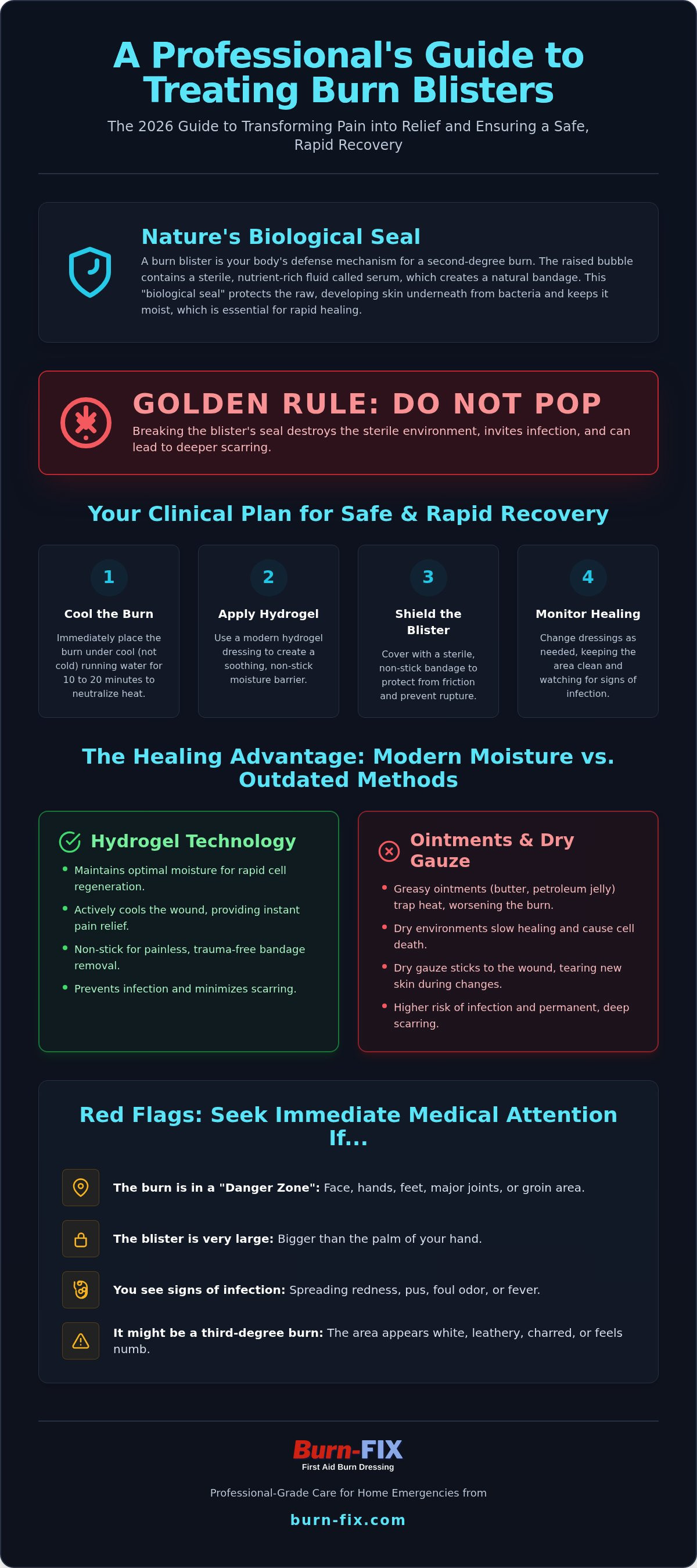
Mastering how to treat burn blisters requires a steady hand and the right supplies. Cooling comes first. Run cool (not cold) tap water over the site for 10 to 20 minutes to halt the burning process immediately. This action prevents the heat from traveling deeper into your tissue and provides instant relief from the initial stinging pain. Unlike some advice found on social forums, you should never use ice. Extreme cold can cause frostbite, adding a secondary injury to the first. Once the skin is cooled, assess the situation. If the blister is on your face or is larger than your palm, you should seek professional help. For smaller, manageable injuries, apply a hydrogel spray or dressing gently over the site. This provides a soothing shield that mimics the skin's natural moisture. Finally, secure the dressing loosely with a bandage. Pressure is the enemy of a healing blister; you want to protect it from friction without squeezing or compressing the fluid pocket.
This systematic approach ensures you're providing the best environment for your body to heal. By focusing on temperature control and moisture retention, you reduce the risk of the blister popping prematurely. Learning how to treat burn blisters properly at home can be the difference between a quick recovery and a long process involving painful scabs and potential scarring.
What to Do If the Blister Breaks
If a blister ruptures accidentally, don't panic. Clean the area gently with mild soap and water to remove any contaminants. You must leave the "flap" of skin in place rather than cutting it off. This skin still acts as a vital protective layer for the raw tissue underneath. To replace the lost natural barrier, apply a sterile burn dressing 4x4. This clinical-grade dressing provides the moisture needed to prevent the wound from drying out and sticking to your bandages.
Source-Specific Care Tips
Different heat sources require tailored approaches for the best results. For instance, first aid for steam burns often involves managing larger surface areas that need immediate, broad cooling. A burn from an iron or a curling iron burn tends to be localized but deep, making a thick hydrogel layer essential to draw out deep-seated heat. When managing first aid for stove burns, ensure any grease is gently rinsed away before bandaging to prevent trapping bacteria against the skin. To keep your family prepared for any of these common household accidents, ensure your first aid supplies include a professional BurnFix Burn Kit.
Burn-Fix Solutions: Professional Care for Home Emergencies
When a kitchen crisis strikes, the "stinging" pain of a burn can trigger an immediate sense of panic. This is where Burn-Fix provides "calm urgency." Our hydrogel formula is designed to intervene at the moment of trauma, neutralizing heat and transitioning you from distress to comfort. While you're learning how to treat burn blisters, having the right tools on hand is the most critical step in your recovery plan. Our Burn-FIX 4x4 First Aid Burn Gel Dressing serves as the essential centerpiece for every emergency burn kit for home. It provides a professional-grade moisture barrier that standard household supplies simply cannot match. For smaller incidents, like a hot pan grazing a knuckle or a friction burn from a tool, our 3.5g BurnFix Burn Gel packets offer the same clinical-grade protection in a portable, single-use format.
Building Your Home First-Aid Defense
Most off-the-shelf first-aid kits are designed for minor cuts and scrapes, often leaving you unprepared for the complexities of a second-degree blister. A standard adhesive bandage can't manage the residual heat or the delicate fluid pocket of a burn. This is why a specialized defense is mandatory. The BurnFix Hydrogel Burn Spray (120ml) is a versatile addition to your medical cabinet, offering a touch-free application for large-area scalds or painful sunburns. It delivers fast-acting relief that stops the pain-panic cycle, allowing you to manage the injury with a clear head. By cooling the site through advanced heat transfer rather than simple evaporation, the spray mimics the body's natural cooling properties while shielding the wound from external stressors and bacteria.
Trust the Specialist
You shouldn't have to guess when it comes to your family's safety during a minor emergency. Burn-Fix offers a doctor-recommended hydrogel formula that has been tested in real-world scenarios to ensure speed, safety, and effectiveness. Our products are gentle enough for a child's sensitive skin yet powerful enough to meet the standards of professional first responders. We focus heavily on the science of moisture-retaining barriers because we know that a protected wound is a fast-healing wound. When you understand how to treat burn blisters with the right technology, you're not just managing immediate pain; you're actively preventing long-term scars and ensuring a smooth recovery process. Shop the full Burn-Fix collection to stay prepared for any accident.
Take Control of Your Healing Journey
Recovery starts with the right choices. You've learned that a blister is more than just a wound; it's a sterile, biological seal that protects your body while it regenerates. By prioritizing moist wound healing and avoiding the "dry-out" cycle of traditional gauze, you safeguard that natural barrier. Mastering how to treat burn blisters with clinical-grade materials transforms a painful accident into a manageable recovery. It's about moving from the sharp sting of trauma to the soothing calm of a protected injury.
Don't wait for a kitchen crisis to realize your first-aid kit is missing essential supplies. Our doctor-recommended formula provides instant cooling and pain relief exactly when you need it most. With our non-stick technology for painless removal, you can change dressings without the fear of damaging new tissue. Be prepared for the unexpected—get your Burn-Fix Hydrogel Dressing today. You have the knowledge and the tools to heal safely and rapidly. Stay prepared, stay protected, and trust your body's incredible ability to bounce back.
Frequently Asked Questions
Should I pop a burn blister if it is very large?
You should never pop a burn blister regardless of its size. The blister acts as a sterile environment for the raw skin underneath. Intentionally breaking this seal invites bacteria and can lead to secondary infections that complicate your recovery. If the blister is exceptionally large, such as being larger than the palm of your hand, you should seek emergency medical attention rather than attempting to drain it yourself.
Can I put Neosporin on a burn blister?
You shouldn't apply antibiotic ointments like Neosporin unless specifically directed by a healthcare professional. These ointments can sometimes trap heat if applied too early and don't provide the same moisture-retaining benefits as a hydrogel. Instead, use a doctor-recommended hydrogel formula to maintain the ideal environment for skin regeneration. This approach focuses on cooling the site and protecting the blister roof without the need for heavy, greasy ointments.
How long does it take for a burn blister to heal?
Most burn blisters take between one and three weeks to heal completely. The exact timeline depends on the depth of the injury and how well you maintain a moist environment. During the first few days, the focus is on cooling and protection. By the second week, you'll typically notice the fluid being reabsorbed as new skin matures underneath. Consistent use of hydrogel dressings can help streamline this process and reduce scarring.
What happens if a burn blister pops on its own?
If a blister ruptures naturally, your primary goal is to keep the area clean and protected. Gently wash the site with mild soap and water, but don't remove the flap of skin. This skin still provides a layer of protection for the sensitive tissue underneath. Apply a Burn-FIX 4x4 First Aid Burn Gel Dressing immediately to replace the lost natural barrier and keep the wound from drying out or sticking to bandages.
Is it okay to use ice to cool a burn blister?
You must never use ice or ice water to treat a burn. Extreme cold can cause further tissue damage and even lead to frostbite on top of the existing burn injury. The safest way to cool a blister is to run cool tap water over the area for 10 to 20 minutes. This provides effective relief without the risk of thermal shock or additional skin trauma that ice often causes.
How do I know if my burn blister is infected?
Signs of infection include increased pain, swelling, or redness that spreads away from the original burn site. You should also look for pus or cloudy fluid leaking from the blister rather than clear serum. If you experience a fever or notice red streaks leading from the injury, these are serious indicators that the wound needs professional medical assessment. Catching these symptoms early is vital for preventing systemic complications.
Can I use a regular adhesive bandage on a burn blister?
Regular adhesive bandages aren't ideal because they often stick to the blister and can rip the skin during removal. When you're learning how to treat burn blisters, choosing a non-stick hydrogel dressing is much safer. These specialized dressings provide a moisture-rich cushion that protects the fluid pocket without adhering to it. This ensures you can change the bandage painlessly without the risk of accidentally popping the blister or tearing new skin.
When should I see a doctor for a burn blister?
You should seek medical care if the blister is on your face, hands, feet, or over a major joint. Medical attention is also necessary for any burn larger than three inches or one that shows signs of infection like pus or worsening redness. Understanding how to treat burn blisters at home is important, but professional intervention is mandatory for deep injuries or those that appear charred, white, or leathery.


