


Reaching for the butter or a handful of ice cubes might be your first instinct after a painful mishap with the steam iron, but these common kitchen "cures" can actually trap heat and deepen the damage to your skin. When you're treating a burn from an iron, the goal isn't just to stop the initial sting; it's to protect the delicate tissue from further trauma. You need a method that cools the area without causing thermal shock or introducing bacteria to the wound site.
We understand the intense, localized stinging that follows a contact burn. It's a moment of distress where you're worried about how much it'll hurt tonight and whether it'll leave a permanent mark. You deserve a solution that works fast and keeps the area protected from infection while providing immediate physical relief. Most people feel confused by conflicting home remedies, but professional first aid focuses on stability, protection, and moisture retention.
This guide provides a professional, step-by-step approach to neutralizing the heat and using moisture-retaining hydrogel technology to ensure your skin heals smoothly. We'll walk through the immediate steps to take in the laundry room, the science of moist wound healing, and how to prevent blisters from forming so you can recover quickly without a lasting scar.
Key Takeaways
- Stop the heat progression immediately by running cool tap water over the injury for at least 10 to 20 minutes before applying any treatments.
- Understand why treating a burn from an iron requires specific care because these appliances operate at extreme temperatures between 300°F and 400°F.
- Replace traditional ointments with hydrogel technology to avoid trapping heat and to maintain the moist environment necessary for fast, scar-free healing.
- Manage blisters professionally by leaving them intact and covering the site with a 4x4 hydrogel dressing to provide a protective barrier against external stressors.
- Prepare for household accidents by keeping a dedicated burn kit in your laundry room to ensure fast-acting pain relief is always within reach.
Assessing the Severity of an Iron Burn
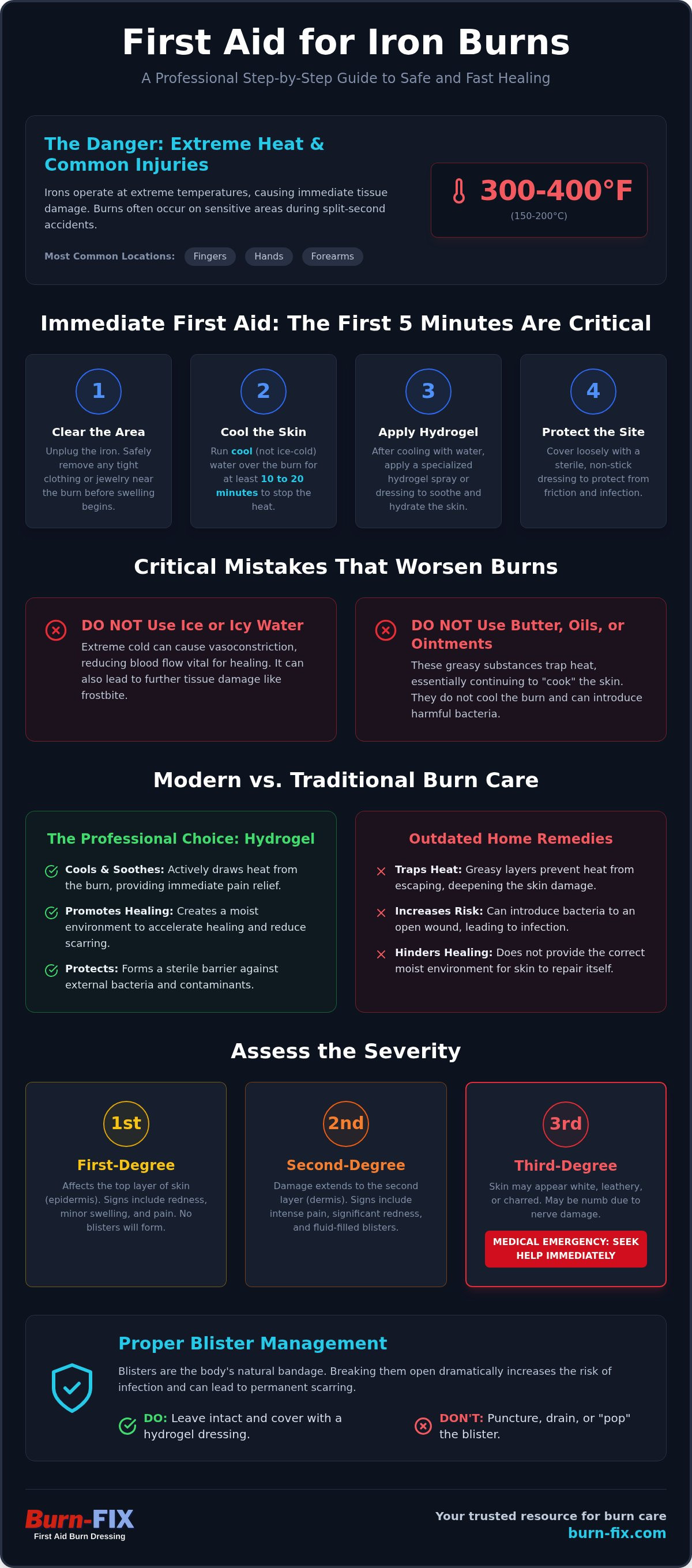
Household irons are deceptive. While they look harmless sitting on your laundry board, their metal plates reach extreme temperatures between 300°F and 400°F. This is more than enough heat to cause instant tissue damage upon contact. When you're treating a burn from an iron, your first task is identifying how deep the heat traveled. Most iron accidents result in first or second-degree injuries, but knowing the difference is vital for your recovery and long-term skin health.
A first-degree burn affects only the top layer of skin. You'll see immediate redness and feel a sharp, dry heat, but no blisters will form. If you notice swelling and fluid-filled blisters accompanied by intense, throbbing pain, you've likely sustained a second-degree burn. This indicates the heat has reached the dermis. For a detailed look at understanding burn severity, medical classifications help determine if home care is sufficient or if professional help is needed.
Stop home treatment and seek emergency care immediately if the skin appears white, leathery, or charred black. These are signs of a third-degree burn. Because these injuries often damage nerve endings, they might feel surprisingly numb despite the visible damage. This is a medical emergency that requires specialized intervention beyond standard first aid.
Iron Plate vs. Steam Burns
Direct contact with the iron plate causes a focal, high-heat injury. However, steam burns are often more deceptive and can be deeper than they initially appear. Steam carries significantly more energy than boiling water. Because it's a gas, it can penetrate skin pores and clothing fibers quickly, transferring heat deeper into the tissue almost instantly. If you've been scalded by a burst of vapor, check our guide on first aid for steam burns to address the specific needs of wet-heat injuries.
Common Burn Locations: Fingers and Arms
Most ironing accidents happen in a split second. You might graze a knuckle while adjusting a collar or brush your forearm against the plate while reaching for a garment. Skin thickness varies significantly across these areas. The skin on your forearm is thicker and may withstand heat slightly longer than the thin, sensitive skin on your hands.
Finger burns are particularly distressing because of the high density of nerve endings in your fingertips. When you need first aid for finger burns, remember that joint mobility makes healing more complex. Swelling on a knuckle can cause the skin to stretch, increasing discomfort and the risk of a blister popping. Treating a burn from an iron on these high-motion areas requires flexible protection that maintains moisture without restricting your natural movement.
Immediate First Aid: The First Five Minutes
Act fast to stop the damage. The first five minutes after contact are the most critical window for immediate first aid for burns. When you're treating a burn from an iron, your priority is to halt the "cooking" process that continues even after you've pulled your skin away from the metal plate. Residual heat trapped in the skin layers continues to destroy healthy tissue until it's actively neutralized.
Follow these immediate steps to stabilize the injury:
- Clear the area: Unplug the iron and move it to a safe location. Remove any rings, watches, or bracelets near the site. Metal jewelry retains heat and can restrict blood flow if the area begins to swell.
- Cool the skin: Run cool tap water over the burn for at least 10 to 20 minutes. This duration is necessary to pull the heat from the deeper layers of the dermis.
- Apply a cooling agent: Once the initial heat is stabilized, using a specialized spray can provide prolonged relief. Keeping a bottle of BurnFix Hydrogel Burn Spray in your laundry room allows you to continue the cooling process through evaporation without needing to stay by a sink.
- Protect the site: Shield the area from friction. Even a light sleeve brushing against a fresh burn can cause intense pain and damage the fragile top layer of skin.
The Danger of Ice and Extreme Cold
Ice feels like an intuitive solution, but it's often a trap. Applying ice or freezing water to a thermal burn causes a reaction called vasoconstriction. This process narrows the blood vessels, which significantly reduces the blood flow needed for the skin to begin repairing itself. In some cases, extreme cold can cause "frostbite" on top of the heat injury, doubling the trauma to your cells. Room-temperature or slightly cool water is the medical gold standard because it safely lowers the skin's temperature without shocking the system.
Initial Pain Management Strategies
Positioning your body correctly can provide instant, drug-free relief. If the burn is on your arm or hand, keep the limb elevated above the level of your heart. This simple adjustment reduces the "throbbing" sensation by preventing blood from pooling at the injury site. Maintain a sense of calm urgency. High stress can increase your sensitivity to pain, so focus on steady breathing while you administer care.
Resist the urge to raid your pantry for remedies. Never use butter, toothpaste, or flour on a fresh iron burn. These substances are not sterile and can trap heat against the skin, making the injury worse and increasing the risk of a painful infection. Stick to professional cooling methods to ensure the fastest possible recovery.
Why Hydrogel Beats Traditional Home Remedies
Old-fashioned kitchen remedies often do more harm than good. While your grandmother might have suggested butter or flour, these substances are not sterile and can actually trap heat against the skin. When you are treating a burn from an iron, the goal is to dissipate heat, not insulate it. Ointments and heavy creams create a seal that prevents the skin from cooling down, which can cause the thermal damage to spread deeper into your tissue long after the initial contact.
Hydrogel technology works differently. It's a water-based solution that mimics the skin's natural moisture levels while providing a cooling effect through evaporation. By using a product like BurnFix Burn Gel, you provide an immediate heat-wicking action that stabilizes the wound. This is a critical step in first aid for minor burns because it addresses both the pain and the underlying temperature of the injury site simultaneously.
Hydrogel vs. Petroleum Jelly
While petroleum jelly is frequently recommended for wound care, it's an occlusive agent. It's designed to seal things in. If you apply it to a fresh iron burn that hasn't been fully cooled, you're essentially "locking in" the high temperature. Hydrogel dressings, such as the Burn-FIX 4x4 First Aid Burn Gel Dressing, are non-adherent. They won't stick to the raw skin. This makes the eventual removal and dressing change painless, as the gel prevents the bandage from fusing with the healing tissue.
The Science of Moist Wound Healing
The idea that you should "let a burn breathe" is a persistent medical myth. Exposing a fresh burn to the air causes the surface to dry out, leading to the formation of a hard scab. This scab acts as a physical barrier that slows down the migration of new skin cells. A moist environment is superior. It allows skin cells to move across the wound bed more efficiently, which speeds up the regeneration process.
Beyond speed, moisture retention is essential for comfort. Iron burns are painful because they expose sensitive nerve endings to the air. A thick layer of hydrogel acts as a protective shield for these nerves. It instantly dulls the sharp, stinging sensation by providing a soothing physical barrier. This transition from pain to comfort is the first sign that your skin is beginning the professional recovery process.
Managing Blisters and Preventing Scars
Protect the blister at all costs. When you see a fluid-filled bubble forming after treating a burn from an iron, your body is actually creating a natural, sterile environment for the raw tissue underneath. Popping this blister is the most common mistake people make during home recovery. Breaking that seal exposes the wound to bacteria and significantly increases your risk of infection and permanent scarring. If the blister eventually breaks on its own, clean it gently with mild soap and water, then immediately cover it with a protective barrier.
Monitor the site daily for signs of complications. While some redness is normal, you should watch for spreading warmth, red streaks moving away from the burn, or any yellow, foul-smelling discharge. These are indicators that the injury requires professional medical attention. By maintaining a clean, moist environment, you minimize the inflammatory response that leads to thick scar tissue.
Dressing the Burn Correctly
Coverage matters. Because iron plates are wide, a standard small adhesive bandage usually isn't enough to protect the entire injury site. A Burn-FIX 4x4 First Aid Burn Gel Dressing is the ideal size for most iron contact injuries, providing comprehensive coverage that keeps the wound bed saturated with cooling hydrogel.
Secure the dressing with medical tape or a loose gauze wrap. Don't pull the wrap tight; you need to allow for the natural swelling that occurs in the first 48 hours. Change the dressing every 24 hours, or sooner if the gel has been fully absorbed by the skin. This consistent moisture keeps the "stinging" sensation at bay and prevents the bandage from sticking to the wound when it's time to remove it.
Minimizing Post-Burn Pigmentation
Iron burns often leave behind a dark or pink mark known as post-inflammatory hyperpigmentation. This happens because the intense heat of the iron triggers a surge in melanin production during the healing phase. To prevent a permanent mark, keep the new skin hydrated and shielded from the sun. UV exposure can "bake" the pigment into the skin, making the scar much more prominent and difficult to fade later.
Once the skin has fully closed and is no longer raw, you can transition to using silicone sheets or specialized scar gels to flatten the tissue. However, the most effective way to ensure a mark-free recovery is to start with professional-grade cooling tools. For the best results in your recovery, keep a BurnFix Burn Kit in your home to ensure you have the right supplies the moment an accident happens.
Essential Supplies for Your Laundry Room Safety Kit
Preparation is your best defense against a sudden injury. When an accident occurs, you don't want to be searching through a cluttered bathroom cabinet while your skin is still radiating heat. Every laundry room should be equipped with a dedicated emergency burn kit for home to ensure you can begin treating a burn from an iron within seconds of contact. Having the right tools within arm's reach transforms a moment of panic into a controlled, professional recovery.
Your kit should prioritize speed and coverage. The BurnFix Hydrogel Burn Spray - 120ml is particularly convenient for those hard-to-reach areas like the back of the arm or the shoulders, providing a continuous mist that cools on contact. For the larger, rectangular injuries caused by the iron's plate, keep several Burn-FIX 4x4 First Aid Burn Gel Dressings on hand. These provide the thick, moist barrier needed for extended healing. If you travel for work or iron your clothes at the office, tuck a few BurnFix Burn Gel - 3.5g Per Packets into your bag for immediate relief anywhere.
Building a Comprehensive Kitchen and Laundry Kit
Safety shouldn't be confined to one room. Many of the same risks found in the laundry room exist near the stove, so it makes sense to integrate your supplies with a kitchen safety first aid kit. This creates a unified "burn station" in your home. Check your hydrogel products every six months to verify expiration dates. To keep the gel at its most effective, store your supplies in a cool, dry place away from direct sunlight. While the gel is shelf-stable, keeping it at room temperature ensures the initial application feels soothing rather than lukewarm.
Prevention Tips for Safer Ironing
Preventing the injury is always better than treating a burn from an iron. Simple environmental changes can eliminate the most common laundry room hazards:
- Manage your cords: Use a cord minder or clip to keep the power cable from dangling. This prevents pets or children from accidentally pulling a hot iron off the board.
- Establish a 'Safe Zone': Designate a specific, heat-resistant spot on your counter or board where the iron stays while it's cooling down. Never leave a cooling iron unattended.
- Avoid 'On-Body' Ironing: It's tempting to touch up a wrinkle while you're wearing a shirt, but the steam and plate heat can penetrate fabric instantly, causing deep burns before you can react.
By combining these preventative habits with a fully stocked BurnFix Burn Kit, you protect your household from the long-term pain and scarring associated with high-heat accidents. Safety is about being ready for the "if" so you can handle the "when" with confidence.
Take Control of Your Recovery and Healing
A household mishap doesn't have to lead to a permanent scar or weeks of unnecessary discomfort. By prioritizing immediate cooling and switching from outdated home remedies to professional-grade hydrogel, you ensure your skin has the best possible environment for a full recovery. Remember to avoid ice and never pop a blister; these simple, protective choices shield the delicate new tissue forming underneath. Treating a burn from an iron effectively requires a calm, methodical approach that focuses on moisture retention and shielding exposed nerve endings from the air.
Our doctor-recommended formulas have been trusted by families for over a decade, providing instant cooling technology that neutralizes high-heat injuries on contact. Don't wait for the next laundry room accident to happen before you secure your home safety kit. Shop Burn-Fix Hydrogel Dressings for Instant Iron Burn Relief today to keep professional-grade care within your reach at all times. You have already handled the initial distress; now you can focus on a smooth, comfortable path back to healthy, mark-free skin.
Frequently Asked Questions
Should I put butter on a burn from an iron?
No, you should never apply butter or any greasy substance to a fresh burn. Butter acts as an insulator that traps heat against the skin, potentially causing the injury to travel deeper into the tissue. It also introduces bacteria to the wound site, which increases your risk of a painful infection. Instead of kitchen staples, use a sterile hydrogel to pull heat away from the skin safely.
How long does it take for an iron burn to heal?
Healing time depends on the severity of the contact. A minor first-degree burn typically heals within three to six days as the top layer of skin sheds. Second-degree burns, which involve blistering, usually take two to three weeks to fully recover. Using moisture-retaining dressings can speed up this process by providing the optimal environment for new skin cells to migrate across the wound bed.
Will an iron burn leave a permanent scar?
Scarring is not inevitable if you provide the right care immediately after the accident. While treating a burn from an iron, the most important factor in preventing a permanent mark is keeping the area hydrated and protected from the sun. Deep second-degree burns are more prone to scarring, but using hydrogel technology and avoiding the urge to pop blisters significantly reduces the likelihood of long-term skin discoloration.
Is it okay to use ice on a burn from a curling iron?
No, you should avoid using ice or extremely cold water on any thermal burn. Ice causes rapid vasoconstriction, which shuts down the blood flow needed for the skin to begin the healing process. This can lead to ice burns or frostbite on top of the original heat injury. The medical gold standard is running cool tap water over the site for at least 10 to 20 minutes.
When should I see a doctor for an iron burn?
Seek professional medical attention if the burn is larger than three inches or located on your face, hands, feet, or a major joint. You should also see a doctor if the skin appears white, leathery, or charred, as these are signs of a third-degree burn. If you notice spreading redness, pus, or a fever several days later, these are indicators of an infection that requires clinical intervention.
How do I stop an iron burn from blistering?
The best way to prevent a blister is to stop the heat progression as fast as possible. Run cool water over the site for 20 minutes immediately after contact to neutralize the residual heat. Following this with a hydrogel application provides active cooling through evaporation. While treating a burn from an iron, this rapid cooling strategy minimizes the depth and size of the fluid-filled bubble that may form.
Can I use Burn-Fix spray on children?
Yes, Burn-Fix products are doctor-recommended and safe for use on both children and adults. Our hydrogel formula is non-toxic and designed to provide fast-acting pain relief without the use of harsh chemicals or medications. Because children have thinner skin that burns more easily, having a bottle of BurnFix Hydrogel Burn Spray in your first aid kit ensures you can provide professional-level cooling the moment an accident happens.
What is the difference between a first and second-degree iron burn?
A first-degree burn is a superficial injury that causes redness and pain but does not break the skin or cause blisters. It is similar to a mild sunburn. A second-degree burn is deeper, affecting both the epidermis and the dermis. This type of injury is characterized by intense pain, a moist or weeping appearance, and the formation of blisters. Both require immediate cooling to prevent the damage from progressing further.


